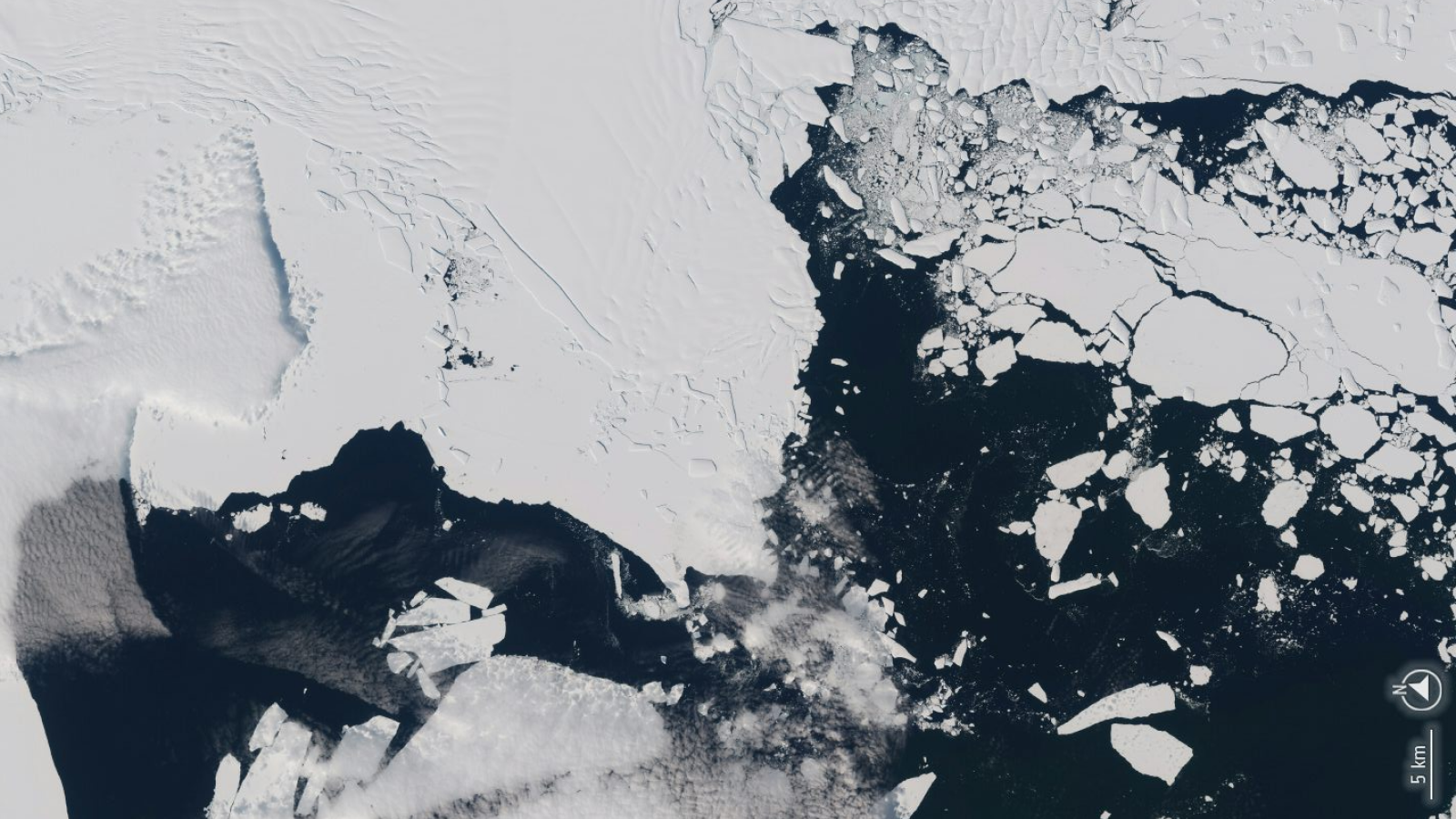
Unveiling the Secrets of Antarctica‘s ‘Doomsday Glacier’: What Iceberg Earthquakes Reveal
Antarctica’s Thwaites glacier, often dubbed the ”doomsday Glacier” due to its potential for notable sea-level rise, is revealing new secrets through the detection of hundreds of previously unknown earthquakes. Thes aren’t your typical tectonic tremors; they’re glacial earthquakes – events triggered by the dramatic calving of icebergs. Understanding these events is crucial for predicting future sea-level changes adn grasping the glacier’s instability.
What are Glacial Earthquakes?
Glacial earthquakes occur when massive chunks of ice break off from a glacier, a process known as calving.This sudden movement releases energy,generating seismic waves that can be detected by instruments thousands of miles away. You might be wondering, how are these different from regular earthquakes? While they register similarly on seismographs, their source and characteristics are distinct.
recent research has focused on a particularly active region of Thwaites Glacier, revealing a surprisingly high frequency of these glacial earthquakes. Scientists have identified over 500 such events occurring between 2019 and 2023 alone. This revelation provides a new window into the glacier’s dynamic behavior.
Why are These Earthquakes Significant?
These glacial earthquakes aren’t just a captivating phenomenon; they offer vital clues about the glacier’s health and future.Here’s what they tell us:
* Calving is accelerating: The sheer number of detected earthquakes indicates a rapid rate of iceberg calving at Thwaites.
* Understanding Instability: They help researchers understand the complex interplay between the ocean, ice, and bedrock that governs the glacier’s stability.
* Refining sea-Level Rise Projections: Better data on calving events allows for more accurate predictions of future sea-level rise. This is critical for coastal communities worldwide.
What Do We Already Know?
Interestingly, previous studies identified similar glacial earthquakes further inland. Though, these events consistently occured 60-80 kilometers (37-50 miles) from the coastline, ruling out direct causation by iceberg capsizing. This suggests other, yet-to-be-understood mechanisms are at play.
The origin of these inland events remains a puzzle, highlighting the need for continued inquiry. It’s clear that Thwaites Glacier is a complex system with many hidden processes.
What’s Next for Research?
The detection of these glacial earthquakes opens up exciting new avenues for research. scientists are now focusing on:
* Pinpointing the exact mechanisms: determining how these earthquakes are generated and what factors influence their frequency and magnitude.
* Improving predictive models: Developing more sophisticated models to forecast future calving events and their impact on sea levels.
* Investigating the glacier’s foundation: studying the interaction between the glacier and the underlying bedrock to assess its long-term stability.
Ultimately, a deeper understanding of Thwaites Glacier is essential for preparing for the challenges of a changing climate. Your future,and the future of coastal regions around the globe,depends on unraveling the mysteries of this critical ice mass.
Continued research promises to reduce the current uncertainty surrounding sea-level rise projections over the coming centuries. It’s a race against time, but with each new discovery, we move closer to a more informed and prepared future.