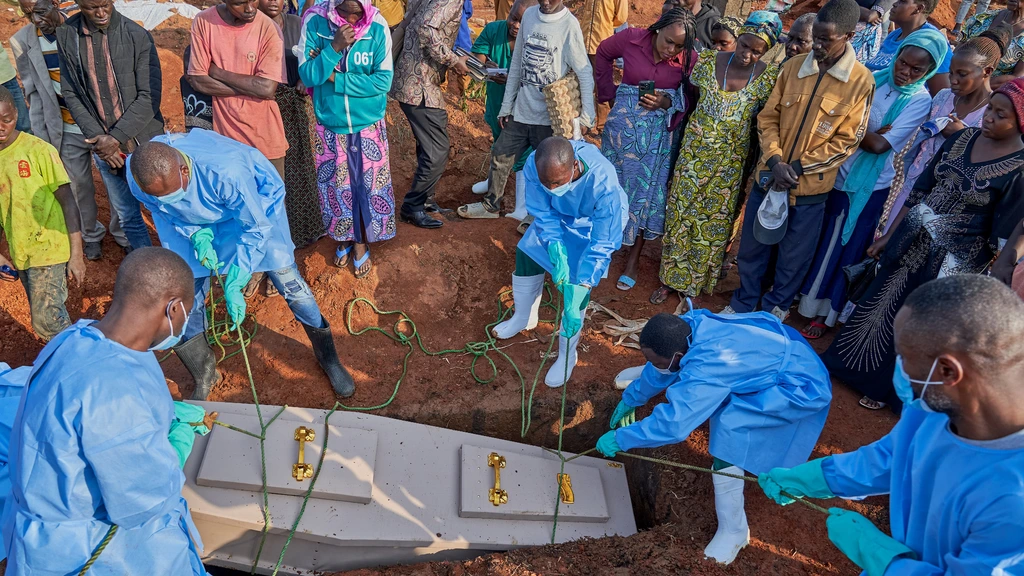
The ongoing Ebola outbreak in the eastern region of the Democratic Republic of the Congo has surpassed 2,011 deaths, according to official figures tracking the public health crisis. Health authorities have registered 4,381 confirmed infections, among which 2,011 fatalities have been documented as the virus spreads rapidly across affected communities.
World Health Organization officials reported that the virus was circulating in the country months before the outbreak received an official diagnosis in mid-May. This delay in detection has significantly hampered containment efforts, leaving medical responders struggling to keep pace with transmission rates in volatile provinces.
Mohamed Yakub Janabi, the WHO regional director for Africa, noted that early clinical presentations frequently mirrored other endemic illnesses. “We lopen daardoor achter het virus aan. Het virus is ons te snel af,” Janabi stated, explaining that initial patients were occasionally misdiagnosed with malaria or typhoid fever before health agencies identified the true pathogen.
Epidemic Scale and Rare Strain Challenges
The current health emergency ranks as the second-largest Ebola epidemic in recorded history. Only the widespread 2014–2016 epidemic in West Africa—which affected Guinea, Liberia, and Sierra Leone—surpassed the present crisis in scale, having caused thousands of deaths across tens of thousands of documented cases according to World Health Organization historical data.
However, the mortality trajectory in the Congolese outbreak has accelerated faster than previous major events due to the presence of the rare Bundibugyo strain. Unlike the more common Zaire species of the virus, the Bundibugyo variant currently lacks licensed vaccines or specialized antiviral treatments, though pharmaceutical research and clinical development efforts remain active.
Ebola is classified as a severe and highly contagious viral infection characterized by systemic illness and internal or external bleeding.
Security Barriers and Community Resistance
Medical operations face severe operational bottlenecks driven by ongoing regional armed conflicts, overextended local healthcare infrastructure, and widespread misinformation regarding the existence of the disease. Resistance from skeptical communities has complicated essential public health protocols, including patient isolation, contact tracing, and safe burial practices.
Public health experts indicate that community skepticism surrounding the authenticity of the virus prevents infected individuals from seeking early medical intervention, meaning the actual number of community infections likely exceeds official tallies. Security disruptions routinely force humanitarian medical teams to suspend operations or evacuate field stations, directly impeding containment and treatment distribution.
Next Steps and Official Monitoring
The World Health Organization and local health authorities continue to issue regular epidemiological updates through the official WHO regional office as field teams adapt containment strategies to security constraints.
Related reading
- AI-First vs. AI-Native in Healthcare: Why Software Moats Still Matter
- Tamaulipas Authorities Investigate Pregnancy of 11-Year-Old Girl in Matamoros
- Colombia Earthquake: Death Toll Surpasses 160 as Rescue Efforts Continue (news-usa.today)
- WHO Warns: Ebola Outbreak in DR Congo Started Earlier Than Reported (archyworldys.com)