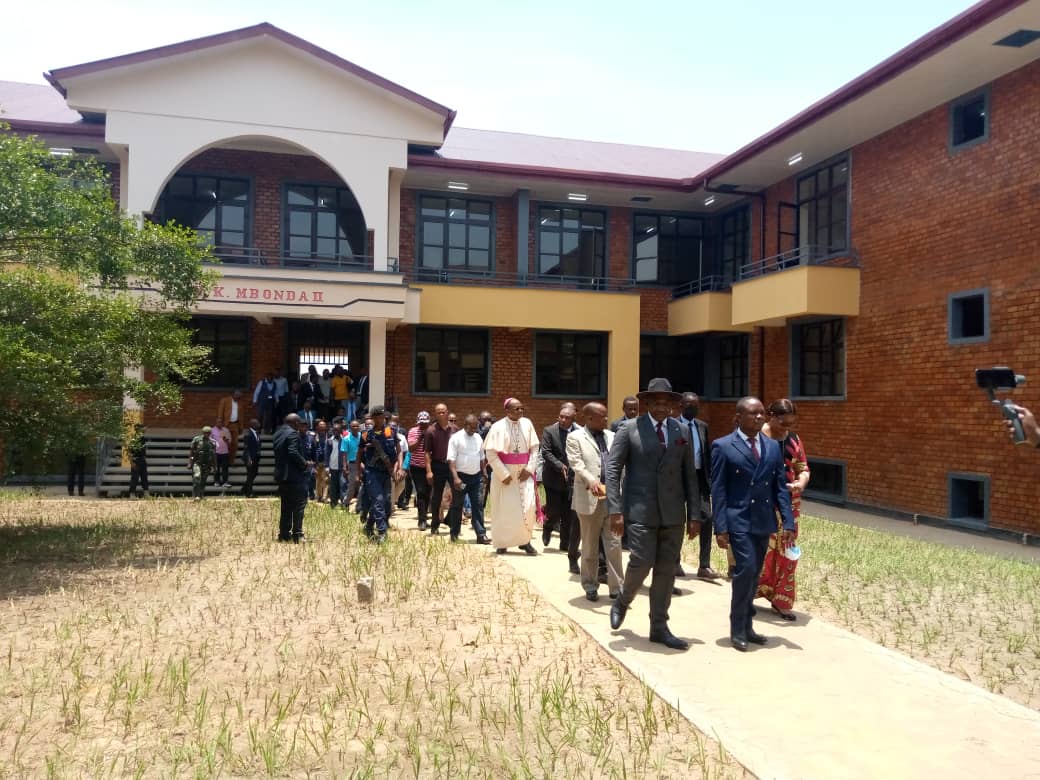
The educational and healthcare institutions founded by former Congolese Prime Minister Augustin Matata Ponyo are facing significant disruption following a government order to freeze their financial assets. The move, enacted on March 3rd, impacts the Université Mapon, its affiliated schools and the Hôpital Mapon, primarily located in Kindu, Maniema province. While authorities cite anti-money laundering legislation as justification, the decision has sparked protests and accusations of arbitrary action, raising concerns about access to essential services for thousands of Congolese citizens.
The asset freeze stems from an ongoing judicial investigation related to the “Bukanga Lonzo” case, a controversial land acquisition project that led to Matata Ponyo’s conviction. The case, involving allegations of illicit enrichment and misuse of public funds, has been a focal point of political and legal scrutiny in the Democratic Republic of Congo. According to a statement released by the Fondation Mapon, the freeze has paralyzed operations, leaving the institutions unable to cover basic expenses such as salaries and medical supplies. This situation is unfolding against a backdrop of broader concerns about corruption and governance in the DRC, where transparency and accountability remain significant challenges. The legal basis for the freeze rests on the Law of December 27, 2022, relating to the fight against money laundering and the financing of terrorism, a piece of legislation intended to strengthen the country’s financial security.
The decision to freeze the accounts has triggered a wave of demonstrations, most notably a peaceful march organized on March 9th by students, staff, and patients affiliated with the Mapon institutions. The Fondation Mapon has publicly denounced the measure as “arbitrary” and appealed to President Félix Tshisekedi for intervention. Dr. Mbungu Mulaila, a member of the Fondation Mapon, stated that the freeze jeopardizes essential services, threatens the livelihoods of over 500 employees and their families, and puts patients, students, and pupils at risk. He further claimed that the accounts were blocked without prior notification or official documentation, even impacting funds held in microfinance institutions. The Fondation emphasizes its legal independence from Matata Ponyo, asserting that We see a distinct legal entity.
Legal Justification and Concerns Over Due Process
The legal rationale behind the asset freeze centers on suspicions that the Mapon institutions may have been used to launder funds diverted from the Bukanga Lonzo project. Me Omar Kigalu, a lawyer at the Kinshasa-Gombe Bar Association, explained to Radio Okapi that articles 114 and 121 of the 2022 anti-money laundering law grant the prosecutor general the authority to monitor or freeze accounts if there is reasonable suspicion of illicit financial activity. Radio Okapi reported that Kigalu clarified the measure is “conservative” in nature, meaning it is temporary and will be lifted if investigations reveal no connection to the alleged misappropriation of funds. However, if evidence of wrongdoing is found, the assets could be permanently seized.
This raises critical questions about due process and the potential impact on innocent beneficiaries. Critics argue that freezing the assets of educational and healthcare institutions, even if linked to a convicted individual, could have devastating consequences for the communities they serve. The principle of collective punishment, where the actions of one individual negatively impact others, is a key concern. The 2022 anti-money laundering law, while intended to combat financial crime, must be applied judiciously to avoid infringing on fundamental rights and hindering access to essential services. The law itself aims to align the DRC with international standards for combating financial crime, including recommendations from the Financial Action Task Force (FATF).
Impact on Kindu and the Wider Maniema Province
The impact of the asset freeze is particularly acute in Kindu, the capital of Maniema province, where the Université Mapon and Hôpital Mapon are major employers and providers of vital services. The disruption to these institutions is causing widespread anxiety among students, parents, patients, and staff. The inability to pay salaries threatens the economic stability of numerous families, while the lack of funds for medical supplies and educational resources jeopardizes the quality of care and education. Local residents have expressed their concerns about the legality of the freeze, questioning whether it is proportionate to the alleged offenses. The situation underscores the interconnectedness of economic activity and social well-being in the region.
The Université Mapon, established by Matata Ponyo, has long been a prominent educational institution in the DRC, offering a range of academic programs. The Hôpital Mapon provides crucial healthcare services to a population with limited access to medical facilities. The Fondation Mapon, which oversees these institutions, has consistently emphasized its commitment to providing quality education and healthcare to the Congolese people. The current crisis threatens to undermine these efforts and exacerbate existing inequalities.
The Bukanga Lonzo Case: A Background
The Bukanga Lonzo case revolves around a large-scale land acquisition project initiated during Matata Ponyo’s tenure as Prime Minister (2010-2012). The project aimed to establish an agricultural zone in the Bukanga region of Bas-Congo province (now Kongo Central province). However, it was marred by allegations of irregularities, including the unlawful expropriation of land from local communities and the misappropriation of public funds. Matata Ponyo was ultimately convicted of embezzlement and sentenced to prison, though he has maintained his innocence, claiming the charges were politically motivated. The case has been a source of considerable controversy and has highlighted the challenges of land governance and corruption in the DRC. The initial allegations surfaced in 2013, leading to a protracted legal battle and significant public debate.
The Bukanga Lonzo project involved an estimated investment of over $200 million, according to reports from the Congolese government. Congo Quotidien reported that the current asset freeze is directly linked to the ongoing efforts to recover funds allegedly stolen from this project. The investigation is focused on tracing the flow of funds and identifying any assets acquired with illicit proceeds. The prosecutor general’s office believes that the Mapon institutions may have been used as conduits for laundering these funds, a claim that the Fondation Mapon vehemently denies. The case underscores the importance of robust financial oversight and accountability mechanisms in preventing corruption and ensuring the responsible use of public resources.
Key Takeaways
- The asset freeze impacting the Université Mapon, its schools, and the Hôpital Mapon is linked to the Bukanga Lonzo corruption case.
- Authorities are invoking the 2022 anti-money laundering law as justification for the freeze, citing suspicions of illicit financial activity.
- The Fondation Mapon maintains its innocence and argues the measure is arbitrary, jeopardizing essential services and livelihoods.
- The situation highlights concerns about due process and the potential impact on innocent beneficiaries of the institutions.
As of March 14, 2026, the fate of the frozen assets remains uncertain. The outcome of the ongoing investigation will determine whether the freeze is lifted or whether the assets are permanently seized. The Fondation Mapon continues to appeal for presidential intervention and a swift resolution to the crisis. The situation is being closely monitored by civil society organizations and international observers, who are calling for transparency and respect for the rule of law. Further developments are expected in the coming weeks as the investigation progresses.
We encourage readers to share their thoughts and perspectives on this developing story in the comments below. Your insights are valuable as we continue to follow this important issue.
Related reading