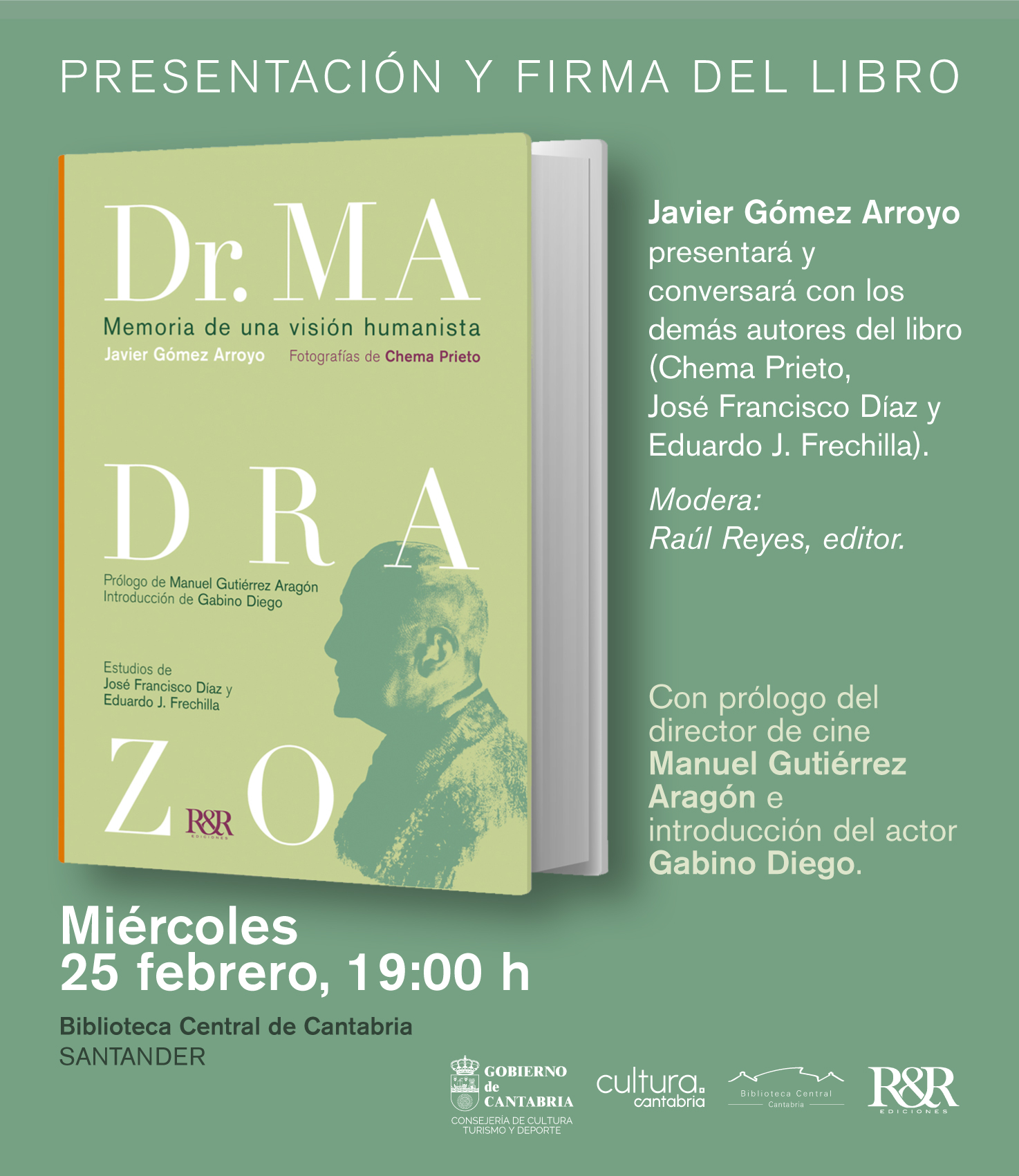
The life and legacy of Enrique Diego Madrazo, a 19th and 20th-century Spanish physician celebrated for his liberal ideals, surgical innovations, and commitment to education, are being revisited with the publication of a new biography. “Doctor Madrazo. Memoria de una visión humanista” (“Doctor Madrazo. Memory of a Humanist Vision”), authored by historian Javier Gómez Arroyo, is set to be presented and signed by the authors on February 25th at the Biblioteca Central de Cantabria in Santander, Spain. This book delves into the life of a man who championed reason and experience, leaving a lasting mark on both the medical field and Spanish society.
Born in Vega de Pas in 1850 and passing away in Santander in 1942, Dr. Madrazo was more than just a skilled surgeon. He was a staunch advocate for liberal principles during a period of significant political and social change in Spain. His dedication extended beyond his practice, encompassing a deep belief in the transformative power of education and a commitment to humanistic thought. He pioneered numerous surgical techniques in Spain, and his work significantly improved patient outcomes, particularly through the implementation of aseptic techniques – a critical advancement in reducing post-operative infections. The new biography promises a comprehensive look at his life, exploring his contributions to medicine, research, teaching, and even the arts, as he penned several socially-themed plays later in life, some of which were prologued by the renowned Spanish novelist Benito Pérez Galdós.
A Life Dedicated to Progress and Liberalism
Enrique Diego Madrazo’s commitment to progressive ideas wasn’t without its challenges. According to records from El Diario Montañés, his republican and socialist leanings led to his imprisonment in the Prisión Central de Santander in the late 1930s. This period of incarceration underscores the political turmoil of the time and the risks associated with advocating for liberal values. Despite these obstacles, Madrazo remained steadfast in his beliefs, continuing to champion education and social reform throughout his life. His dedication to his “paisanos,” the people of his native Vega de Pas, was also a defining characteristic, demonstrating a deep sense of community, and responsibility.
The biography, illuminated by photographs from Chema Prieto, is further enriched by a prologue from Manuel Gutiérrez Aragón, a film director and member of the Real Academia Española, and an introduction by actor and photography specialist Gabino Diego. Expert analysis from healthcare professionals José Francisco Díaz and Eduardo J. Frechilla adds further depth to the work, providing a well-rounded perspective on Madrazo’s contributions to the medical field. The book aims to shed light on the often-overlooked ideals of a man who lived a “turbulent and beneficial life,” as described in the promotional material.
Aseptic Techniques and Surgical Innovation
Dr. Madrazo’s impact on Spanish surgery is particularly noteworthy. His adoption and refinement of aseptic techniques – methods designed to prevent contamination and infection during surgical procedures – were instrumental in saving countless lives. Prior to the widespread understanding of germ theory and the importance of sterilization, surgical procedures carried a high risk of infection. Madrazo’s commitment to these techniques, which involved rigorous cleaning and sterilization protocols, significantly reduced post-operative complications and improved patient survival rates. This dedication to patient safety established him as a leader in his field and a pioneer in Spanish surgical practice.
Beyond aseptic techniques, Madrazo was a pioneer in a number of other surgical advancements. While specific details of these techniques require further research, his reputation as an innovator suggests a willingness to embrace new methods and challenge conventional practices. His success in these areas stemmed not only from his technical skill but also from his dedication to continuous learning and his commitment to staying at the forefront of medical knowledge.
The Presentation and Authors in Conversation
The presentation of “Doctor Madrazo. Memoria de una visión humanista” will take place on Wednesday, February 25th, at 7:00 PM (19:00 hours) in the main hall of the Biblioteca Central de Cantabria. Historian Javier Gómez Arroyo, the author of the biography, will lead a conversation with the other contributors to the book, offering insights into the research process and the significance of Madrazo’s life and work. The event will be moderated by Raúl Reyes, an editor. This event provides a unique opportunity to learn more about this fascinating figure and the historical context in which he lived and worked.
Legacy and Recognition
The recognition of Dr. Madrazo’s contributions extends beyond the publication of this new biography. In March 2023, a plaque was unveiled on Calle Santa Lucía in Santander, commemorating his life and work as part of the “Ruta de Ilustres” (Route of Illustrious Figures) established by the city council. This initiative aims to honor individuals who have made significant contributions to the cultural and intellectual life of Santander. The unveiling ceremony was attended by Gema Igual, the mayor of Santander, and Juan Carlos García, the mayor of Vega de Pas, highlighting the widespread appreciation for Madrazo’s legacy.
The efforts to recognize Madrazo’s achievements were championed for years by his great-great-nephew, Dr. Manuel Oria Martínez Conde, who unfortunately passed away before seeing his ancestor receive greater recognition. His dedication underscores the importance of preserving historical memory and celebrating the contributions of those who have shaped our society. The publication of this biography and the inclusion of Madrazo in the Ruta de Ilustres represent a significant step towards ensuring that his legacy endures for generations to arrive.
Key Takeaways
- Enrique Diego Madrazo was a pioneering Spanish physician and advocate for liberal ideals.
- His implementation of aseptic surgical techniques significantly improved patient outcomes and reduced post-operative infections.
- A new biography, “Doctor Madrazo. Memoria de una visión humanista,” explores his life and contributions in detail.
- A presentation and signing event will be held on February 25th at the Biblioteca Central de Cantabria.
- Madrazo’s legacy is being honored through the Ruta de Ilustres in Santander, with a plaque commemorating his life and work.
The presentation of “Doctor Madrazo. Memoria de una visión humanista” on February 25th represents an important opportunity to delve deeper into the life of this remarkable individual and to reflect on his enduring legacy. Further information about the event and the book can be obtained from the Biblioteca Central de Cantabria. We encourage readers to share their thoughts and reflections on Dr. Madrazo’s life and work in the comments below.
Keep reading