
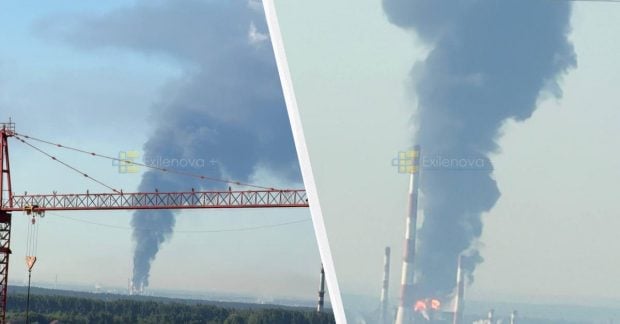
Ukrainian long-range drones have targeted several of Russia’s largest oil refineries, including facilities operated by Lukoil, to disrupt the Kremlin’s fuel supplies and export revenues. These strikes have caused fires and operational shutdowns at key sites that supply fuel to Moscow and other strategic regions, according to regional reports and satellite imagery analysis.
The campaign focuses on the primary distillation units of these plants, which are critical for converting crude oil into gasoline and diesel. Because these units are often custom-built and difficult to replace under current international sanctions, officials and industry analysts suggest that repairs may take months, potentially leading to prolonged fuel shortages in specific Russian districts.
The attacks represent a strategic shift in Ukraine’s approach to the conflict, moving from targeting storage depots to hitting the actual production capacity of the Russian energy sector. This effort aims to constrain the Russian military’s fuel logistics and force the government to divert fuel imports from overseas to meet domestic demand.
Impact on Fuel Supplies to Moscow
Recent drone strikes have hit refineries that serve as the primary fuel hubs for the Moscow metropolitan area. According to reports from regional monitoring services, the damage to these facilities has forced operators to reroute fuel shipments from other regions to prevent shortages in the capital. This logistical strain increases transportation costs and creates bottlenecks in the domestic distribution network.
The targeting of refineries supplying Moscow is intended to create domestic political pressure by increasing fuel prices for civilians. By hitting the “last mile” of production near major population centers, Ukraine is attempting to disrupt the stability of the Russian internal market. Russian authorities have not officially confirmed the total volume of lost production but have acknowledged “incidents” at several energy sites.
Damage to Refining Capacity and Distillation Units
The drones have specifically targeted the atmospheric-vacuum distillation units, known as AVT units. These towers are the heart of a refinery; they separate crude oil into different fractions. According to Reuters, attacks on these specific components are more damaging than strikes on storage tanks because distillation columns are complex, high-pressure vessels that cannot be quickly patched or replaced.
Industry experts indicate that the lead time for replacing specialized refinery equipment has increased significantly due to Western sanctions. Most of the high-tech components used in Russian refineries were historically sourced from the U.S., Europe, or Japan. With these supply chains severed, Russia must rely on more expensive and less efficient alternatives from China or attempt to manufacture the parts domestically, a process that can take several months to a year.
The cumulative effect of these strikes has impacted a significant portion of Russia’s refining capacity. Some reports suggest that a majority of Russia’s ten largest refineries have experienced some level of disruption or damage since the start of the drone campaign in early 2024. This has led to temporary bans on gasoline exports to ensure domestic stability, as the Russian government prioritizes internal fuel security over foreign currency earnings.
Strategic Shift in Energy Infrastructure Targeting
The shift toward refinery strikes follows a pattern of “economic warfare” designed to degrade Russia’s ability to fund its military operations. While oil exports remain high, the ability to refine that oil into usable fuel is a critical vulnerability. By reducing the domestic supply of high-octane gasoline and diesel, Ukraine is targeting the mobility of the Russian Armed Forces.
This strategy also forces Russia to expend significant air defense resources far from the front lines. To protect refineries in the interior, the Russian Ministry of Defense has had to redeploy S-300 and S-400 missile systems from the combat zone to the hinterlands, potentially leaving other strategic assets or front-line positions more exposed.
The use of long-range drones allows Ukraine to strike targets deep inside Russian territory without risking manned aircraft. These drones often fly at low altitudes to avoid radar detection, making them difficult to intercept until they are close to the target. The precision of these strikes on specific distillation towers suggests an increase in the quality of intelligence regarding the layout of Russian industrial sites.
Comparative Impact on Russian Oil Exports
While the strikes have not halted Russia’s overall crude oil exports, they have significantly hampered the export of refined petroleum products. The following table outlines the difference between the two types of impacts:

| Metric | Crude Oil Exports | Refined Product Exports |
|---|---|---|
| Impact Level | Low to Moderate | High |
| Primary Cause | Pipeline capacity/Demand | Refinery downtime/AVT damage |
| Economic Effect | Steady revenue stream | Lost high-margin profits |
| Logistic Result | Continued shipments | Increased domestic fuel prices |
The loss of refined product exports is particularly costly for the Russian budget because refined gasoline and diesel sell at a higher premium than raw crude oil. According to data from The Associated Press, the Russian government has had to implement various market interventions to prevent a price spiral as refining capacity dropped.
The ongoing campaign demonstrates a calculated effort to turn Russia’s greatest economic strength—its energy sector—into a strategic liability. As more facilities are targeted, the pressure on the Russian energy grid and fuel distribution network is expected to increase.
The next confirmed checkpoint for assessing the damage will be the release of the next quarterly energy production report from the Russian Ministry of Energy, which will provide data on total refining throughput and downtime.
Share your thoughts on this development in the comments below or share this report on social media to keep the conversation going.