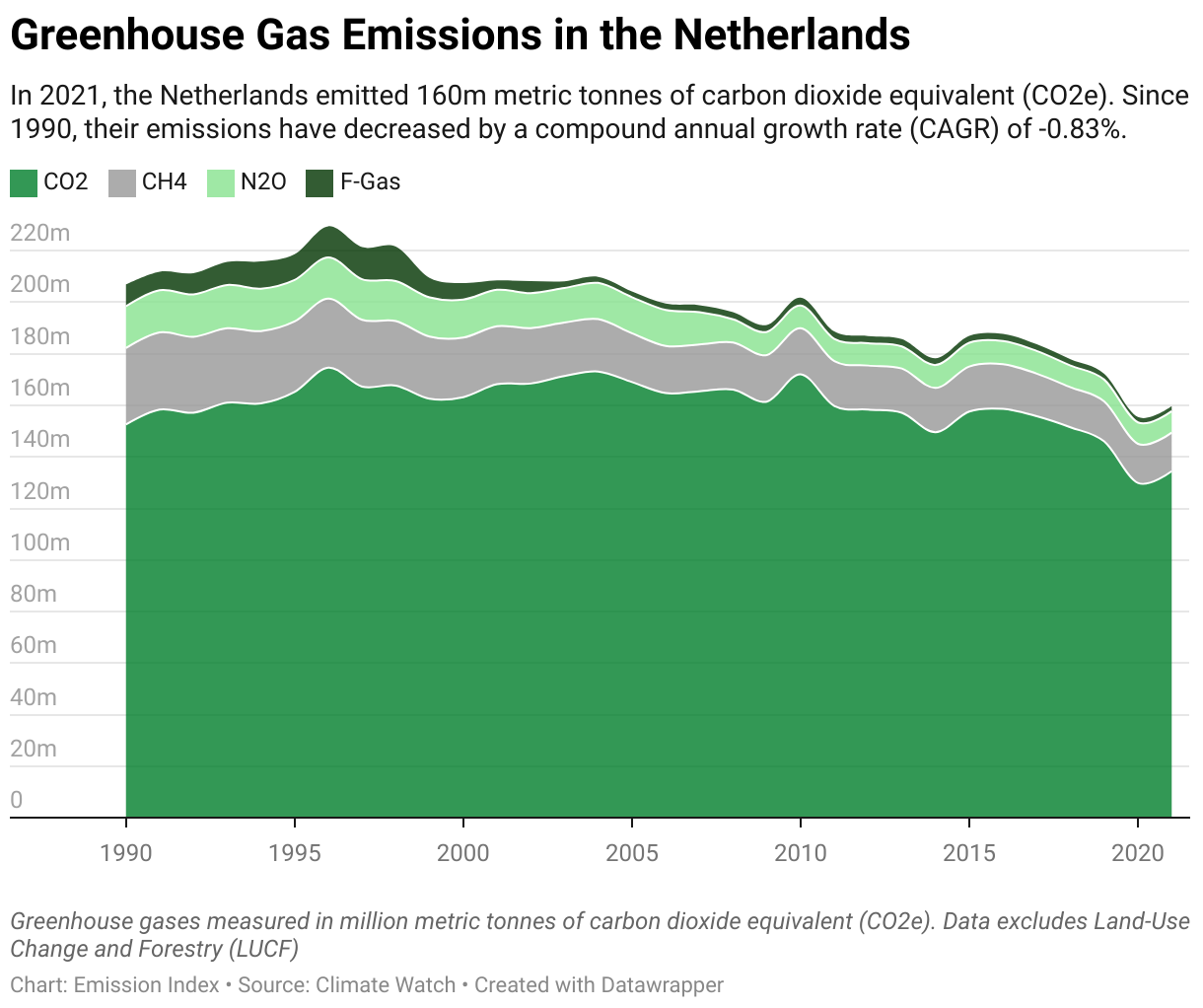
The Netherlands saw a total greenhouse gas emission reduction of approximately 5% in 2023 compared to the previous year, according to preliminary figures released by Statistics Netherlands (CBS). This decline in national output was primarily driven by a significant reduction in coal-fired power generation and a notable decrease in fuel sales at border gas stations—a phenomenon frequently attributed to the effects of cross-border “fuel tourism.”
As the Chief Editor of the Business section at World Today Journal, I have tracked these environmental shifts against the backdrop of European energy policy. The data reflects a structural transition in how the Dutch economy consumes energy, though analysts caution that reduced fuel sales within national borders do not necessarily equate to a total reduction in carbon consumption, as motorists simply shift their purchasing to neighboring countries like Belgium and Germany.
The Impact of Declining Coal Consumption
The primary driver behind the lower emission figures is the power sector’s pivot away from coal. According to the CBS report, the electricity sector emitted 18% less carbon dioxide in 2023 than in 2022. This shift is largely due to the increased availability of renewable energy sources, specifically wind and solar, which have gained a larger market share in the Dutch energy mix.
.jpg "The Impact of Declining Coal Consumption")
Furthermore, the government’s push to phase out coal-fired power plants has forced utility companies to rely more heavily on natural gas and imported electricity. While the transition toward renewables is a stated goal of the Dutch climate policy, the volatility of global energy prices—particularly following the energy crisis that began in 2022—has also played a role in how power companies choose their fuel inputs. When coal becomes less economically viable compared to gas or imported renewable energy, the national emission inventory reflects that change immediately.
Understanding ‘Fuel Tourism’ and Emission Data
A curious factor in the Dutch emission statistics is the role of “tanktoerisme” (fuel tourism). Because Dutch excise duties on petrol and diesel are among the highest in Europe, many residents and commercial freight operators choose to refuel across the border. When fuel is purchased outside the Netherlands, those emissions are attributed to the country where the sale occurs, rather than the country where the vehicle is registered.
The CBS analysis highlights that the decline in domestic fuel sales contributed to the overall drop in reported national emissions. However, this creates a statistical blind spot. Economists often point out that this is a “geographic shift” in emissions rather than an absolute reduction in the carbon footprint of Dutch mobility. If a Dutch commuter drives across the border to purchase cheaper fuel, the carbon released from burning that fuel still contributes to the global climate, even if it disappears from the Dutch national register.
Broader Economic and Policy Implications
The Netherlands remains under pressure to meet its 2030 climate goals, which mandate a 55% reduction in greenhouse gas emissions compared to 1990 levels. The 2023 data suggests that the country is moving in the right direction, but structural challenges remain in the industrial and agricultural sectors, which have been slower to decarbonize than the power sector.
The Netherlands Environmental Assessment Agency (PBL) noted in its 2023 Climate and Energy Outlook that while electricity generation is successfully decarbonizing, the industrial sector requires significant investment in hydrogen technology and carbon capture to meet future targets. The reliance on imported energy also underscores the nation’s vulnerability to international price fluctuations.
What Happens Next?
The next major checkpoint for Dutch climate policy will be the publication of the 2024 emission inventory, which is expected in mid-2025. This report will reveal whether the 2023 decline was a result of long-term structural changes or temporary market conditions, such as the high price of coal relative to other fuels during that specific year.
As the government continues to adjust tax policies to mitigate the effects of fuel tourism while balancing the need for climate revenue, observers will be watching to see if the downward trend in emissions persists. We encourage our readers to participate in the conversation by sharing their thoughts on the balance between national climate targets and the economic realities of cross-border trade in the comments section below.
Keep reading