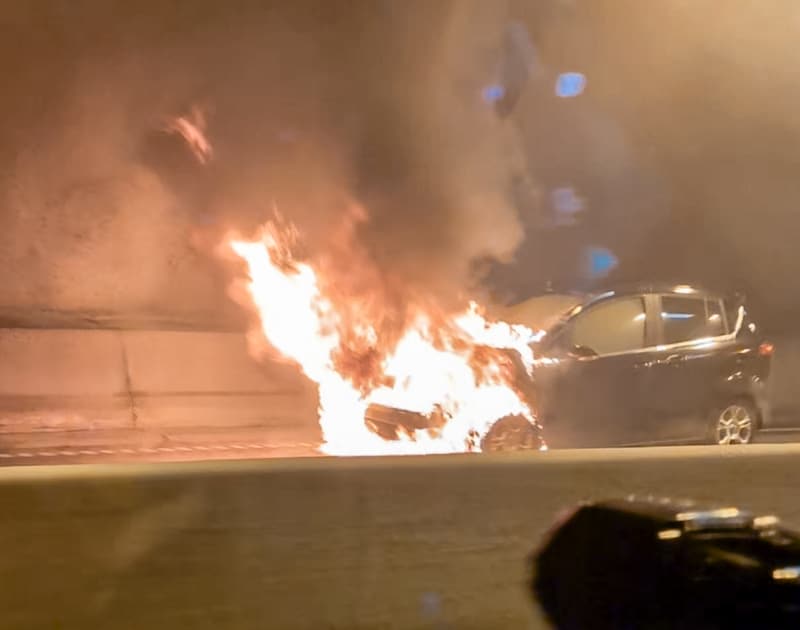
A vehicle fire broke out in a tunnel along the E39 highway in Norway’s Agder region on Tuesday, prompting emergency services to shut down the tunnel and divert traffic while crews worked to extinguish the blaze. The incident occurred in the Lillesand Tunnel, a key stretch of the E39 that connects southern Norway and sees heavy daily leverage by commuters and freight transport. Eyewitnesses reported seeing thick black smoke pouring from the tunnel entrance shortly after midday, with flames visible inside the confined space. No injuries were reported, according to initial statements from local authorities.
The fire prompted an immediate response from fire and rescue services in the Agder district, who arrived on scene within minutes and began efforts to contain the fire while ensuring the tunnel was fully evacuated. Police closed both directions of the E39 at the tunnel entrances, advising motorists to use alternative routes via regional roads such as Rv41 and E18. Traffic cameras showed significant backups forming on both approaches as vehicles were turned back or rerouted. The tunnel remained closed for several hours while firefighters worked to fully extinguish the blaze and assess structural safety.
By late afternoon, officials confirmed the fire had been fully extinguished and that ventilation systems were being activated to clear residual smoke. Structural inspections were underway to determine if any damage had occurred to the tunnel lining, ventilation, or emergency systems. The Norwegian Public Roads Administration (Statens vegvesen) stated that the tunnel would remain closed until safety checks were completed, emphasizing that no timeline for reopening had been set. Authorities urged the public to follow official updates via Statens vegvesen’s traffic information page and local police channels.
Emergency Response and Safety Protocols Activated
Emergency services followed established procedures for tunnel fires, which include immediate evacuation, isolation of the affected section, and deployment of specialized firefighting units equipped for confined-space operations. According to the Norwegian Directorate for Civil Protection (DSB), tunnel fires present unique challenges due to limited ventilation, rapid heat buildup, and the risk of toxic smoke accumulation. In this case, responders used thermal imaging cameras to locate the fire’s origin and deployed high-pressure water jets from both ends of the tunnel to cool the structure and prevent reignition.
No hazardous materials were reported to be involved in the vehicle, and early assessments suggest the fire originated in the engine compartment. Police have opened an investigation into the cause, though they stated it is too early to determine whether mechanical failure, electrical fault, or another factor was responsible. The driver reportedly escaped the vehicle before flames spread and was checked by emergency medical personnel as a precaution but did not require hospitalization.
Tunnel safety systems, including automatic fire detection, deluge systems, and emergency exits, are designed to activate in such incidents. While it is not yet confirmed whether these systems engaged automatically, officials noted that the rapid containment of the fire suggests that both automated and manual responses functioned as intended. The Norwegian Public Roads Administration conducts regular maintenance and safety drills in tunnels like the Lillesand Tunnel, including annual inspections of ventilation, fire suppression, and emergency communication systems.
Traffic Disruptions and Travel Advisory
The closure of the E39 tunnel caused major disruptions to regional traffic, particularly affecting freight transport between Kristiansand and Arendal, as well as commuter travel during the afternoon peak. Detour routes added significant travel time, with some drivers reporting delays of over an hour. Local news outlets reported increased congestion on alternative roads, particularly along Rv41 through rural areas not designed to handle high volumes of through traffic.
By evening, traffic flow began to normalize as authorities prepared to reopen the tunnel pending final safety checks. Statens vegvesen advised drivers to check real-time traffic updates via their website or the Norwegian Public Roads Administration’s traffic portal before embarking on journeys through the region. The agency also reminded the public to remain alert to variable message signs and radio updates for any changes in routing.
Public transport operators in the area, including Vy and Nettbuss, reported minor adjustments to bus schedules but confirmed no cancellations. School transport services were briefly affected, though officials said all students were safely rerouted and no delays impacted school schedules significantly. Emergency lanes remained clear throughout the incident to allow unimpeded access for rescue vehicles.
Tunnel Safety in Norway: Context and Infrastructure
Norway has over 1,200 road tunnels, many of which are critical arteries in a country shaped by fjords, mountains, and coastal geography. The Lillesand Tunnel, opened in 2010, is approximately 1.1 kilometers long and forms part of the E39’s upgrade to improve safety and capacity along the southern coastal corridor. It features two lanes, unidirectional traffic, and modern safety systems including longitudinal ventilation, emergency exits every 250 meters, and fire-resistant coatings.
Following several high-profile tunnel fires in Europe, including the 2001 Gotthard Tunnel fire in Switzerland and the 2011 Sierre Tunnel crash in Norway, safety standards have been progressively strengthened. Norwegian regulations now require all tunnels longer than 500 meters to have automatic fire detection, video surveillance, and emergency communication systems. The Lillesand Tunnel meets or exceeds these standards, according to Statens vegvesen’s public safety documentation.
Experts emphasize that while tunnel fires are rare, they demand rapid and coordinated response due to the potential for rapid fire spread and smoke inhalation risks. Public awareness campaigns in Norway regularly remind drivers to turn on hazard lights, evacuate immediately, and use emergency phones or SOS buttons located inside tunnels if a fire occurs. In this case, the driver’s prompt evacuation and reporting of the incident were cited by responders as a key factor in preventing escalation.
Official Statements and Ongoing Investigation
Police in Agder confirmed they have launched a preliminary investigation into the cause of the fire, though they stressed that no conclusions have been drawn. “We are treating this as a standard vehicle fire investigation at this stage,” said a spokesperson for Sørørlandet Police District. “Our focus is on gathering evidence, speaking with witnesses, and examining the vehicle to determine the origin.” No charges or citations have been issued, and the vehicle involved has not been publicly identified.
Statens vegvesen said it would review the incident as part of its ongoing safety evaluation process, though it noted that initial external inspections showed no visible damage to the tunnel structure. “The tunnel’s safety systems performed as expected, and the response was swift and effective,” said a representative from the agency. “We will conduct a full technical review before declaring the tunnel safe for reopening.”
The Norwegian Directorate for Civil Protection reiterated that tunnel fires, while infrequent, are taken extremely seriously due to the potential for cascading risks. They encouraged drivers to familiarize themselves with safety procedures, including knowing the location of emergency exits and how to use fire extinguishers located at intervals in larger tunnels. No changes to national tunnel safety policy were announced following this incident.
Next Steps and Public Guidance
As of the latest update, the Lillesand Tunnel remains closed pending final safety inspections. Statens vegvesen has not announced a specific time for reopening but stated that updates will be provided through their official traffic information channels. Drivers are advised to continue using detour routes and to monitor vegvesen.no/trafikk or local radio broadcasts for real-time developments.
Authorities have not released a timeline for when the investigation into the fire’s cause will conclude, though such inquiries typically take several days to complete, especially if forensic analysis of the vehicle is required. No further updates have been issued regarding potential mechanical recalls or safety advisories linked to the vehicle type involved.
This incident serves as a reminder of the importance of vigilance and preparedness when traveling through confined infrastructure like road tunnels. While modern safety systems and emergency protocols are designed to minimize risk, driver awareness and rapid response remain critical components of tunnel safety.
We encourage readers to share this article to support spread awareness of road safety practices and to leave comments with any observations or questions about tunnel travel in Norway. Stay informed, stay safe, and always follow official guidance during road incidents.
Keep reading