
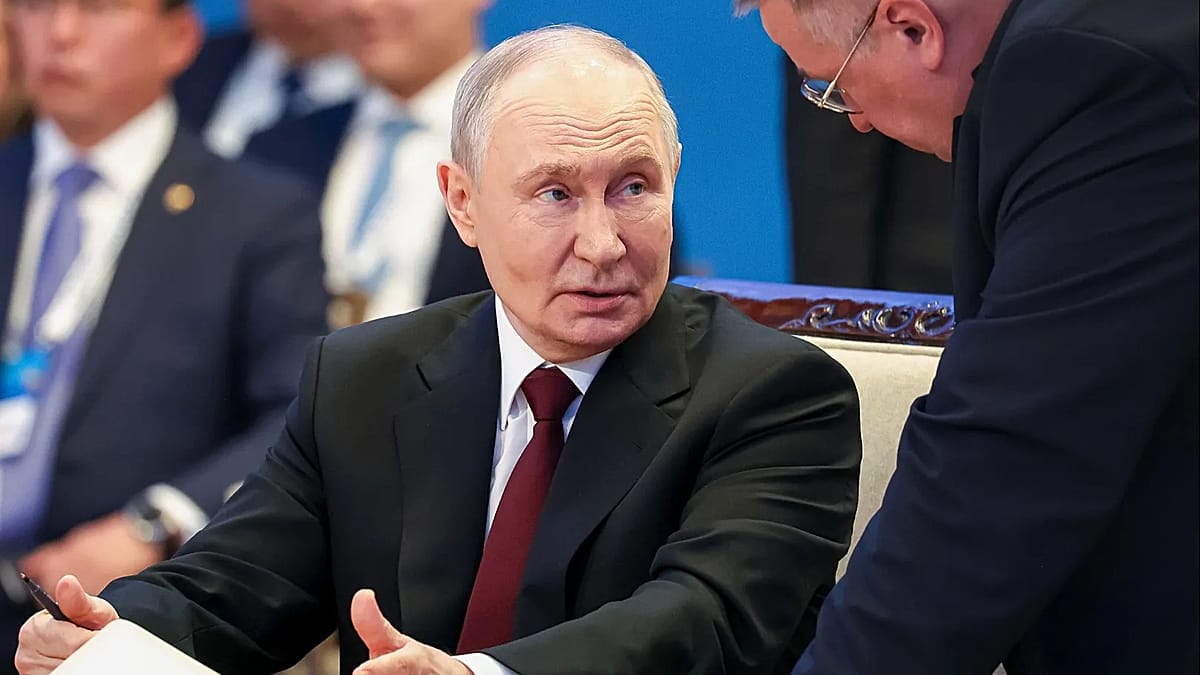
ASTANA — Tensions within the Eurasian Economic Union (EAEU) reached a critical threshold this week as leaders of the Russia-led bloc issued a direct challenge to Armenia regarding its intensifying diplomatic pivot toward the European Union. During a summit held in the Kazakh capital of Astana on Friday, May 29, 2026, member states signaled that Yerevan’s pursuit of European integration is creating a fundamental conflict with its current commitments to the Moscow-led organization.
The EAEU, which was founded in 2015, has now formally placed Armenia on notice. Leaders from Russia, Kazakhstan, Belarus, and Kyrgyzstan expressed grave concerns that Armenia’s westward ambitions pose “significant risks to the economic security” of the union. The bloc has called for a popular referendum in Armenia to determine the country’s geopolitical future, explicitly suggesting that the vote should include a clear choice between continued membership in the EAEU and the pursuit of European Union accession.
A Bloc at a Crossroads
The diplomatic friction marks a significant escalation in the struggle for influence in the South Caucasus. Russian President Vladimir Putin, speaking after the summit, warned that the EAEU would be forced to “scale back… practically all our work with Armenia concerning integration processes in the economic sphere” should the current trajectory continue. The Russian leader emphasized that while the two nations share a “special relationship,” the responsibility for steering the country’s future lies with the Armenian people.

“Everything needs to be weighed up, carefully considered and a decision made,” Putin stated, noting that regardless of the geopolitical outcome, he expects humanitarian and political ties between Moscow and Yerevan to remain intact. Despite the gravity of the announcement, Armenian Prime Minister Nikol Pashinyan was notably absent from the Astana summit, citing his active campaign for the upcoming parliamentary election scheduled for June 7, 2026.
The institutional response from the EAEU is not merely rhetorical. According to the summit’s concluding statements, the union intends to review Armenia’s status formally at its next meeting, which is slated for December 2026. This timeline provides a narrow window for Yerevan to reconcile its domestic political agenda with its regional economic obligations.
The Geopolitical Stakes
For Armenia, the current situation represents a high-stakes balancing act. Prime Minister Pashinyan has faced mounting pressure to address the country’s long-term strategic orientation. While the government has increasingly criticized Moscow’s policies in public, it remains deeply embedded in the economic architecture of the EAEU. The bloc’s demand for a referendum underscores the perceived incompatibility of Armenia’s simultaneous efforts to deepen ties with Brussels while remaining a cornerstone of a Russian-led economic framework.
The impact of this potential suspension extends beyond trade tariffs and customs regulations. It touches upon the broader security architecture of the South Caucasus, a region that has historically looked to Moscow as a primary security guarantor. Analysts suggest that the EAEU’s ultimatum is designed to force a definitive choice, effectively ending the era of multi-vector diplomacy that Yerevan has attempted to navigate.
Looking Toward the December Review
As Armenia heads toward its June 7 parliamentary election, the question of European integration is expected to dominate the political discourse. The EAEU’s requirement for a transparent, popular vote on the matter of EU membership adds a layer of democratic pressure that may prove difficult for the ruling administration to navigate without alienating either its Western-leaning voter base or its traditional regional partners.

The formal review of Armenia’s membership status in December serves as the next major checkpoint for this unfolding diplomatic crisis. Until that time, regional observers will be watching closely to see if Yerevan chooses to formalize its European aspirations through the suggested referendum or if it attempts to recalibrate its relationship with the EAEU to avoid total isolation from the bloc’s economic sphere.
The situation remains fluid. As the December deadline approaches, the World Today Journal will continue to track official statements from both the Armenian government and the EAEU secretariat. We invite our readers to share their analysis of this evolving situation in the comments section below.