According to reports from the Centro Sismológico Nacional (CSN), a series of seismic events shook Chile on Thursday, August 13, prompting ongoing monitoring by authorities across multiple regions. The country sits atop the Pacific Ring of Fire, where the interaction between the Nazca and South American tectonic plates produces frequent seismic activity that ranges widely in magnitude.
Throughout the day, the CSN recorded several notable movements. At 08:51 local time, a magnitude 3.8 temblor struck at a depth of 192 kilometers, with an epicentre located 76 kilometers west of San Antonio de los Cobres in neighboring Argentina, as detailed by Chilevisión. Earlier in the morning, additional activity included a magnitude 3.3 quake at 06:51 situated 162 kilometers northwest of Constitución in the Maule region at a depth of 20 kilometers.
Additional events registered by the CSN on August 13 included a magnitude 3.3 sismo at 06:44 with an epicentre 40 kilometers west of Camiña in the Tarapacá region at a depth of 76 kilometers, and another magnitude 3.3 tremor at 02:07 located 43 kilometers southeast of Baquedano in the Antofagasta region at a depth of 91 kilometers, according to Chilevisión. These routine releases by the national monitoring center help officials track subsurface shifts along the continental margin.
Understanding Seismic Activity Along the Pacific Ring of Fire
Chile’s geographic positioning makes earthquakes and tremors a regular part of daily life. As explained by Pauta, the country’s territory lies directly over the convergence of major tectonic plates that continuously accumulate and release energy beneath the Earth’s crust. When this subterranean stress overcomes friction, it generates seismic waves that travel outward to the surface.
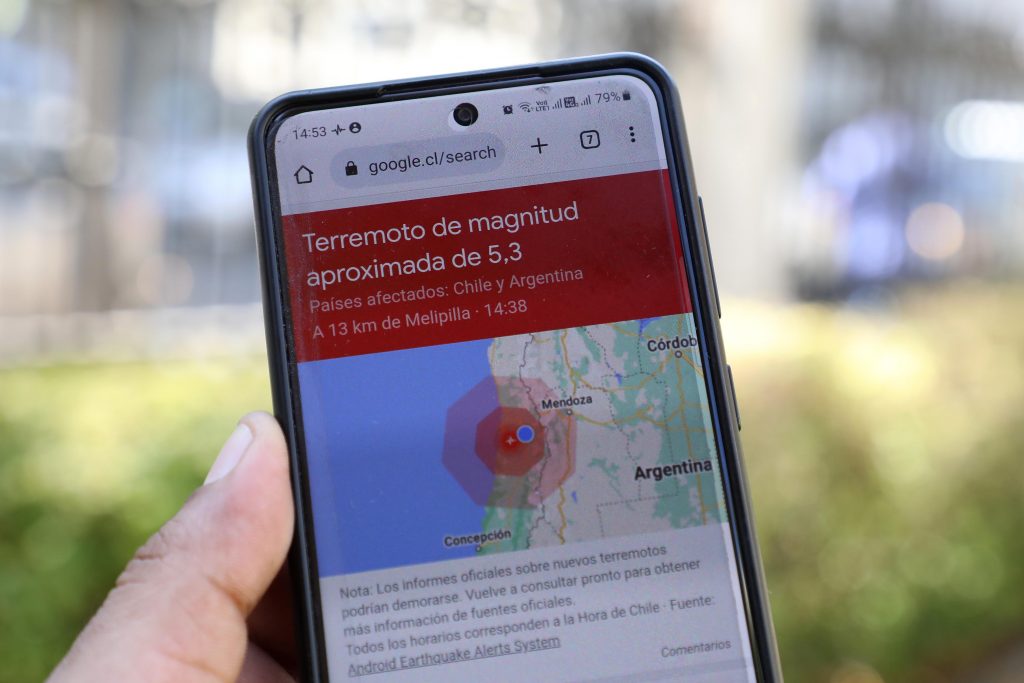
While many of these events register as low-magnitude temblors that cause little to no structural impact, the constant frequency requires robust institutional oversight. Government agencies maintain real-time tracking networks to measure precise epicentral coordinates, focal depths, and magnitudes immediately after each occurrence, ensuring that emergency systems remain prepared for larger tectonic shifts.
Official Safety Guidelines and Prevention Measures
In response to the persistent seismic activity, the Servicio Nacional de Prevención y Respuesta ante Desastres (Senapred) has issued standard safety protocols for residents across the country. According to guidelines outlined by Chilevisión, individuals should remain calm during a movement, seek shelter under a sturdy object, and attempt to shut off utility lines such as electricity, gas, and water if safe to do so.
Authorities also advise pedestrians to stay clear of utility poles and overhead electrical cables during a tremor. Drivers navigating tunnels or bridges are instructed to reduce speed gradually and pull over into a designated safe zone until the shaking stops. Government representatives continue to urge the public to consult only official monitoring channels for updates and to disregard unverified rumors during active periods.
Related reading