How Did They Do That? New Research Supports ‘Walking’ Moai Theory on Easter Island
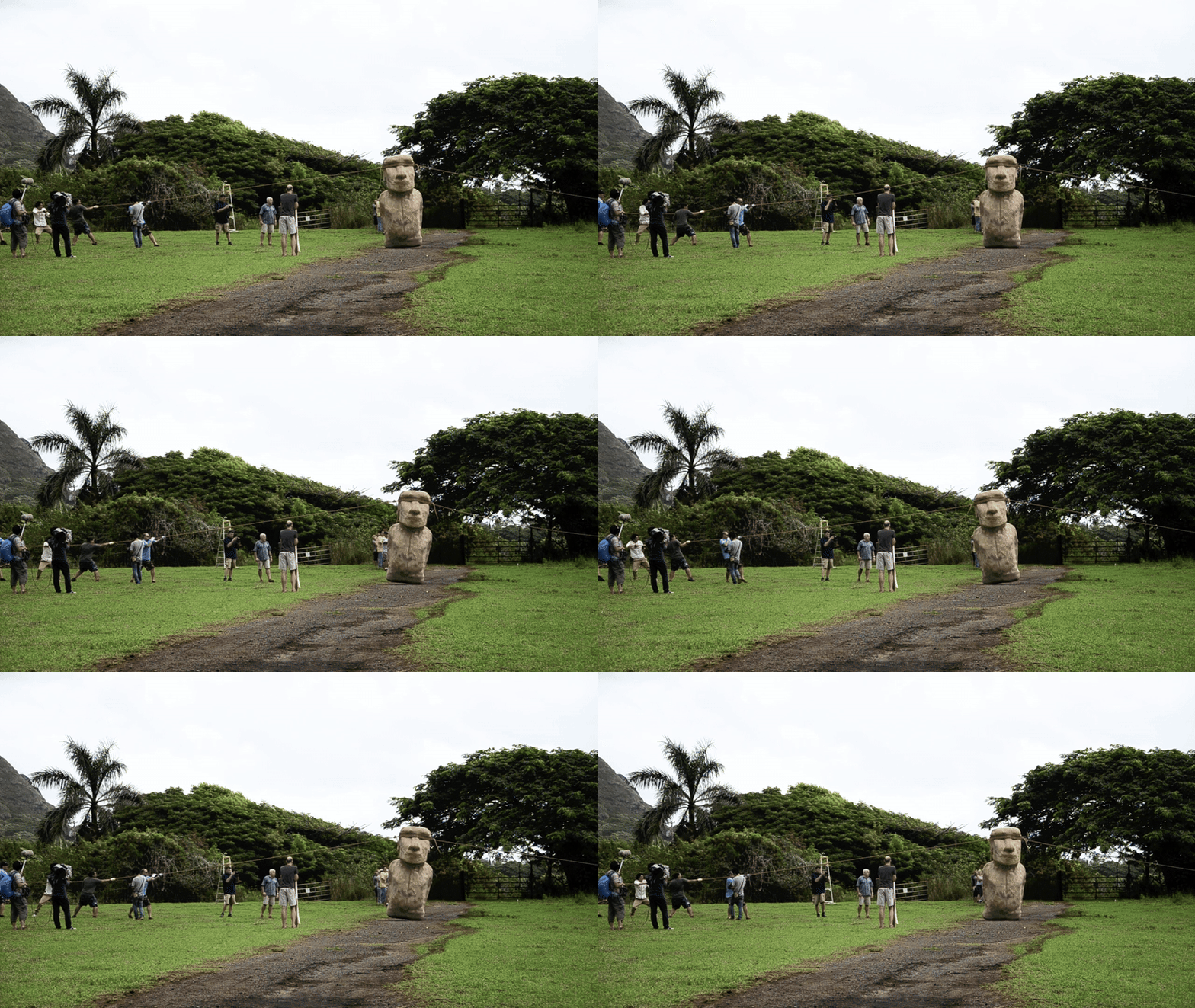
For decades, the mystery of how the ancient rapa Nui people moved the massive stone statues – known as moai – across Easter Island (Rapa Nui) has captivated archaeologists and the public alike. Now, a new study offers compelling evidence supporting the “walking” hypothesis, suggesting these colossal figures weren’t dragged, but rocked into place. Let’s dive into the details of this captivating research and what it means for our understanding of this remarkable culture.
(Image: JDvWvDBALg9YbTybDXfyiH-320-80.png.webp 320w” sizes=”(min-width: 1000px) 970px, calc(100vw – 40px)”/>)
Example of a road moai that fell and was abandoned after an attempt to re-erect it by excavating under its base, leaving it partially buried at an angle. (Image credit: Carl Lipo)
the Mystery of the Moai Movement
The moai, some weighing over 100 tons, were carved from volcanic rock at a quarry called Rano Raraku and transported across the island to ceremonial platforms called ahu. customary theories proposed the statues were moved using complex systems of logs, ropes, and manpower – essentially, dragging them. However, this method presents logistical challenges, particularly considering the island’s limited tree resources.
The ‘Walking’ Moai Hypothesis Gains Traction
Researchers Carl Lipo and Terry Hunt, along with their team, have been championing the “walking” hypothesis for years. Their latest research, published recently, provides further support for this idea. It proposes the moai were maneuvered upright using a rocking motion, pivoting on a D-shaped base.
Here’s how it likely worked:
* The Pivot Point: The D-shaped base of the moai acted as a crucial pivot point.
* Rope Teams: Teams of people used ropes attached to the statue’s head to pull and initiate a rocking motion.
* Pendulum Effect: Once in motion, the pendulum-like swing of the moai reduced the effort needed to continue “walking.”
* Step-by-Step Progress: Each rock forward constituted a “step,” gradually moving the statue towards its destination.
Evidence Supporting the Theory
The team’s research isn’t just theoretical. They’ve identified several key pieces of evidence:
* Road Moai Characteristics: Moai found along ancient roads consistently lack eye sockets. This suggests the finishing touches – including carving the eyes – were completed after the statue reached its final location.
* Physical Modeling: The researchers modeled the physics of this ”walking” motion, factoring in the moai’s weight and irregular shapes.
* Workforce Requirements: Their calculations indicate a surprisingly small workforce was needed. Depending on the size of the moai, only 15-60 people were required to start the movement, and just 5-25 to sustain it.
* Efficient transport: The modeling suggests the moai could “walk” an average of 1,000 feet (310 meters) per hour. A typical 6.2-mile (10 km) journey would require approximately 11,000 steps.
This demonstrates a remarkably efficient method of transport, especially considering the available resources.
An Expert Weighs In
Sue Hamilton, an archaeologist and professor of prehistory at University Collage London, calls the research “an ingenious and worthwhile contribution to the discussion.” However, she cautions that the evidence remains open to interpretation.
Hamilton points out that the unique characteristics of the road moai could be due to different ceremonial purposes, varying skill levels among the builders, or simply a change in trends over time. She emphasizes that while this research demonstrates the possibility of upright movement, it doesn’t definitively prove it was the method used.
The Ongoing Debate
Lipo and Hunt maintain that their hypothesis best accounts for the totality of the evidence. They argue that critics haven’t offered viable alternatives that explain all the observed data.
The mystery of
Worth a look
- Proof of Health™: How XRP Healthcare Is Redefining AI-Driven Healthcare Rewards
- Nadie te lo cuenta: la razón por la que un conductor evita sentarse cuando viaja en metro o …
- Rhode Island State Police News Update: Winy Radio Report (news-usa.today)
- Alison Hammond Reveals Why She Initially Rejected ‘This Morning’ Role (archyde.com)