An escalating Ebola epidemic in the eastern region of the Democratic Republic of the Congo is spreading, with health authorities warning that the current outbreak threatens to eclipse the devastating 2014–2016 crisis in West Africa. The outbreak, which has officially recorded more than 4,300 cases and claimed 2,000 lives since authorities announced it on May 15, is driven by the rare Bundiyugyo strain of the virus, for which no authorized vaccine or treatment currently exists, according to global health officials.
The relentless spread has ignited urgent concerns over whether the deadly infectious disease could breach the capital city of Kinshasa, home to roughly 19 million people.
“If a case is suspected, the epidemiological services and the INRB laboratory are prepared to detect it quickly,” Jean-Jacques Muyembe stated. “The Ministry of Health has conditioned the Cinquantenaire hospital so that, if necessary, it can accommodate patients and isolate them completely. We are prepared. We can quickly contain an outbreak of Ebola here in Kinshasa.”
Surge in Ituri and Kivu Provinces Stretches Health Infrastructure
The epicentro of the crisis remains concentrated in the northeastern province of Ituri, an area heavily impacted by persistent insecurity and a large population of internally displaced persons. Additional clusters of cases continue to overwhelm healthcare workers in North Kivu and South Kivu, where ongoing security challenges severely hamper containment efforts. World Health Organization (WHO) Director-General Tedros Adhanom Ghebreyesus noted that the epidemic is moving faster than health systems can track, projecting that the outbreak’s peak may still be six months away.
“The outbreak got a big head start on us and is still way ahead of us. Now we are trying to catch up,” Tedros Adhanom Ghebreyesus stated. To effectively break transmission chains, health agencies estimate that tracing must capture 95 percent of all contacts of infected individuals, a significant jump from the current 80 percent threshold. Public health officials indicate that thousands of additional healthcare workers must be trained, and treatment bed capacity must triple to reach 3,000.
Sylvie Briand, a senior scientist at the WHO, confirmed that no dangerous mutations of the virus have been observed in the Congo. Instead, epidemiologists attribute the rapid transmission to intense population movements, persistent regional violence, and complex socioeconomic factors rather than viral evolution.
Heightened Alert and Emergency Preparations in Kinshasa
A sense of profound anxiety grips residents in Kinshasa, located roughly 2,000 kilometers from the active conflict zones. Tensions peaked recently when authorities intercepted a vessel at the Port of Maluku, situated about 65 kilometers upstream from the capital, following reports that a passenger had disembarked in Mongala province exhibiting classic symptoms of fever and diarrhea before dying.
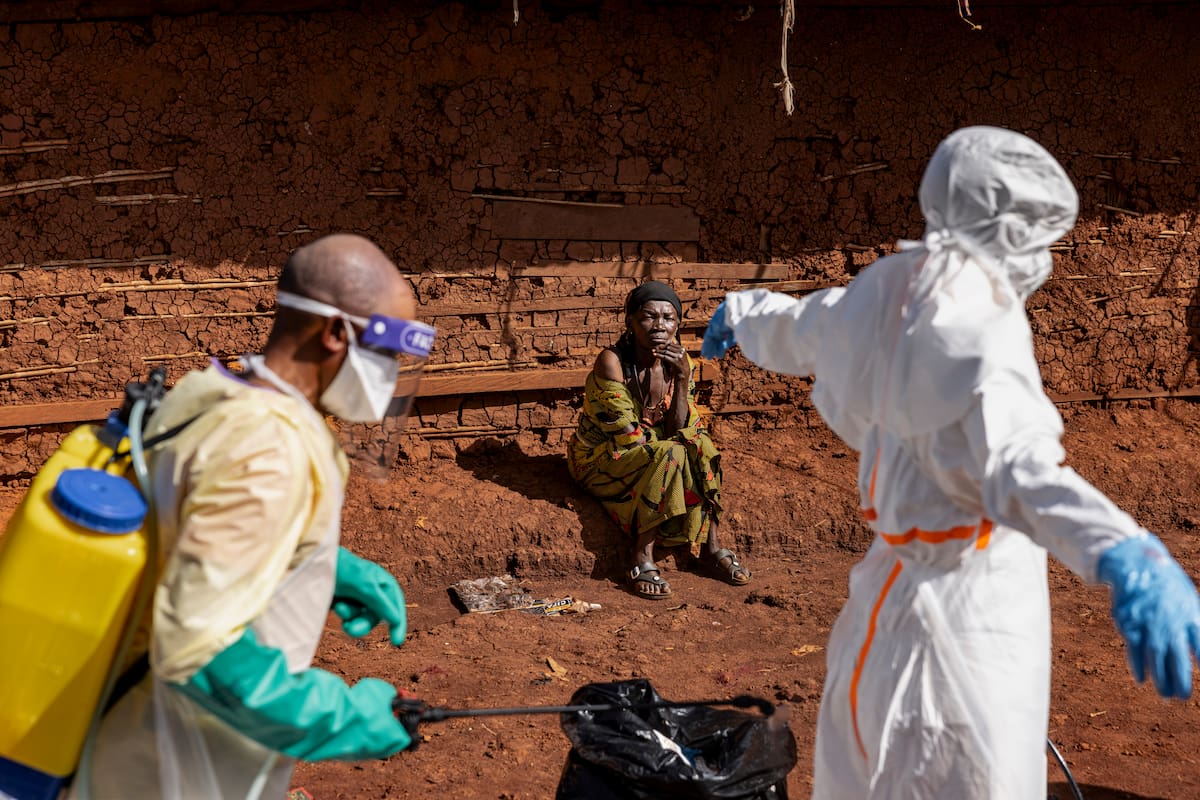
More than 200 passengers aboard the vessel were immediately quarantined while mobile laboratories operated by the Ministry of Health and the WHO conducted screening tests. All diagnostic results returned negative. Despite the negative tests, health authorities acknowledge that accommodating a large-scale influx of patients remains a formidable logistical hurdle for the sprawling metropolis.
“We have set aside twenty beds for this purpose. However, this capacity is flexible and can be expanded to reach between 200 and 250 beds,” Christian Ngandu, coordinator at the Cinquantenaire hospital, explained.
Clinical Trials and Therapeutic Responses
Transmission of the virus occurs through direct physical contact and bodily fluids, triggering severe illness characterized by high fever, gastrointestinal distress, and hemorrhaging. In response to the widening emergency, clinical trials utilizing two antiviral treatments began in early July, alongside ongoing research into candidate vaccines.
As international agencies work to reinforce diagnostic networks and supply chains, the timeline for curbing the epidemic remains tightly bound to security improvements in the eastern provinces and the scale of community engagement. Health authorities continue to urge vigilance as monitoring teams track cross-provincial transit routes to prevent the pathogen from penetrating densely populated urban centers.
Keep reading