
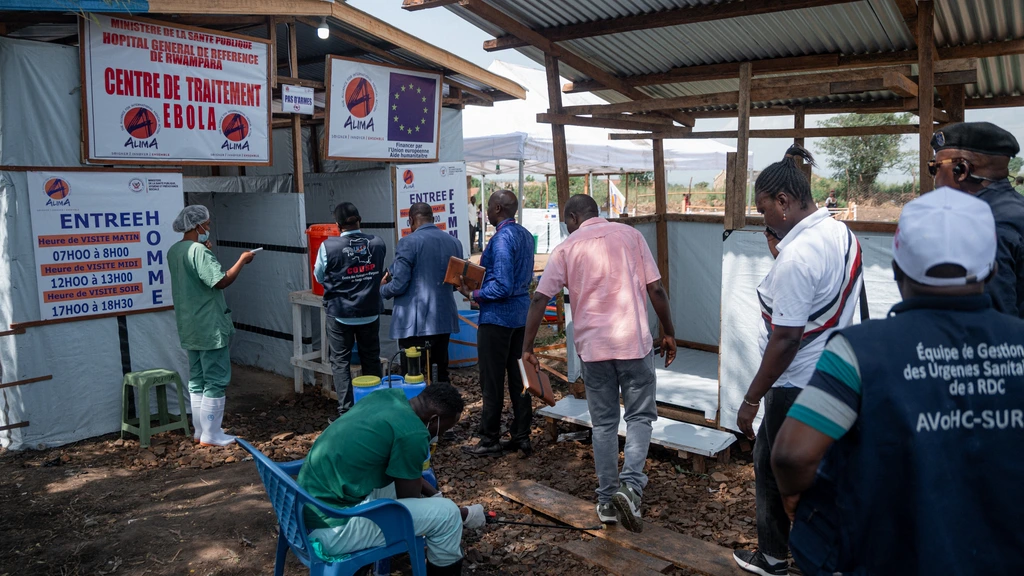
A fire at an Ebola treatment center in the Democratic Republic of the Congo has resulted in at least one fatality, forcing patients and medical staff to flee the facility. The incident occurred amidst ongoing regional efforts to contain a persistent Ebola virus outbreak, complicating humanitarian operations in affected provinces.
Incident Overview and Patient Safety
Local health officials confirmed that the fire broke out at a dedicated Ebola treatment unit, causing significant damage to the structure and disrupting medical care for those undergoing treatment. According to reports from the World Health Organization (WHO) and regional health authorities in the Democratic Republic of the Congo, the chaotic scene led to patients leaving the center, raising concerns about the potential for further virus transmission within the community. The exact cause of the fire remains under investigation by local authorities, who are working to ensure the safety of both the displaced patients and the healthcare workers on site. Official updates regarding the status of the facility and the recovery of the displaced individuals can be monitored through the World Health Organization Regional Office for Africa.

Challenges in Ebola Containment
The Democratic Republic of the Congo has faced recurring challenges in managing Ebola outbreaks, particularly in high-density areas such as North Kivu and Ituri. The logistical difficulty of operating treatment centers in remote or conflict-affected regions is compounded by community mistrust and limited infrastructure. As noted by the Centers for Disease Control and Prevention (CDC), the transmission of the virus is primarily managed through rigorous contact tracing, the isolation of infected individuals, and the implementation of safe burial practices, all of which are severely hindered when treatment centers are compromised.

Healthcare providers in the region, such as those operating in Beni, have previously reported the need for specialized equipment—including plexiglass barriers and consistent supplies of medical-grade hand sanitizer—to maintain infection control standards. These measures are essential to prevent the spread of the virus to neighboring provinces, a concern that has been documented as the virus has expanded its geographical reach in recent years.
Medical Innovation and Ongoing Research
Despite the operational hurdles, significant strides have been made in clinical research regarding Ebola treatments. In recent years, international research consortiums have launched clinical trials in the Congo to test the efficacy of various therapeutic interventions. Data from these trials, coordinated in part by the World Health Organization, provide a framework for treating patients with monoclonal antibodies and other experimental antiviral medications. These advancements have improved survival rates for those who receive care early in the progression of the disease, making the security of treatment centers a critical factor in public health outcomes.
The Impact of Infrastructure on Public Health
The destruction of health infrastructure serves as a reminder of the fragility of the public health response in the region. When a facility is damaged, the immediate loss of access to life-saving care is only one part of the problem; the loss of public confidence in the healthcare system can be equally damaging. Health policy experts emphasize that sustainable control of the virus requires not only medical resources but also the physical security of the clinics where these treatments are administered. The Humanitarian Response portal for the DRC continues to track the allocation of resources and the operational status of clinics across the affected provinces.

Next Steps for Health Authorities
Authorities are currently conducting an assessment to determine the extent of the damage and the timeline for restoring services at the site. The primary focus remains on locating the patients who fled the facility to ensure they continue their treatment and do not inadvertently spread the virus. Further updates are expected as local health departments coordinate with international partners to stabilize the situation. Readers interested in the latest developments regarding public health directives in the Congo are encouraged to consult official bulletins from the Ministère de la Santé Publique, Hygiène et Prévention of the Democratic Republic of the Congo.
We will continue to monitor the situation as official reports are released. Please share your thoughts in the comments section below or join the conversation on our social media platforms.