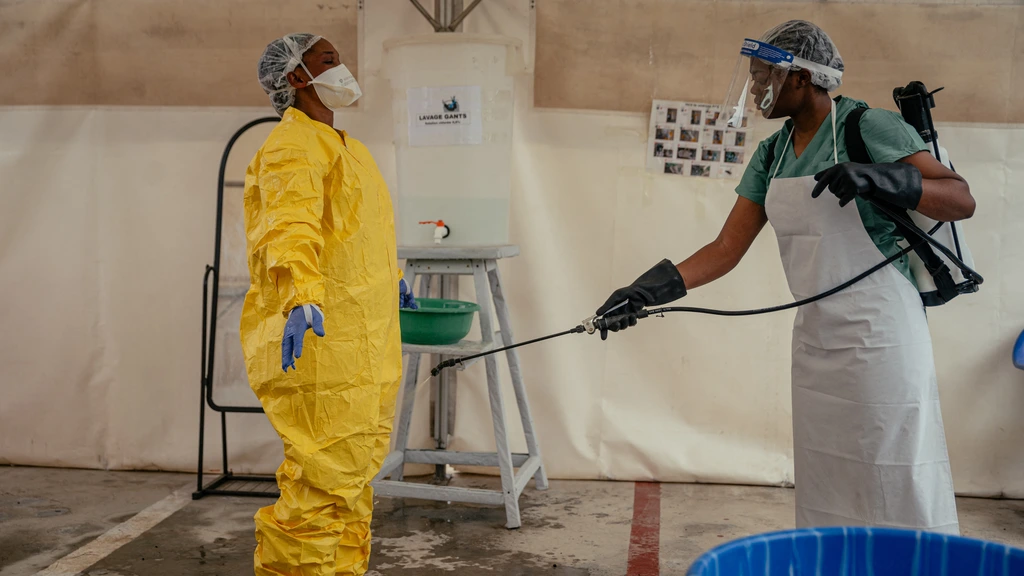
BERLIN — In the complex landscape of infectious disease management, a sudden drop in reported numbers does not always signal the end of a crisis. In the Democratic Republic of the Congo (DRC), recent data suggests a significant downward trend in the number of suspected Ebola cases. While this may initially appear to be a sign of containment, health experts are clarifying that this shift is largely the result of a massive scale-up in diagnostic testing and more rigorous contact tracing protocols.
For weeks, the rapid spread of the Ebola virus in the eastern provinces of the DRC had sparked intense concern among international humanitarian organizations. However, as medical teams and local health authorities deploy more sophisticated testing kits and increase the frequency of laboratory analysis, the “noise” of unverified clinical symptoms is being replaced by the precision of molecular confirmation. This transition from suspicion to certainty is a critical milestone in managing the current public health challenge.
As we monitor the situation, It’s essential to distinguish between a decrease in actual viral transmission and an increase in our ability to identify exactly who is infected. The current trend in the Congo highlights a pivotal moment in the battle against the virus: the move from reactive crisis management to proactive, data-driven epidemiological surveillance.
The Diagnostic Paradox: Why More Testing Leads to Fewer Suspected Cases
To the layperson, a decrease in reported cases often implies that a disease is receding. In the context of an Ebola outbreak, the reality is often more nuanced. In the early stages of an epidemic, health workers often rely on “suspected” cases—individuals presenting with classic symptoms such as high fever, severe headache, muscle pain, and unexplained bleeding. Because these symptoms overlap with many other endemic diseases in the DRC, including malaria and typhoid fever, the number of suspected cases can skyrocket during an outbreak.
However, as diagnostic capacity improves, the medical community can perform more rapid and accurate Polymerase Chain Reaction (PCR) testing. This allows clinicians to differentiate between a patient who is merely febrile and one who is actually carrying the Ebola virus. According to recent updates from the World Health Organization (WHO), the surge in testing capabilities in the DRC is directly responsible for refining these numbers. When a “suspected” case is tested and returns a negative result, it is removed from the suspected tally, even if the patient remains ill with another ailment. This process significantly reduces the number of unconfirmed cases, providing a much clearer picture of the true epidemiological spread.
This increase in precision is vital for resource allocation. By knowing exactly where the virus is active, international responders can direct vaccines, personal protective equipment (PPE), and specialized medical teams to the specific clusters that require urgent intervention, rather than spreading resources too thin across a wide net of unverified suspects.
The Humanitarian Warning: Speed of Transmission vs. Response Capacity
Despite the encouraging news regarding diagnostic precision, the humanitarian sector remains on high alert. Médecins Sans Frontières (MSF), also known as Doctors Without Borders, has expressed significant concern regarding the velocity of the current outbreak. In recent field reports, MSF personnel have noted that the virus has demonstrated a speed of transmission that challenges traditional containment models.
The primary concern is not just the number of cases, but the speed at which the virus moves through mobile populations and high-density communities. In the eastern DRC, where conflict and displacement are frequent, the ability to conduct effective contact tracing—the process of identifying and monitoring everyone who has come into contact with an infected individual—is hampered by logistical and security challenges. If the virus spreads faster than the “ring” of contact tracing can be established, the outbreak can move from a localized cluster to a regional crisis before health authorities can react.
The tension between the improving diagnostic data and the warnings from frontline clinicians underscores the precarious nature of the situation. While the “suspected” numbers are falling, the biological reality of the virus remains a potent threat that requires constant vigilance and sustained international support.
Scientific Collaboration: The Role of International Expertise
The effort to contain the outbreak is a global endeavor, involving a sophisticated network of academic institutions, NGOs, and governmental bodies. One notable example of this international cooperation is the involvement of experts from the University Medical Center Groningen (UMCG) in the Netherlands. Specialists such as infectious disease expert Joost Hopman have been instrumental in providing the technical expertise necessary to support local health systems in East Africa.

This type of academic-clinical partnership is crucial for several reasons:
- Epidemiological Modeling: Using complex data sets to predict where the next cluster of cases might emerge.
- Technical Training: Ensuring that local healthcare workers are proficient in the latest biosafety protocols and diagnostic techniques.
- Resource Coordination: Bridging the gap between high-level research and the practical, on-the-ground needs of clinics in remote areas.
This collaborative model ensures that the response in the DRC is not just a localized effort, but one informed by the best available global science. It allows for the rapid implementation of lessons learned from previous outbreaks in the region, creating a more resilient healthcare infrastructure.
Understanding the Ebola Virus: Biology and Transmission
To understand why the response in the Congo is so intensive, it is necessary to understand the nature of the pathogen itself. Ebola is caused by an infection with a group of viruses within the genus Ebolavirus. It is a zoonotic disease, meaning it is transmitted from animals to humans, often through contact with the blood, secretions, or organs of infected wildlife, such as fruit bats or primates.
Once a human is infected, the virus spreads through direct contact with the bodily fluids of an infected person—either living or deceased. This makes the management of burials and the care of the sick the most critical components of any containment strategy. The clinical progression of the disease can be rapid and devastating, often characterized by:
- Initial Phase: Sudden onset of fever, fatigue, muscle pain, and headache.
- Gastrointestinal Phase: Vomiting, diarrhea, and abdominal pain.
- Advanced Phase: Internal and external bleeding (hemorrhaging), organ failure, and, in many cases, death.
The high fatality rate associated with Ebola makes it one of the most feared pathogens in existence. However, modern medical advancements have significantly changed the prognosis for those who receive early, specialized care. The development of effective vaccines and monoclonal antibody treatments has turned what was once an almost certain death sentence into a manageable, albeit critical, medical emergency.
The Modern Toolkit: Vaccines and Monoclonal Antibodies
The landscape of Ebola treatment has been revolutionized in the last decade. We are no longer in an era where People can only offer supportive care (fluids and symptom management). Today, the medical response in the DRC utilizes two primary pillars of innovation:
1. The Ervebo Vaccine
The rVSV-ZEBOV vaccine (marketed as Ervebo) has been a game-changer. It is used in a “ring vaccination” strategy, where the vaccine is administered to the contacts and contacts-of-contacts of a confirmed case. This creates a human buffer zone that effectively halts the chain of transmission.
2. Monoclonal Antibody Treatments
Recent clinical trials have paved the way for the use of monoclonal antibodies, such as Ebanga and Inmazeb. These treatments work by targeting the virus directly, preventing it from entering human cells. When administered early in the course of the illness, these therapies have shown a significant increase in survival rates, providing a crucial lifeline to patients in the most affected regions.

The challenge remains the “last mile” of delivery—getting these highly specialized, temperature-sensitive medical products into the most remote and insecure parts of the Congo. This requires not just medical science, but extraordinary logistical and humanitarian coordination.
Key Takeaways for Global Health Observers
- Data Refinement: The decline in “suspected” Ebola cases is primarily due to increased diagnostic precision and PCR testing, not necessarily a decrease in viral presence.
- Transmission Risks: MSF warns that the speed of viral spread remains a high-priority threat, particularly in areas with high population mobility.
- International Support: Success depends on the integration of local healthcare workers with global experts (e.g., UMCG) and organizations (WHO, MSF).
- Medical Advancements: The availability of the Ervebo vaccine and monoclonal antibodies has fundamentally improved survival rates and containment potential.
Looking Ahead: The Next Critical Checkpoints
As the situation evolves, the international community will be looking for several key indicators to determine if the outbreak is truly being brought under control. The focus will shift from the number of “suspected” cases to the stability of “confirmed” case numbers and the successful completion of contact tracing cycles.
The next critical milestones include:
- WHO Weekly Epidemiological Updates: These reports will provide the most authoritative data on confirmed vs. Suspected case ratios.
- Field Reports from MSF: These will offer real-time insights into the logistical challenges and the actual speed of transmission on the ground.
- Vaccination Coverage Audits: Monitoring the percentage of “rings” successfully vaccinated in high-risk zones.
For more in-depth analysis on global health crises and medical innovation, please subscribe to the World Today Journal Health Newsletter. What are your thoughts on the balance between diagnostic precision and rapid response? Let us know in the comments below.
Dr. Helena Fischer
Editor, Health, World Today Journal