In an era where the “Alpha generation” consumes information in rapid-fire bursts of creativity, traditional environmental campaigns are evolving. The latest shift is taking place in South Korea, where a long-standing youth competition is pivoting toward the digital habits of today’s children by integrating short-form video content into its core curriculum of environmental activism.
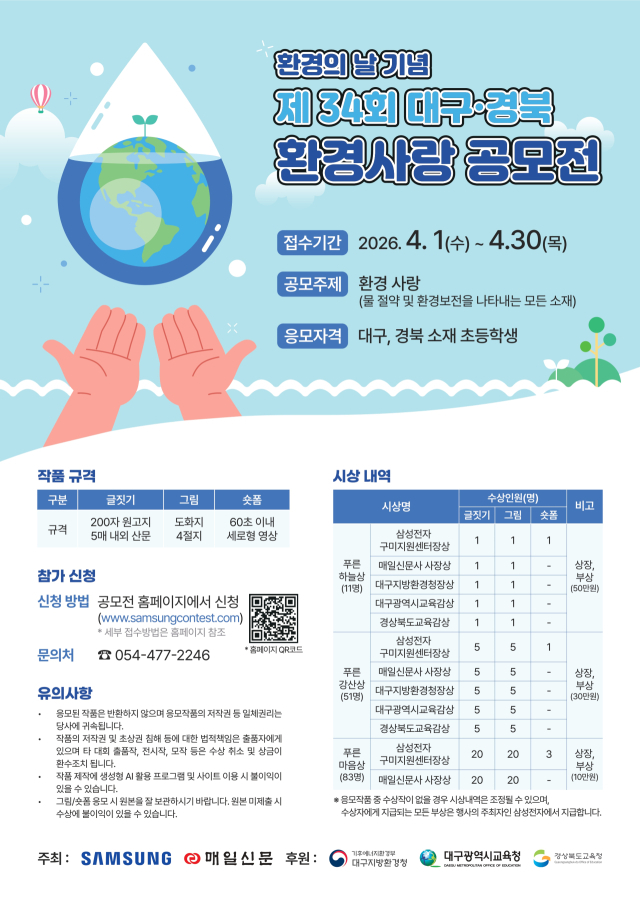
The Daegu-Gyeongbuk Environmental Love Contest, now in its 34th year, has officially opened its doors to elementary students across the Daegu and Gyeongbuk regions. Jointly hosted by Samsung Electronics and Maeil Shinmun, the competition seeks to engage young minds in the critical issues of water conservation and environmental preservation through a mix of classic art and modern digital media.
For the first time, the contest has introduced a “short-form” category specifically designed to lower the barrier to entry and resonate with students who are already fluent in the languages of TikTok and Instagram Reels. By allowing participants to submit 60-second vertical videos, organizers are leveraging the technology that defines the current youth experience to foster a deeper connection with ecological sustainability.
Bridging the Gap: Short-Form Media and Environmentalism
The decision to introduce a 60-second video category is a strategic response to the changing media consumption patterns of elementary students. Short-form content—characterized by its vertical orientation and concise storytelling—has become the primary medium for self-expression among the Alpha generation. By aligning the contest’s format with these preferences, the organizers aim to produce environmental advocacy feel less like a school assignment and more like a creative digital project.
The competition encourages students to use these digital tools to highlight themes of “environmental love,” with a specific focus on water conservation and general environmental preservation. This approach transforms the act of learning about ecology into an act of content creation, encouraging students to synthesize complex environmental problems into impactful, bite-sized narratives.
Contest Guidelines and Submission Categories
The 34th edition of the contest maintains its commitment to diverse forms of expression, offering three distinct categories to ensure that students with different talents can participate. The submission window is open from April 1, 2026, to April 30, 2026.
Eligibility is limited to elementary school students currently residing or attending school within the Daegu and Gyeongbuk regions. Depending on their preference, students can enter via one of the following formats:
| Category | Required Specifications |
|---|---|
| Short-form Video | Vertical video, 60 seconds or less |
| Writing | Prose format, approximately 5 pages of 200-character manuscript paper |
| Drawing | 4-cut drawing paper (standard size) |
Incentives and Recognition for Young Activists
To drive participation and reward creativity, the contest offers a significant prize pool and high-profile recognition. The total prize money for the event is 30 million KRW, reflecting the scale and importance of the initiative.

Among the top honors is the “Pureun Gangsan” (Green Mountain/River) award. Winners of this prestigious category receive a cash prize of 500,000 KRW, along with an invitation to visit Samsung Electronics and the honor of having their work exhibited. Winning entries will be displayed at the Samsung Electronics Gumi plant, providing students with a rare opportunity to see their environmental message showcased within one of the world’s leading technology hubs.
Key Takeaways for Participants
- Submission Deadline: All entries must be submitted by April 30, 2026.
- Core Themes: Focus on water conservation and the protection of the natural environment.
- Digital Pivot: The new 60-second vertical video format is specifically designed for the Alpha generation.
- Eligibility: Open exclusively to elementary students in the Daegu and Gyeongbuk areas.
- Major Rewards: Total prizes of 30 million KRW and exhibition opportunities at Samsung Electronics Gumi.
The Broader Impact of Tech-Driven Education
From a technological perspective, this contest represents a broader trend of “gamifying” or “digitizing” civic education. When students use software to edit a 60-second clip about water scarcity, they are not just learning about biology or geography; they are practicing digital literacy, narrative pacing, and visual communication. This intersection of software skill and social consciousness is where modern education is heading.
By partnering with a global tech giant like Samsung Electronics, the contest also signals to students that the technology industry views environmental sustainability as a priority. The transition from traditional manuscript paper to vertical video reflects a world where the tools of advocacy are changing, but the necessity of the message—protecting the planet—remains constant.
The final results and award winners are expected to be announced in June 2026 via the official contest website and through participating schools.
We invite readers to share their thoughts on the use of short-form media in education in the comments below. Do you believe TikTok-style formats are effective for teaching serious global issues?