The coastal city of Tuapse in Russia’s Krasnodar region is grappling with a severe ecological disaster following a series of Ukrainian strikes on a critical oil refinery. The attacks have triggered massive fires and the subsequent leakage of petroleum products into the Black Sea and the Tuapse River, leaving residents to contend with a landscape scarred by oil and toxic fallout.
The scale of the environmental damage became starkly apparent as reports emerged of black rain
falling over the city—a phenomenon caused by the combustion of oil and chemicals during the refinery blaze. This toxic precipitation, combined with the spill, has led to widespread reports of bird deaths and contaminated air, turning a strategic military target into a localized humanitarian and ecological crisis.
As of late April 2026, Russian emergency services have been working around the clock to mitigate the damage. According to a report from TASS, professionals have gathered 4,165 cubic meters of soil contaminated by oil products and a fuel oil-water mix, using excavators to clear the shoreline and water surfaces.
Refinery Strike and Immediate Environmental Impact
The disaster originated from Ukrainian drone strikes targeting the Tuapse refinery, a facility that processes approximately 12 million metric tons of crude oil annually. The strikes ignited intense fires that were difficult to extinguish, sending plumes of dark smoke into the atmosphere and causing petroleum products to overflow into the surrounding environment. The Moscow Times reported on April 24, 2026, that the resulting pollution has devastated local wildlife, specifically citing bird deaths as a direct consequence of the oil spill and toxic air quality.
The atmospheric impact was particularly severe, with satellite imagery from the Copernicus Sentinel on April 16 showing extensive smoke cover over the port city and its coastal surroundings. This smoke eventually condensed into a polluted rain that fell on the urban center, raising immediate concerns regarding public health and long-term soil toxicity.
The Scale of the Spill
While the Russian government has attempted to manage the narrative, the physical evidence on the ground suggests a significant failure in containment. The spill has affected both the maritime environment of the Black Sea and the freshwater ecosystem of the Tuapse River. The process of recovery has been slow, with the Ministry of Emergency Situations deploying heavy machinery to remove the thick sludge of oil and contaminated earth from the coast.
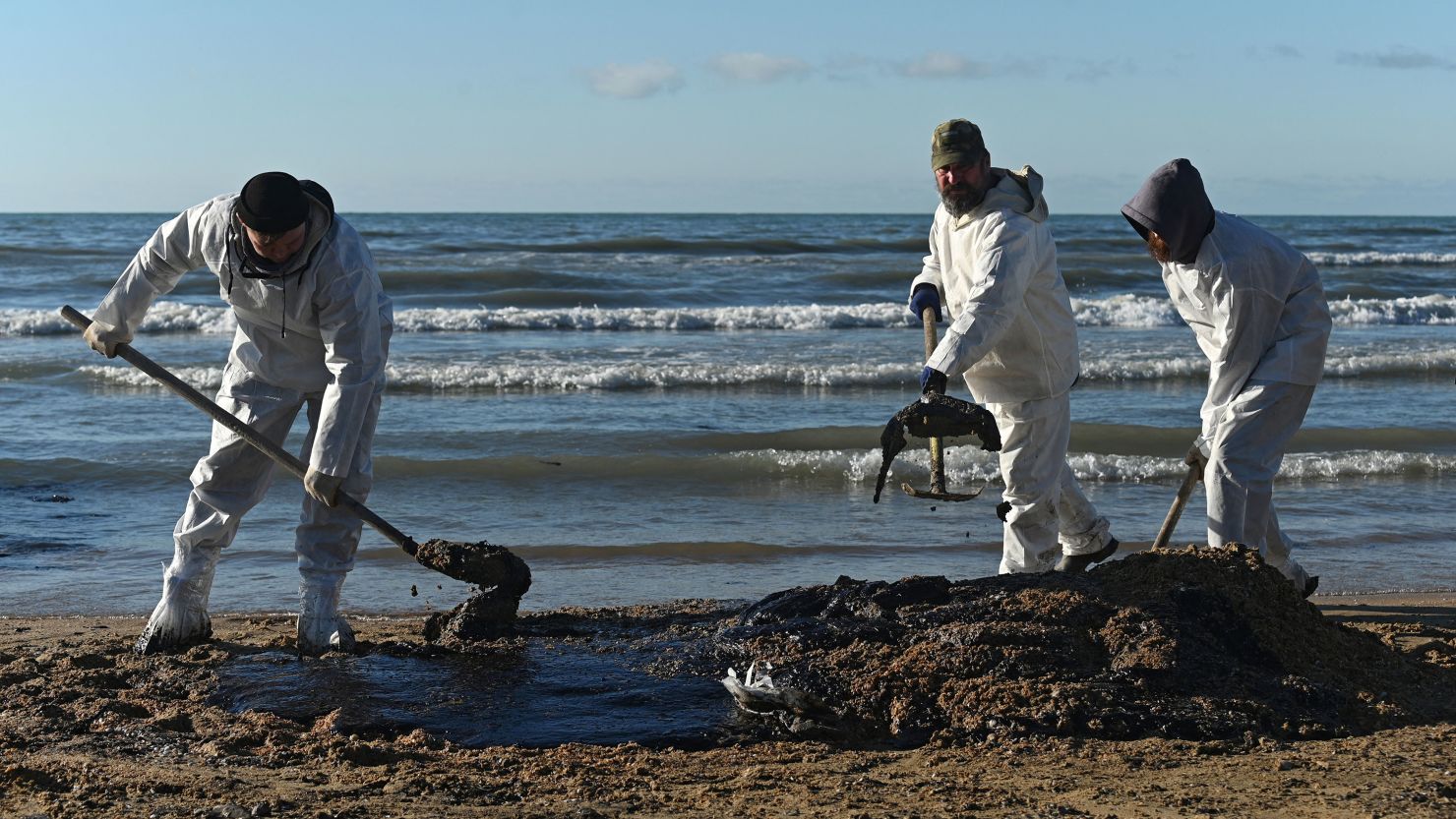
The volume of recovered material—over 4,000 cubic meters—indicates that the spill was not a minor leak but a systemic failure of the refinery’s storage and containment infrastructure following the kinetic impact of the drones.
Government Response and Crisis Management
The Kremlin’s response has been characterized by a mixture of emergency mobilization and an effort to minimize the perceived severity of the disaster. On April 28, 2026, Russian President Vladimir Putin reportedly ordered the Minister of Civil Defense, Emergencies, and Elimination of Consequences of Natural Disasters, Alexander Kurenkov, to travel to Tuapse immediately to oversee the recovery efforts, as reported by Pravda EN.
Despite the deployment of high-level officials, local residents and environmental observers have noted a gap between official statements and the reality of the pollution. The government’s focus has remained on the “containment” of the spill, yet the long-term ecological risks—such as groundwater contamination and the collapse of local marine biodiversity—remain largely unaddressed in official briefings.
Ecological Risks and Long-term Consequences
Environmental experts warn that the immediate removal of surface oil is only the first step in a long recovery process. The “black rain” has deposited heavy metals and hydrocarbons into the city’s soil and drainage systems, which could lead to secondary pollution of the water table. The impact on the Black Sea’s coastal ecosystem may be permanent for certain species of fish and migratory birds that rely on the Tuapse shoreline.
The refinery’s role as a major economic hub—processing millions of tons of oil—means that any prolonged shutdown or failure in safety protocols not only affects the environment but also disrupts the regional energy supply chain. However, the priority for the local population remains the immediate toxicity of their air and water.
Summary of the Tuapse Ecological Crisis
| Date/Period | Event / Action | Impact/Outcome |
|---|---|---|
| Mid-April 2026 | Ukrainian drone strikes on refinery | Massive fires; oil leak into Black Sea and Tuapse River |
| April 16, 2026 | Copernicus Sentinel satellite imagery | Confirmed extensive smoke over Tuapse and coastal areas |
| April 24, 2026 | Reports of “black rain” and bird deaths | Atmospheric pollution and acute wildlife mortality |
| April 27, 2026 | Emergency cleanup operations | 4,165 cubic meters of contaminated soil/oil recovered |
| April 28, 2026 | Presidential order to Minister Kurenkov | High-level government intervention to manage the crisis |
The situation in Tuapse serves as a stark reminder of the “collateral” environmental cost of modern warfare. When industrial infrastructure—particularly oil refineries—becomes a target, the resulting ecological fallout often transcends the immediate military objective, creating a disaster that persists long after the fires are extinguished.
The next critical checkpoint for the region will be the publication of the full environmental impact assessment by the Russian Ministry of Natural Resources and Environment, which is expected to detail the extent of the seabed contamination and the recovery plan for the affected wildlife habitats.
We invite our readers to share this report and leave their comments below regarding the intersection of geopolitical conflict and environmental protection.
Worth a look