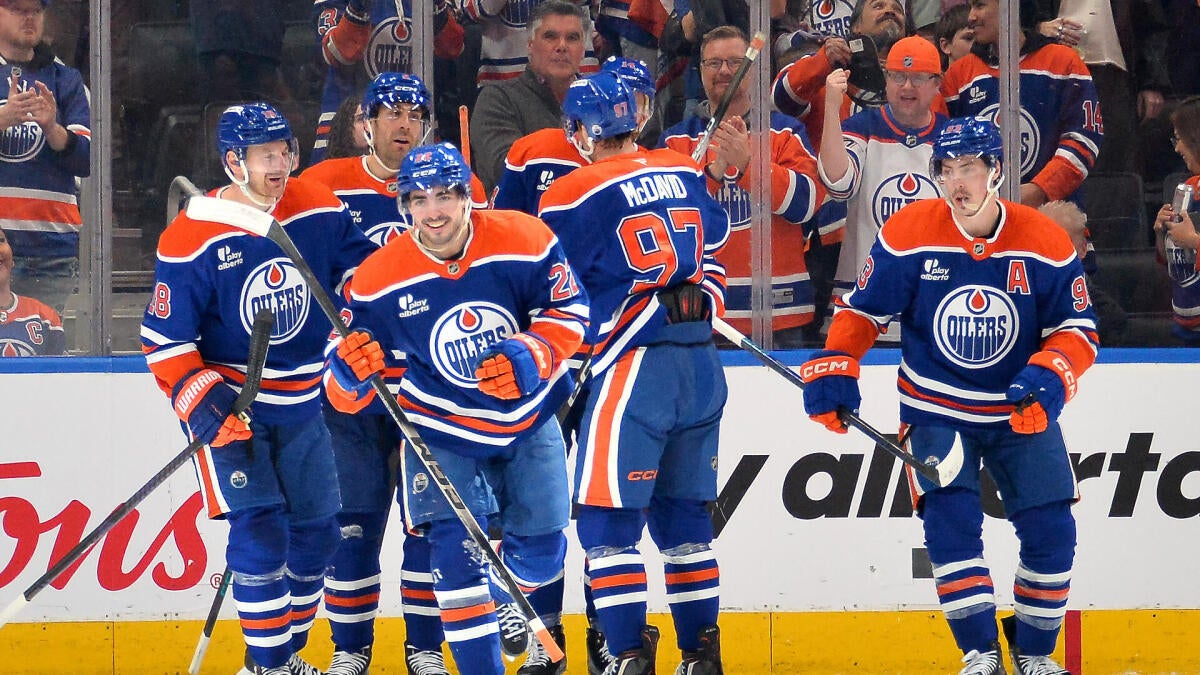
The Edmonton Oilers and Anaheim Ducks are set to meet in the first round of the 2026 Stanley Cup Playoffs, a Western Conference showdown that has drawn significant attention from fans and analysts alike. As the regular season concluded, both teams secured playoff berths through contrasting paths — Edmonton riding the offensive firepower of Connor McDavid and Leon Draisaitl, while Anaheim relied on a disciplined defensive structure and standout goaltending from Lukas Dostal. The series, scheduled to begin on April 16, 2026, at Rogers Place in Edmonton, marks the first playoff meeting between the two franchises since 2017, adding historical intrigue to a matchup shaped by evolving rosters and strategic adjustments.
Oddsmakers have positioned the Oilers as clear favorites in the series, with NHL futures odds reflecting Edmonton’s superior regular-season performance and star power. According to verified betting lines from major sportsbooks, Edmonton opened as a -180 favorite to win the series, while Anaheim was listed at +150 — odds that suggest a 64% implied probability for the Oilers to advance. These figures are consistent with Edmonton’s 112-point season, which ranked second in the NHL behind only the Florida Panthers, compared to Anaheim’s 94-point campaign that earned them the second wild-card spot in the West. The disparity in offensive production is stark: Edmonton led the league in goals per game (3.8), while Anaheim ranked 28th (2.4), a gap that analysts say could prove decisive in a best-of-seven series.
Despite the odds favoring Edmonton, Anaheim enters the postseason with momentum after a strong finish to the regular season, winning seven of their final ten games to clinch a playoff berth. Head coach Greg Cronin has emphasized defensive responsibility and structured neutral-zone play, a system that held opponents to under 2.6 goals per game in the second half of the season. Goaltender Lukas Dostal, who posted a .918 save percentage and 2.35 goals-against average in his 58 appearances, has been a cornerstone of that improvement. His performance in net — particularly his ability to handle high-danger chances — has drawn praise from peers and analysts, with some suggesting he could be the X-factor if the Ducks are to pull off an upset.
On the Edmonton side, the health and usage of Connor McDavid will be closely monitored. The Oilers captain finished the regular season with 123 points (44 goals, 79 assists), his second consecutive 100-point campaign and fifth overall. However, McDavid missed six games in March due to a lower-body injury, raising questions about his readiness for the physical demands of playoff hockey. Leon Draisaitl, who recorded 110 points (42 goals, 68 assists), remains a dual threat capable of taking over games offensively. Together, they form one of the most potent duos in NHL history, but their effectiveness will depend on how well Edmonton’s supporting cast — particularly wingers Zach Hyman and Evan Bouchard — can contribute offensively and defensively.
Special teams could also play a pivotal role in the series outcome. Edmonton’s power play, which converted at a 28.4% rate during the regular season (third-best in the NHL), has been a hallmark of their success under coach Kris Knoblauch. Anaheim’s penalty kill, meanwhile, ranked 15th at 81.2%, suggesting vulnerability if the Oilers can maintain discipline and generate sustained pressure. Conversely, Anaheim’s power play struggled at just 16.8%, ranking 29th in the league, while Edmonton’s penalty kill was solid at 83.1% (12th). This imbalance in special-teams efficiency further underscores the challenges Anaheim faces in trying to extend the series beyond four or five games.
Historical context adds another layer to the narrative. The Oilers and Ducks last met in the playoffs during the 2017 Western Conference Second Round, a series Anaheim won in six games en route to the Western Conference Final. That Ducks team, led by Ryan Getzlaf, Corey Perry, and John Gibson, relied on size, toughness, and goaltending to overcome a more skilled Oilers squad. Today’s Anaheim roster lacks that same veteran presence and physical identity, instead relying on speed, positional play, and emerging talent like rookie forward Leo Carlsson, who recorded 48 points in his first NHL season. The shift in team identity reflects broader changes in the NHL, where skill and transition play have increasingly outweighed traditional enforcer roles.
Injury status heading into the series remains a key unverified factor as of the latest reports. While no major long-term absences have been confirmed for either roster beyond McDavid’s earlier issue, day-to-day statuses for players like Oilers defenseman Mattias Ekholm (who missed time with a wrist strain in February) and Ducks forward Trevor Zegras (who dealt with a shoulder concern in late March) are being monitored. Neither team has issued official updates on playoff readiness as of April 14, 2026, leaving some uncertainty around lineup configurations for Game 1.
The winner of this series will advance to face either the Vegas Golden Knights or the Los Angeles Kings in the Western Conference Second Round, depending on outcomes in the other first-round matchups. Edmonton’s side of the bracket is considered more navigable on paper, with the Oilers avoiding the Pacific Division champion Panthers — who finished with the NHL’s best record — due to crossover seeding rules. Anaheim, by contrast, faces a steeper climb regardless of outcome, as both potential second-round opponents possess elite defensive cores and deep forward groups.
As the puck drops on April 16, the series will test not only talent and tactics but also mental resilience and adaptability. For Edmonton, the goal is to validate their regular-season excellence with deep playoff progress, a pursuit that has eluded them despite multiple 100-point seasons in the Connor McDavid era. For Anaheim, simply competing in a best-of-seven series against a top-tier opponent represents progress in a franchise rebuilding toward sustained competitiveness. Regardless of the outcome, the Oilers-Ducks matchup offers a compelling study in contrasting team-building philosophies and the unpredictable nature of postseason hockey.
Fans seeking real-time updates, official stats, and broadcast information can visit the NHL’s official website at nhl.com or consult the Oilers’ and Ducks’ respective team pages for schedule changes, injury reports, and media availability. The series will be televised nationally in the United States on ESPN and TNT, with streaming available via ESPN+ and Max in the U.S., and Sportsnet and CBC in Canada.
Stay tuned to World Today Journal for ongoing coverage of the 2026 Stanley Cup Playoffs, including game previews, analysis, and exclusive interviews as the tournament progresses. Share your thoughts on the Oilers-Ducks series in the comments below, and help us keep the conversation going by sharing this article with fellow hockey fans.
Related reading