
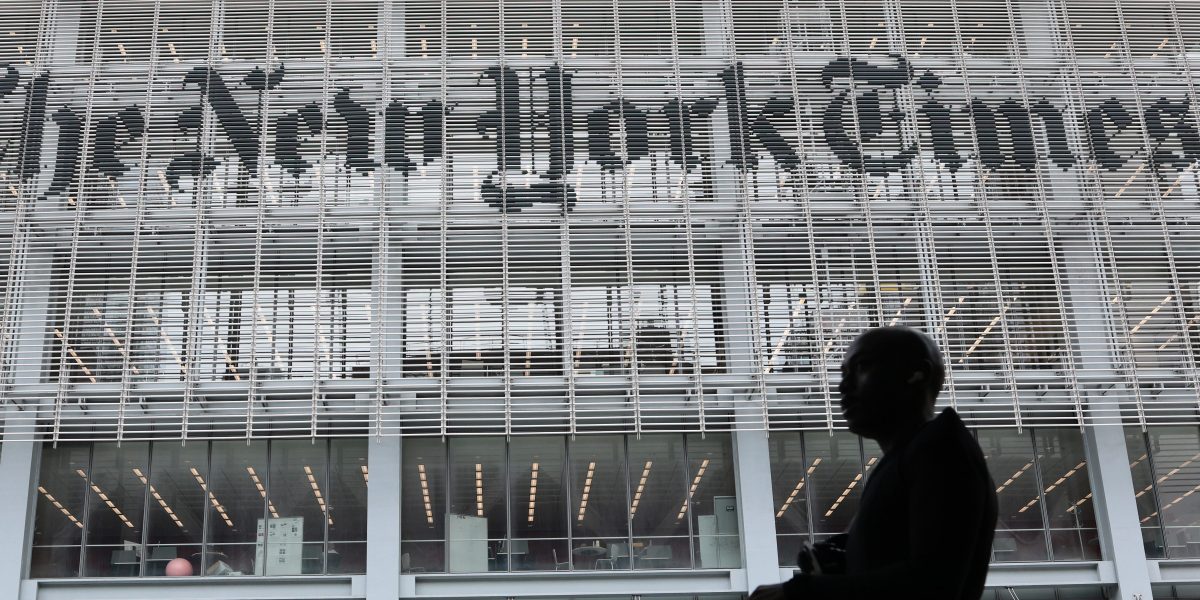
EEOC Lawsuit Against The New York Times: How a Controversial Lawyer and Political Priorities Reshaped Civil Rights Enforcement
The Equal Employment Opportunity Commission (EEOC), the federal agency established under the Civil Rights Act of 1964, has filed a lawsuit against The New York Times on behalf of a white male employee who claims he was passed over for a leadership position due to his race and sex. The case, filed May 6, 2026, is notable not only for its high-profile target but also for the involvement of Benjamin North, an assistant general counsel at the EEOC with a history of advocating for men’s rights cases—including his own disputed college disciplinary record.
The lawsuit alleges that The New York Times engaged in “unlawful employment practices” by prioritizing diversity goals over merit in hiring decisions. Legal experts, however, question whether the EEOC has presented sufficient evidence to support its claims, particularly given the agency’s strained resources and a history of political interference in civil rights enforcement.
This case comes amid a broader push by the Trump administration to reshape the EEOC’s enforcement priorities, with Chair Andrea Lucas directing staff to accelerate claims of “reverse discrimination” against white men. Critics argue this shift diverts attention from the agency’s core mission of protecting marginalized workers.
The EEOC’s Case: A Single Hiring Decision with Sweeping Claims
The EEOC’s complaint centers on a white male applicant who, according to the lawsuit, was denied a position as a deputy real estate editor in January 2025. The agency claims the candidate was qualified but rejected because he did not match the “race and/or sex characteristics” The New York Times sought to increase in its leadership ranks. Instead, the job went to a multiracial female candidate, whom the EEOC alleges was less qualified.

Legal scholars, however, have expressed skepticism about the strength of the EEOC’s argument. Chai Feldblum, a former EEOC commissioner and civil rights attorney, stated in a recent interview that “there is no actual evidence that he was more qualified than her.” She added that leadership hiring decisions involve multiple subjective factors beyond formal qualifications, making the EEOC’s claim difficult to prove.
“Their assertion that she was less qualified is based on their view of the facts,” Feldblum said. “We’ll see what the facts actually say when this goes to court.”

The New York Times has vehemently denied the allegations, calling them “politically motivated.” In a statement, spokesperson Danielle Rhoades Ha said the company’s hiring practices are “merit-based” and that the EEOC’s filing “ignores the facts to fit a predetermined narrative.” She noted that the disputed position is one of over 100 deputy roles across the newsroom, suggesting the claim lacks broader systemic significance.
Yet the lawsuit goes further, accusing The New York Times of engaging in “unlawful employment practices” since at least October 2024 through its diversity, equity, and inclusion (DEI) policies. The EEOC cites the company’s 2021 diversity goals, which aimed to increase Black and Latino leadership by 50% within four years. The lawsuit argues that such demographic targets inherently disadvantage white employees.
Feldblum countered that “a commitment to DEIA, without more, is not evidence of discrimination.” She explained that many employers use legal strategies to promote diversity, such as expanding candidate pools, without violating anti-discrimination laws. “One can include diversity as an employer without discriminating against white people,” she said.
Benjamin North: The Lawyer Behind the Lawsuit
The EEOC’s complaint is signed by Benjamin North, who was hired earlier this year as an assistant general counsel. North’s appointment has drawn scrutiny due to his past legal work advocating for men’s rights, particularly in cases involving Title IX—the federal law prohibiting sex discrimination in education. Critics argue his hiring reflects the EEOC’s new focus on claims of discrimination against men.
North’s background includes a disciplinary suspension during college over a rape allegation he has consistently denied. He later argued that Title IX had been weaponized against men, a stance that aligns with the EEOC’s current priorities under Lucas.
When asked about North’s role in the lawsuit, an EEOC spokesperson referred to the complaint itself, avoiding direct confirmation of his authorship. However, Feldblum suggested his involvement was significant: “North’s signature could mean he wrote it.”
North’s presence on the case has reignited debates about the EEOC’s impartiality. Legal observers note that the agency’s resources are at their lowest in decades, raising concerns about whether politically driven lawsuits divert attention from more pressing civil rights violations.
Political Priorities and the Future of Civil Rights Enforcement
The lawsuit against The New York Times is part of a larger pattern under the Trump administration, which has pushed the EEOC to prioritize claims of reverse discrimination. Chair Lucas has instructed staff to focus on cases alleging discrimination against white men, accelerating such claims through the agency’s process despite struggles to find meritorious cases.

Kalpana Kotagal, the sole Democratic commissioner on the EEOC, voted against authorizing the lawsuit, calling it a “poor use of scarce agency resources.” She argued that DEI initiatives alone do not constitute discrimination unless proven to be intentional and discriminatory.
Critics, including Feldblum, have warned that the EEOC’s shift could undermine its credibility. “It is truly a sad day for anyone who cares about civil rights to see what the EEOC is spending its resources on today,” she said, highlighting the agency’s strained capacity to address all forms of workplace discrimination.
A reporter at The New York Times, speaking to New York Magazine, framed the issue bluntly: “There are plenty of white guys at the top of The New York Times. Not really something that’s holding you back.”
Next Steps: Courtroom Battles and Broader Repercussions
The lawsuit is now in the discovery phase, where both sides will exchange evidence. Legal experts anticipate that The New York Times will challenge the EEOC’s interpretation of Title VII, arguing that its diversity goals are lawful and that the hiring decision was based on merit.
Beyond this case, the EEOC’s priorities under Lucas will likely face continued scrutiny. The agency’s decision to pursue high-profile lawsuits—particularly those aligned with the Trump administration’s anti-DEI agenda—risks alienating allies in Congress and the judiciary. Meanwhile, advocates for marginalized workers fear that the EEOC’s focus on reverse discrimination claims will leave fewer resources to combat systemic discrimination against women and minorities.
The outcome of this lawsuit could set a precedent for how employers navigate DEI policies under Title VII. For now, the case underscores the EEOC’s evolving role in an increasingly polarized legal landscape.
Key Takeaways
- Legal Merits in Question: The EEOC’s lawsuit against The New York Times lacks clear evidence that the hiring decision was based on race or sex, raising doubts about its legal standing.
- Political Influence: The case reflects the Trump administration’s push to reshape the EEOC’s enforcement priorities, focusing on claims of discrimination against white men.
- Resource Strain: The EEOC’s decision to pursue this lawsuit diverts attention from its core mission, with staffing at historic lows and limited capacity to address all forms of workplace discrimination.
- DEI Policies Under Fire: While diversity initiatives are legal, the lawsuit could embolden employers to challenge DEI programs, creating uncertainty in hiring practices.
- Broader Implications: The case may influence how courts interpret Title VII in the context of workplace diversity goals, with potential ripple effects for corporate America.
This story is developing. For updates on the EEOC’s lawsuit against The New York Times, monitor official filings on PACER and follow EEOC press releases. Share your thoughts in the comments below or discuss this issue on our community forum.