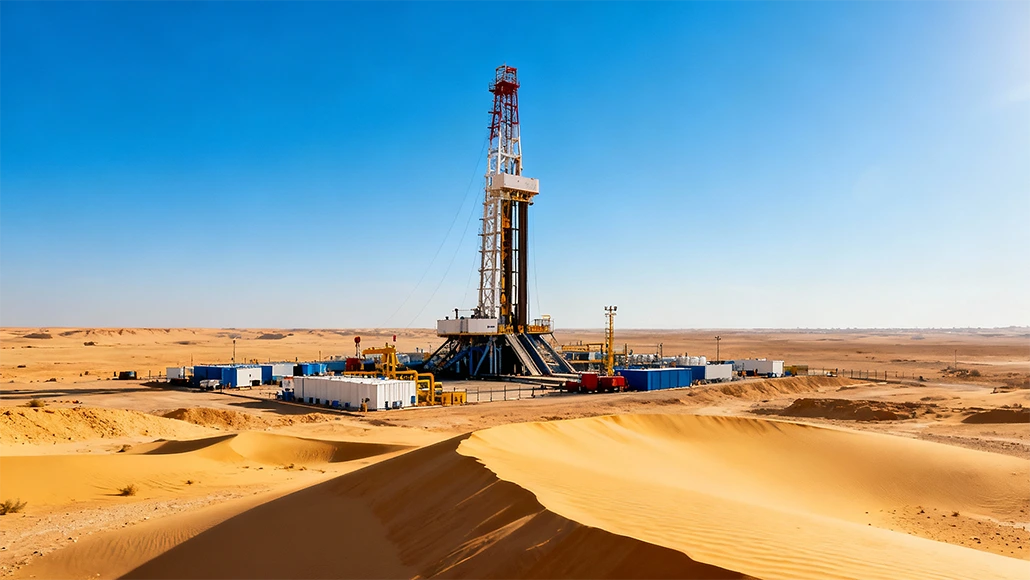
Egypt has intensified its efforts to bolster domestic energy production, officially announcing a series of new oil and gas discoveries in the Western Desert. As the nation seeks to reduce its reliance on energy imports and revitalize its domestic output, the recent exploration success marks a strategic step in a broader, multi-billion-dollar initiative to stabilize the country’s energy sector.
According to the Egyptian Ministry of Petroleum and Mineral Resources, the four exploration wells identified in the Western Desert are projected to yield a combined daily production capacity of nearly 4,500 barrels of crude oil, and 2.6 million cubic feet of natural gas. These findings come at a pivotal time for the North African nation, which has been actively working to reverse a four-year trend of production decline, a recovery that began showing positive momentum as of September 2025 according to industry reporting.
Strategic Expansion in the Western Desert
The latest discoveries are the result of collaborative efforts between the Egyptian General Petroleum Corporation (EGPC) and various international and domestic partners. Among the key players involved are Khalda Petroleum Company, a joint venture between EGPC and Apache Corporation, alongside Tharwa Petroleum Company and Borg El Arab Petroleum Company.
The production breakdown from these successful wells highlights the regional potential:
- Khalda Petroleum Company: Successfully brought two wells, Sultan S-1X RC and Alex NW-1X, into the fold, contributing a daily rate exceeding 1,500 barrels of crude oil and approximately 1.7 million cubic feet of gas.
- Tharwa Petroleum Company: Achieved its discovery in the East Abu Sennan concession area via the EAS Z-3 well, recording an initial production rate of 1,500 barrels of oil per day.
- Borg El Arab Petroleum Company: Identified reserves at the AS Z-2X well within the Abu Sennan Development Area, with testing indicating rates of roughly 1,305 barrels of oil per day and 900,000 cubic feet of associated gas daily.
As noted by the Ministry, testing remains ongoing at several of these sites to accurately assess the total volume of added reserves. This methodical approach is part of Egypt’s wider strategy to maximize the utility of its existing producing regions.
A $5.7 Billion Commitment to Energy Security
The recent discoveries are closely tied to a significant capital investment strategy. Late last year, the Egyptian government unveiled an ambitious $5.7 billion plan to drill 480 new exploratory oil wells over the next five years. This capital-intensive approach is designed to reverse years of production stagnation and ensure long-term energy security for the country’s population, which is currently estimated to exceed 107 million people according to official demographic data.
For the 2026 calendar year, the government has slated 101 wells for drilling across its primary oil and gas provinces. This aggressive timeline underscores the importance of the Western Desert as a cornerstone of Egypt’s economic and industrial policy. By scaling up domestic drilling, officials aim to provide necessary relief to the national import bill, which has faced pressure from global market fluctuations.
Looking Ahead: The Path to Production
As the sector moves forward, stakeholders are closely monitoring the integration of these new wells into the national grid and refinery infrastructure. The success of the current exploration phase is a litmus test for the broader $5.7 billion investment program. With 101 wells scheduled for development throughout 2026, the industry is bracing for a sustained period of high-intensity operational activity.

For investors and industry observers, the next key milestone will be the completion of testing at the recently discovered wells, followed by the official release of updated reserve assessments by the Ministry. These figures will be critical in determining the long-term viability of the Western Desert concessions and their impact on Egypt’s overall GDP, which was estimated at approximately $429.6 billion in nominal terms for 2026, as noted in global economic estimates.
As we continue to follow these developments, we invite our readers to share their insights on the shift toward increased domestic energy independence in North Africa. What are the long-term implications for the regional energy market? Join the conversation in the comments section below.
Worth a look