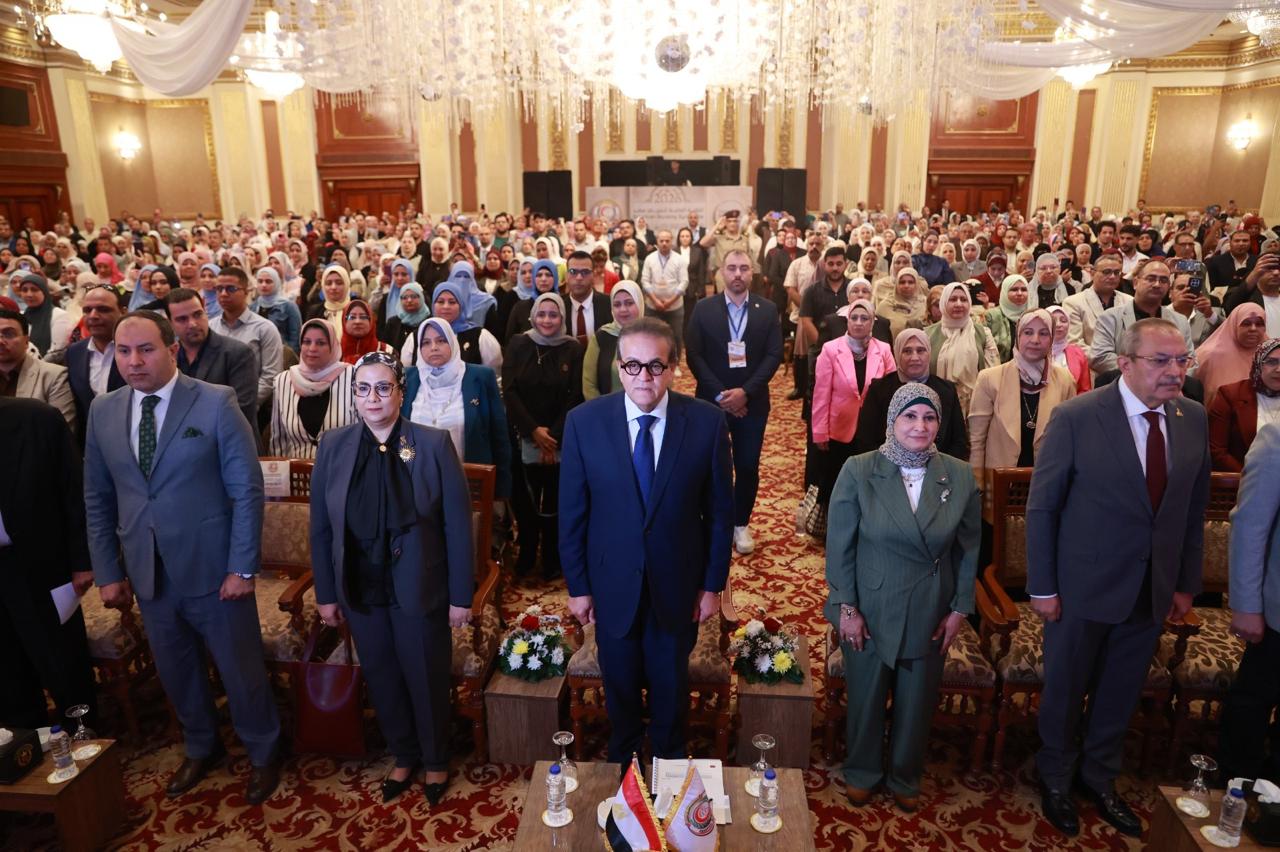
Egypt has reaffirmed its commitment to the advancement of its healthcare workforce, centering its recent celebrations of International Nurses Day on the critical need for investment in nursing staff and the expansion of professional training programs. The event, held under the slogan “Supporting nurses saves lives,” served as a high-level platform for government officials to outline strategies for strengthening the nation’s medical infrastructure through human resource development.
During the ceremony, Health Minister Khaled Abdel Ghaffar emphasized that nursing professionals constitute one of the primary pillars of the Egyptian healthcare system. The gathering brought together a diverse group of stakeholders, including lawmakers, health officials, nursing professionals from across the country, and representatives from the World Health Organization, highlighting the collaborative nature of the government’s current healthcare initiatives.
The initiative reflects a broader national effort to modernize the healthcare sector by prioritizing the qualification and specialization of its staff. By focusing on the intersection of clinical skill and professional support, the Ministry of Health aims to ensure a more resilient response to both routine medical needs and acute health crises.
Investing in the Pillars of Healthcare
Minister Khaled Abdel Ghaffar noted that the Egyptian government is placing a strong emphasis on the development of the nursing profession. This focus is part of a wider strategic framework intended to strengthen the healthcare sector by investing heavily in human resources. In his address, the minister praised Egyptian nurses for their ability to combine “knowledge, skill, and compassion,” specifically citing their vital role in responding to various health crises.
To sustain these improvements, the government has pledged to continue expanding training and qualification programs. A key component of this expansion is the support for specialized nursing fields, which allows practitioners to gain advanced expertise in critical areas of care, thereby improving patient outcomes and operational efficiency within hospitals.
The Legacy and Global Recognition of May 12
International Nurses Day is observed annually on May 12 to commemorate the birth anniversary of Florence Nightingale, the founder of modern nursing. The day serves as a global reminder of the essential nature of nursing care and the ongoing need for professional standards in the field.
The observance has been officially recognized since 1974 by the International Council of Nurses, the global federation representing nursing professionals. By aligning its national celebrations with this international standard, Egypt integrates its domestic health goals with global benchmarks for nursing excellence and workforce support, as advocated by the World Health Organization.
National Advocacy and Professional Standards
The event featured contributions from several key figures in Egyptian civil society and medical leadership. Kawthar Mahmoud, head of the Nursing Syndicate, praised the support provided by President Abdel Fattah Al-Sisi to medical teams. During her review of the current state of nursing education in Egypt, Mahmoud called upon nursing professionals to prioritize continuous professional development and to strictly uphold ethical standards in their practice.
The social and gender dimensions of the profession were also highlighted. Amal Emara, head of the National Council for Women, described Egyptian nurses as “a model representing Egyptian women,” acknowledging the profession’s role in female empowerment and public service. Complementing this perspective, physician Hossam Mowafy stressed that a robust nursing system is not merely a support mechanism but is essential for the overall success of healthcare services.
The celebrations concluded with a formal honors ceremony, where distinguished medical and nursing professionals were recognized for their specific contributions to the improvement of the Egyptian healthcare system.
As Egypt continues to expand its training programs and specialize its nursing workforce, the focus remains on the sustainable integration of education and practice to meet the evolving needs of the population.
The Ministry of Health is expected to provide further updates on the rollout of new qualification programs in the coming months.
We invite our readers to share their perspectives on the role of nursing in global health in the comments section below.
Related reading