
In the modern clinical landscape, the promise of seamless data exchange remains the “holy grail” of digital transformation. Every year, the United States healthcare system navigates approximately 33.5 million hospital admissions and 155 million emergency department visits, generating a staggering volume of clinical documentation. With annual national healthcare spending reaching $4.9 trillion, the financial and operational stakes of data fragmentation have never been higher. As we look at the trajectory of health information technology, This proves becoming increasingly clear that the traditional “layered” approach to EHR interoperability is reaching a point of diminishing returns.
For years, the industry has treated interoperability as a series of bolt-on projects—interfaces and third-party integrations designed to bridge the gaps between disparate legacy systems. While this strategy facilitated early progress, it has also created a complex, brittle architecture that complicates clinical workflows rather than streamlining them. As a physician, I have seen firsthand how fragmented data contributes to the cognitive load of clinicians, leading to redundant testing, diagnostic delays, and, increased costs. The current architectural model is no longer merely a technical inconvenience; it is a structural barrier to the high-quality, efficient care that patients deserve.
The Architectural Shift: From Bolt-On to Built-In
The industry is currently at a pivotal juncture where healthcare leaders are reevaluating their long-term digital strategy. Recent data from the College of Healthcare Information Management Executives (CHIME) indicates that nearly 90% of healthcare CIOs now view vendor consolidation as a primary strategy to simplify their increasingly complex technology environments. This move toward consolidation reflects a broader realization: we cannot continue to build “digital duct tape” onto our core systems and expect them to function as a unified, intelligent backbone for patient care.


Despite this strategic intent, the transition from “project-based” interoperability to “infrastructure-based” capability remains slow. According to the same CHIME survey, only 16% of respondents currently report that interoperability is fully enabled through the core of their Electronic Health Record (EHR) systems. This gap between the desire for a simplified, integrated environment and the reality of fragmented architectures is the defining challenge for hospital IT departments in the coming decade.
Why does this matter? Because the cost of maintaining these layered extensions is immense. When interoperability is an afterthought, it requires constant governance, specialized staffing, and ongoing maintenance to ensure that data remains accurate and accessible across different vendor systems. For nearly 47% of healthcare leaders, the financial burden of these integration models is cited as the single largest barrier to achieving scalable, effective interoperability. These costs are not merely line items in an IT budget; they are resources diverted from direct patient care and innovation.
The Hidden Costs of Fragmented Data
The impact of disconnected systems is best understood when viewed through the lens of the entire care continuum. When data is trapped in silos, the administrative burden on clinicians grows, and the patient experience suffers. We know that inefficient systems contribute to the rising tide of uncompensated care, which has reached nearly $745 billion since the year 2000, according to data from the American Hospital Association. While hospital financial health is influenced by a myriad of complex factors, the operational inefficiencies caused by the inability to share data seamlessly remain a significant, preventable drag on the entire system.
the foundational hurdles to progress remain stubbornly consistent. Beyond the financial constraints, 42% of IT leaders report that vendor-driven delays and a lack of cooperative support remain significant challenges. An additional 26% point to the lack of universal standardization, while 37% struggle with internal staffing and resource limitations. These figures highlight a systemic issue: our current technology ecosystem was largely built to respond to immediate, often regulatory, pressures rather than being designed for the long-term, architectural needs of a modern, data-driven health system.
Defining the Future of Clinical Interoperability
Looking ahead, the goal must be to move interoperability into the background, where it functions as a “silent partner” rather than a complex, manual task. For the clinician, this means having the right information at the right time, without having to navigate multiple portals or reconcile conflicting data points. For the patient, it means a more coordinated, safer care experience, regardless of which facility they visit or which specialists they see.
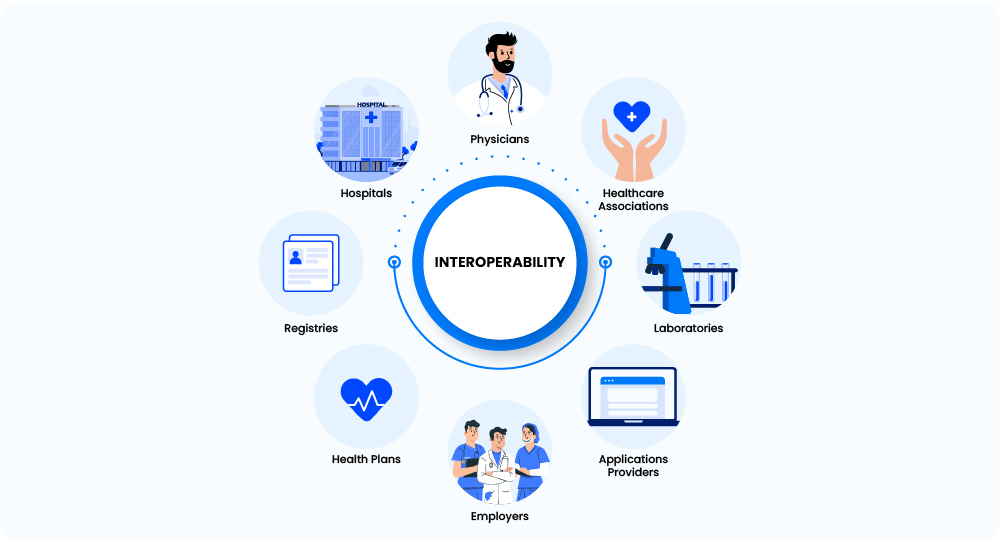
The path forward requires a fundamental shift in how we procure and deploy health technology. We must move toward EHR systems where interoperability is a foundational capability—embedded, supported, and sustained at the core. When the system itself is designed to be natively interoperable, the need for complex, layered extensions diminishes, allowing organizations to focus their resources on the clinical outcomes that truly matter.
As we continue to navigate the complexities of digital health, the alignment between strategic goals and technical architecture will determine which organizations succeed in delivering sustainable, high-value care. The industry is already seeing progress as standards like FHIR (Fast Healthcare Interoperability Resources) continue to evolve and gain adoption. However, the next phase of this evolution will be defined by the willingness of health systems to demand that their core EHR platforms treat interoperability not as a feature, but as the essential infrastructure of modern medicine.
Key Considerations for Health IT Leaders
- Prioritize Core Integration: Evaluate whether your current EHR platform treats interoperability as a native function or an external requirement.
- Reduce Complexity: Consider the total cost of ownership for third-party interfaces and whether vendor consolidation could simplify your environment.
- Focus on Outcomes: Shift the conversation from technical “connectivity” to clinical “coordination”—ensure that data exchange is directly tied to improving patient safety and reducing redundant workflows.
- Strategic Alignment: Ensure that IT roadmap decisions are closely aligned with the long-term clinical and financial goals of the health system.
The conversation around healthcare technology is moving away from the “how” of connecting systems and toward the “why” of improving patient outcomes. As we look to the next fiscal year, hospital leaders should monitor upcoming updates from the Office of the National Coordinator for Health Information Technology (ONC) regarding the TEFCA (Trusted Exchange Framework and Common Agreement) implementation, which serves as a critical checkpoint for national interoperability efforts. I encourage our readers to share their own experiences with system consolidation in the comments below—the dialogue between clinical expertise and IT strategy is exactly what will drive the next generation of patient care.
Related reading