
Historians Debate Whether Medieval Monk Eilmer of Malmesbury Witnessed Halley’s Comet Twice
Historians are debating whether Eilmer of Malmesbury, a Benedictine monk known for an early attempt at human flight, witnessed Halley’s comet on two separate occasions. While 12th-century chronicles suggest the monk saw the comet in both 989 and 1066, modern scholars argue that a different comet appearance in 1018 may better align with the recorded timeline of his life and flight attempt.
The debate centers on an account written by the 12th-century historian William of Malmesbury. The text describes Eilmer’s attempt to fly using makeshift wings, an event that has become a legendary moment in the history of early aviation. By comparing astronomical data with the monk’s purported age and the timing of his flight, researchers are attempting to resolve discrepancies in the medieval record.
What happened during Eilmer’s attempt at flight?
According to the account provided by William of Malmesbury, Eilmer was a Benedictine monk residing at Malmesbury Abbey in England. In an attempt to achieve human flight, he constructed a pair of wings made from willow wood and cloth. Eilmer jumped from the abbey’s 150-foot tower to test his design.
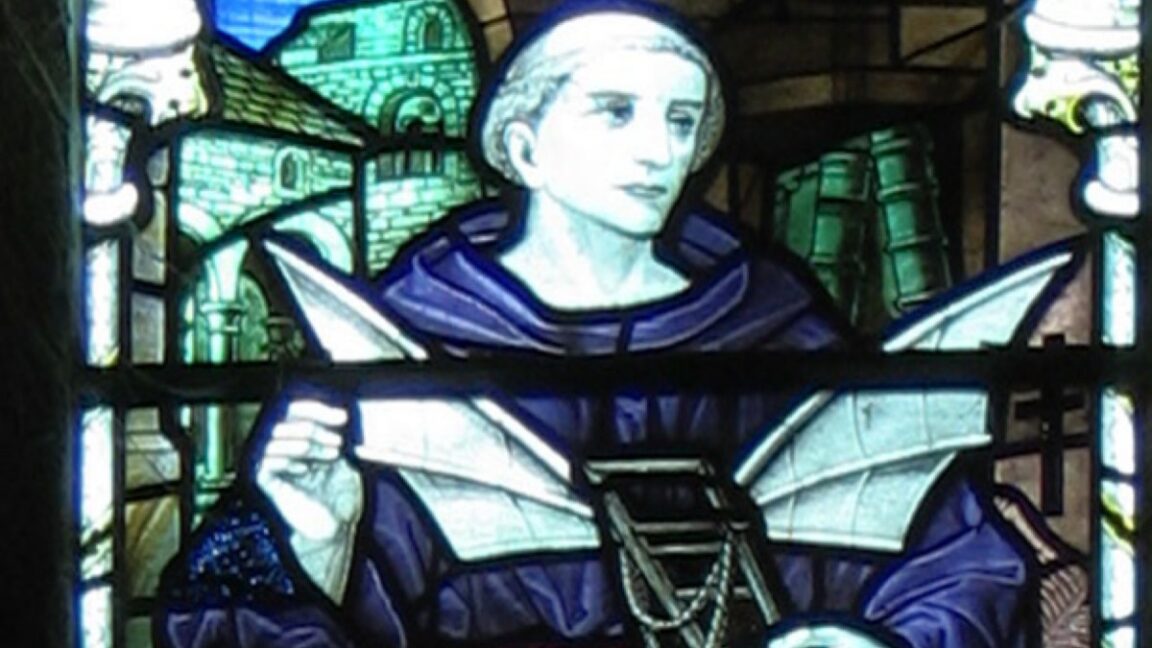
The experiment resulted in a brief period of controlled movement followed by a significant injury. Eilmer managed to glide approximately 600 feet, passing over the city wall of Malmesbury before a crash landing in a valley near the River Avon. The impact broke both of his legs, leaving him permanently crippled. Malmesbury Abbey continues to commemorate the event through a stained-glass window dedicated to Brother Eilmer.
The exact date of this flight remains unverified, as William of Malmesbury did not provide a specific year in his writing, which was composed around 1125. Historians must instead rely on secondary clues within the text to estimate when the event took place.
Why do historians disagree on the comet sighting timeline?
The controversy involves the intersection of medieval biography and astronomical history. William of Malmesbury noted that in his later years, Eilmer witnessed the appearance of Halley’s comet in 1066. Upon seeing the celestial event, the monk reportedly remarked, “It is long since I saw you.”

This comment has led many historians to conclude that Eilmer had seen the same comet during a previous pass. Because Halley’s comet follows a predictable orbit, the most likely previous appearance would have been in 989. If Eilmer saw the comet in 989 as a young boy and again in 1066 as an elderly man, the timeline for his “first youth”—the period during which he attempted to fly—would likely fall between 1000 and 1010.
However, this timeline is contested. James Aitcheson of the University of Leicester has challenged this interpretation. In a paper published in the journal Notes and Queries, Aitcheson argues that Eilmer may have actually seen a different comet during his youth, specifically the comet of 1018. If the 1018 comet was the one Eilmer observed, it would fundamentally shift his biographical timeline.
Under Aitcheson’s model, Eilmer would have been born much later than previously assumed. This would move the date of his experimental flight to a period between the 1020s and the 1040s. This distinction is significant for historians attempting to map the development of early scientific inquiry and the recording of astronomical phenomena in the 11th century.
Comparison of Historical Timeline Theories
| Feature | Traditional Interpretation | Aitcheson Theory |
|---|---|---|
| Assumed Youthful Comet | Halley’s Comet (989) | Comet of 1018 |
| Estimated Flight Period | 1000–1010 | 1020s–1040s |
| Age in 1066 | Approximately 80s | Significantly younger |
| Primary Source Basis | William of Malmesbury’s “long since” quote | Discrepancy in birth/flight age alignment |
How does the 1066 comet impact the historical record?
The appearance of Halley’s comet in 1066 is one of the most well-documented astronomical events of the Middle Ages. Its presence coincided with the Norman Conquest of England, a period of massive political and social upheaval. The comet is famously depicted in the Bayeux Tapestry, where it is interpreted as an omen regarding the fate of King Harold II and the rise of William the Conqueror.
For historians studying Eilmer, the 1066 sighting provides a fixed chronological anchor. Because the appearance of the comet is a verified scientific fact, it allows researchers to work backward to test the validity of medieval biographies. The ability of a single individual to claim a connection to two specific appearances of a periodic comet provides a rare, albeit complicated, data point for medieval chronology.
The tension between the two theories—the 989 sighting versus the 1018 sighting—highlights the difficulties of using anecdotal evidence from 12th-century chronicles to establish precise 11th-century dates. While the 1066 sighting is certain, the “long since” remark remains subject to interpretation.
Frequently Asked Questions
Who was Eilmer of Malmesbury?
Eilmer of Malmesbury was a Benedictine monk in the 11th century who attempted an early form of human flight using wings made of cloth and willow wood. His attempt resulted in a 600-foot glide but caused permanent leg injuries.

What was the source of the information about Eilmer?
The primary source is the historian William of Malmesbury, who wrote about Eilmer’s life in an account produced around 1125.
Why is the comet sighting controversial?
The controversy lies in whether Eilmer’s comment about seeing the comet “long since” refers to Halley’s comet in 989 or a different comet in 1018. This choice changes the estimated dates of his life and his flight attempt.
Where did the flight take place?
The flight occurred at Malmesbury Abbey in the town of Malmesbury, England.
There are no scheduled official updates or upcoming hearings regarding this historical interpretation, though ongoing archaeological research at Malmesbury Abbey continues to provide context for the site. We invite you to share your thoughts on this historical mystery in the comments below.