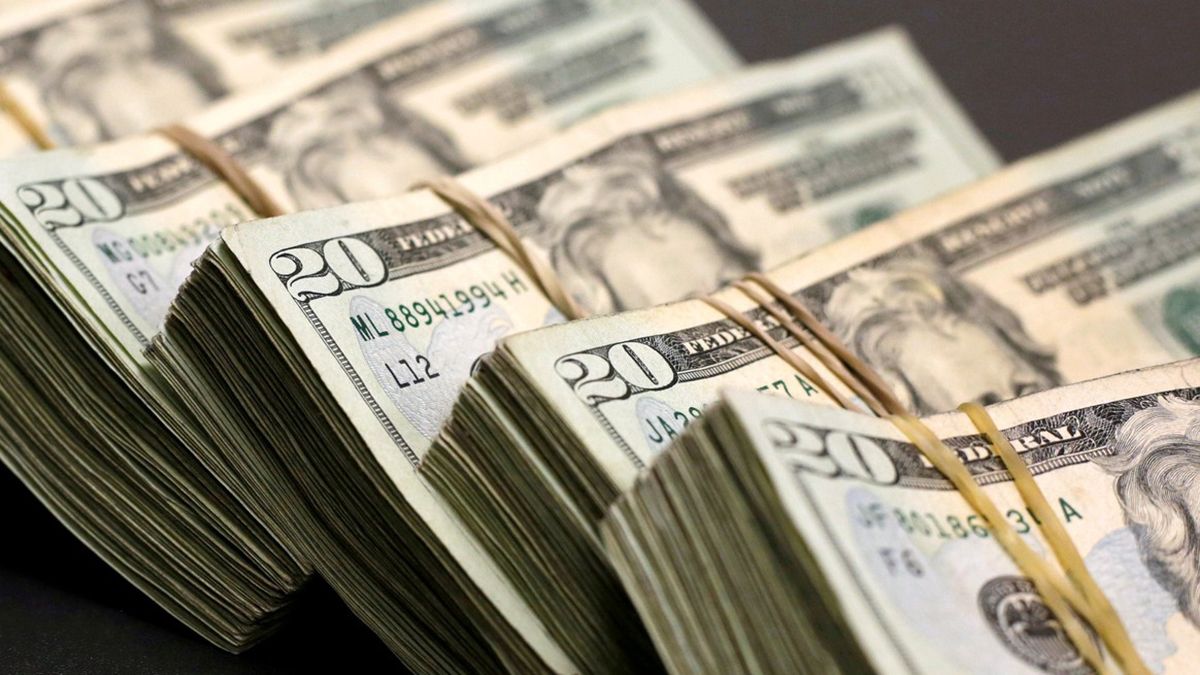
Argentina’s official exchange rate has declined for the second consecutive day, continuing a trend that has kept the peso stronger against the dollar for over a month. The official dollar closed lower on Tuesday, April 21, 2026, marking its fourth straight session of losses and reinforcing a broader downward trajectory that began in mid-March.
The currency’s sustained weakness reflects shifting market dynamics amid evolving monetary policy expectations and external economic pressures. Analysts note that the peso’s recent strength has been driven by a combination of tighter liquidity conditions, seasonal factors affecting foreign exchange demand, and renewed confidence in macroeconomic stability following recent policy adjustments.
According to market data monitored by financial news outlets, the official dollar traded below the 1,400 Argentine peso threshold for more than 30 consecutive days as of April 21, 2026. This level represents a significant psychological and technical benchmark in local currency markets, often watched closely by investors, importers, and policymakers.
The decline comes after two prior sessions of gains, suggesting a temporary pause in the dollar’s recent upward momentum. Traders attribute the reversal to profit-taking after earlier advances and renewed selling pressure from exporters seeking to convert foreign currency earnings into pesos.
Meanwhile, alternative exchange rates such as the MEP dollar and the Contado con Liquidación (CCL) also showed modest declines, though they remain at higher levels than the official rate due to capital controls and market segmentation. The blue dollar, which operates in the informal market, remained relatively stable during the same period, trading within a narrow band around 1,410 pesos for purchase and 1,430 pesos for sale in major urban centers.
Economists point to several factors contributing to the peso’s recent resilience. These include a seasonal uptick in foreign currency liquidity from agricultural exports, reduced demand for imports due to subdued domestic consumption, and intervention by the Central Bank of Argentina in the foreign exchange market to smooth volatility.
recent data showing a narrowing trade deficit and improved foreign reserve levels have supported the local currency. In March 2026, Argentina recorded a trade surplus of over USD 2.5 billion, marking the highest monthly surplus in more than two years and providing additional support for the peso.
The Central Bank has maintained a cautious stance, emphasizing that while short-term fluctuations are normal, the broader trend will depend on inflation trends, fiscal discipline, and the evolution of capital flows. Officials have reiterated their commitment to maintaining a stable and predictable exchange rate regime to support economic planning and investment.
Market participants continue to monitor weekly releases of foreign exchange reserves, trade balance data, and inflation reports for further clues about the peso’s direction. The next key data point is expected in early May, when the National Institute of Statistics and Censuses (INDEC) releases the April inflation report, which could influence market expectations about monetary policy.
As of the close of trading on April 21, 2026, the official dollar was quoted at 1,382 pesos for purchase and 1,398 pesos for sale in major banks, according to aggregated price data from financial information providers. This represents a decline of approximately 1.2% from the previous day’s close and a cumulative drop of nearly 6% since mid-March.
While the official rate remains below 1,400 pesos, analysts caution that the level could be tested again in the coming weeks depending on external shocks, such as shifts in global risk appetite or changes in commodity prices affecting export revenues.
The current environment highlights the sensitivity of Argentina’s exchange rate to both domestic policy decisions and international developments. With capital controls still in place and multiple exchange rates operating simultaneously, the official dollar serves as a key reference point for assessing the effectiveness of economic policy and market sentiment.
Looking ahead, traders and economists will watch for signals from the Central Bank regarding potential adjustments to monetary policy or foreign exchange intervention strategies. Any shift in approach could quickly influence the trajectory of the official dollar and related rates.
For real-time updates on exchange rate movements, investors and businesses typically refer to official sources such as the Central Bank of Argentina’s website, financial data terminals, and reputable financial news platforms that provide live pricing and market analysis.
Stay informed about developments in Argentina’s foreign exchange market by following trusted financial news outlets and consulting official economic reports as they become available.
Related reading