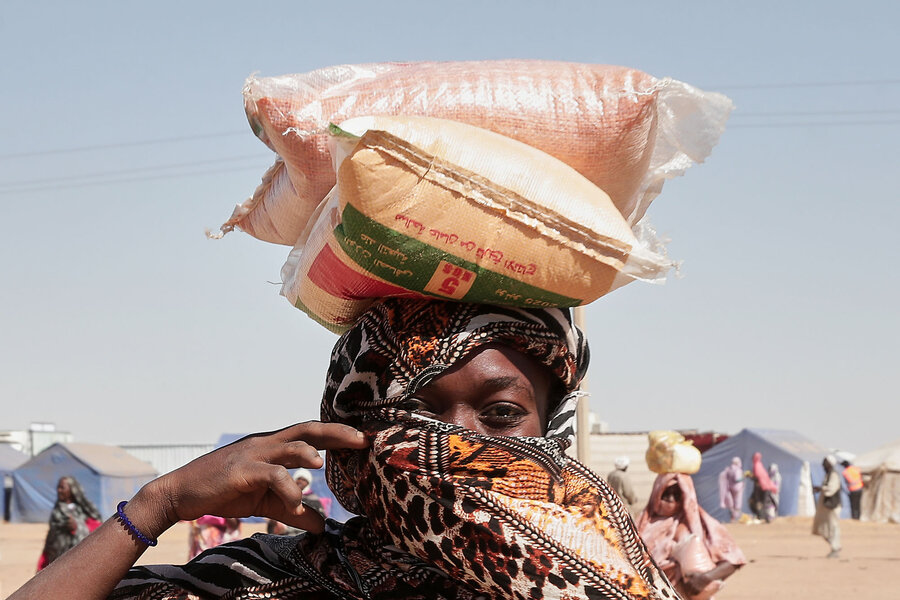
Sudan’s Silent Crisis: Displacement, Hunger, and the Shadow of Fear
The conflict in Sudan, erupting in April 2023, has triggered a humanitarian catastrophe of immense scale. Already, approximately 14 million Sudanese - nearly one in four – have been forced from their homes. This isn’t just a displacement crisis; it’s a story of shattered lives, escalating hunger, and a growing climate of fear.This article delves into the experiences of Sudanese families caught in the crossfire,highlighting the desperate conditions and the agonizing uncertainty they face.
A Nation Unraveling
The fighting, primarily between the Sudanese Armed Forces (SAF) and the Rapid Support Forces (RSF), has concentrated heavily in the Darfur region, especially around El Fasher. El Fasher, once a relative haven, recently became a war zone, forcing another wave of civilians to flee. The consequences are devastating, extending far beyond immediate physical danger.
Stories of Loss and Resilience
Consider the plight of Ms. Idris. Her journey embodies the layered trauma experienced by so many. She initially fled her home in korma in 2015, seeking safety in El Fasher. Then, as violence erupted again in 2023, her husband left for Libya, hoping to reach Europe – a journey fraught with peril.
The family hasn’t heard from him as. Now, having lost their home in El Fasher, they find themselves in Tawila, facing critical shortages of food and water. “We survived the journey [out of the city], but survival alone is not enough,” she poignantly states.
This sentiment echoes across displacement camps. Doctors Without Borders (MSF) reports that the majority of those arriving from El Fasher are already malnourished. They describe the situation as the “most severe [hunger] situation” in Sudan sence the war began.
The RSF and the Cycle of Fear
The RSF’s tactics are exacerbating the crisis. They have been systematically kidnapping civilians, particularly those from non-Arab ethnic groups. This serves a dual purpose: intimidating communities and generating revenue through ransom payments.
Ms. Younis’ story illustrates this terrifying reality. Her husband, Abdel Majid Hasab Allah, was detained by RSF soldiers as the family fled El Fasher in late October. Initially, she hoped for a swift release, perhaps secured with a ransom.
Weeks have passed with no contact. Reports indicate he was last seen being transported to a bus station east of El Fasher - a location notorious for both ransom negotiations and executions.Ms. Younis now waits with her children in a displacement camp in Korma, grappling with grief and the agonizing uncertainty of his fate.
Here’s a breakdown of the key concerns:
* Displacement: Over 14 million Sudanese are displaced, creating immense strain on resources.
* Hunger: Malnutrition rates are soaring,particularly among those fleeing conflict zones.
* Kidnappings: The RSF’s practice of kidnapping civilians fuels fear and instability.
* Uncertainty: Families are torn apart, with little to no facts about loved ones.
The Urgent Need for Action
The situation demands immediate and sustained international attention. Here’s what needs to happen:
- Increased Humanitarian Aid: Rapidly scale up food, water, and medical assistance to displacement camps and affected areas.
- Protection of Civilians: Pressure all parties to the conflict to protect civilians and cease attacks on humanitarian workers.
- Accountability for Abuses: Investigate and prosecute those responsible for human rights violations,including kidnappings and killings.
- Diplomatic Efforts: Intensify diplomatic efforts to achieve a lasting ceasefire and a political solution to the conflict.
Ms. Younis, despite her unimaginable hardship, clings to hope. ”Whenever I hear about murdered prisoners held by the RSF, I pray to God to protect my husband,” she says. “And provided that there is no news, she will continue to hold out hope that one day they will all be together again.”
Her resilience, and that of countless other Sudanese, is a testament to the human spirit. But hope alone isn’t enough
Keep reading