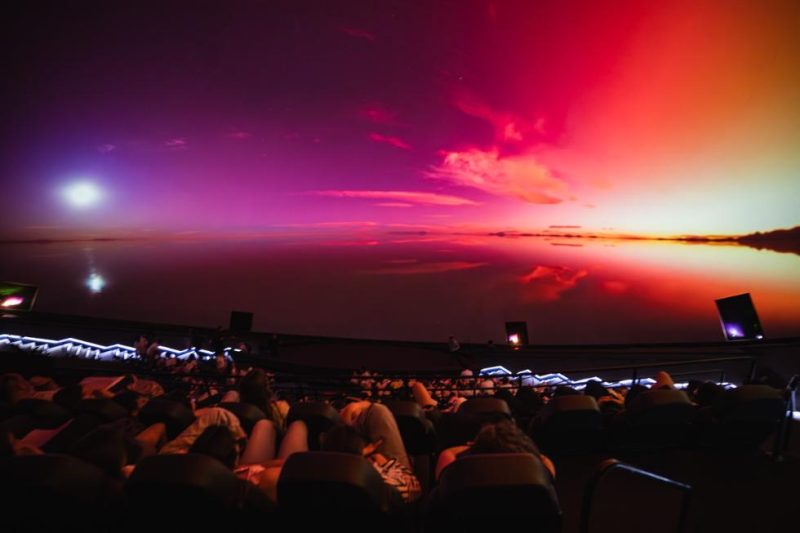
In the heart of Valencia, the architectural marvel known as El Hemisfèric stands as a giant, metallic eye gazing toward the heavens. This iconic structure, part of the City of Arts and Sciences, has long served as a bridge between cutting-edge technology and the mysteries of the cosmos. Today, that bridge is being used to prepare the public for one of the most anticipated astronomical events of the decade.
The venue has recently launched a specialized cinematic experience titled “Eclipse: The Moment of Totality,” designed to immerse viewers in the science and spectacle of solar alignments. Released on April 28, the production leverages the facility’s unique IMAX and planetarium capabilities to provide a visceral preview of the celestial mechanics that will soon darken the Spanish sky official projection details at City of Arts and Sciences.
This initiative comes at a critical time for astronomy enthusiasts and the general public alike. According to the National Geographic Institute (IGN), Spain is set to experience its first total solar eclipse in more than a century on Wednesday, August 12, 2026 National Geographic Institute data. The Hemisfèric’s current programming serves not only as entertainment but as a vital educational tool, ensuring that the population understands both the rarity of the event and the safety protocols required for observation.
The Technology of Immersion: IMAX and the Dome
As a technology editor, I find the Hemisfèric particularly fascinating because it doesn’t just show a movie; it creates an environment. The facility utilizes a massive hemispherical screen that mimics the curvature of the sky, allowing for a level of immersion that standard cinema cannot replicate. By combining high-resolution IMAX projection with a planetarium atmosphere, the “Eclipse: The Moment of Totality” film can simulate the gradual transition from daylight to the eerie, midday twilight of a total eclipse.

This use of immersive media is essential for scientific communication. A total solar eclipse is an event that defies traditional description; the sudden drop in temperature, the appearance of the solar corona, and the 360-degree darkness are sensory experiences. By utilizing large-format digital projection, the Hemisfèric allows spectators to visualize the precise alignment of the Sun, Moon, and Earth, making the abstract concepts of orbital mechanics tangible and accessible.
The technical precision required for such a projection is immense. To accurately depict the “diamond ring” effect—the brief flash of light just before and after totality—the system must manage extreme contrast ratios on a curved surface. This ensures that the visual transition is seamless, providing a realistic simulation of what observers will see across Spain in 2026.
The Science of the 2026 Total Solar Eclipse
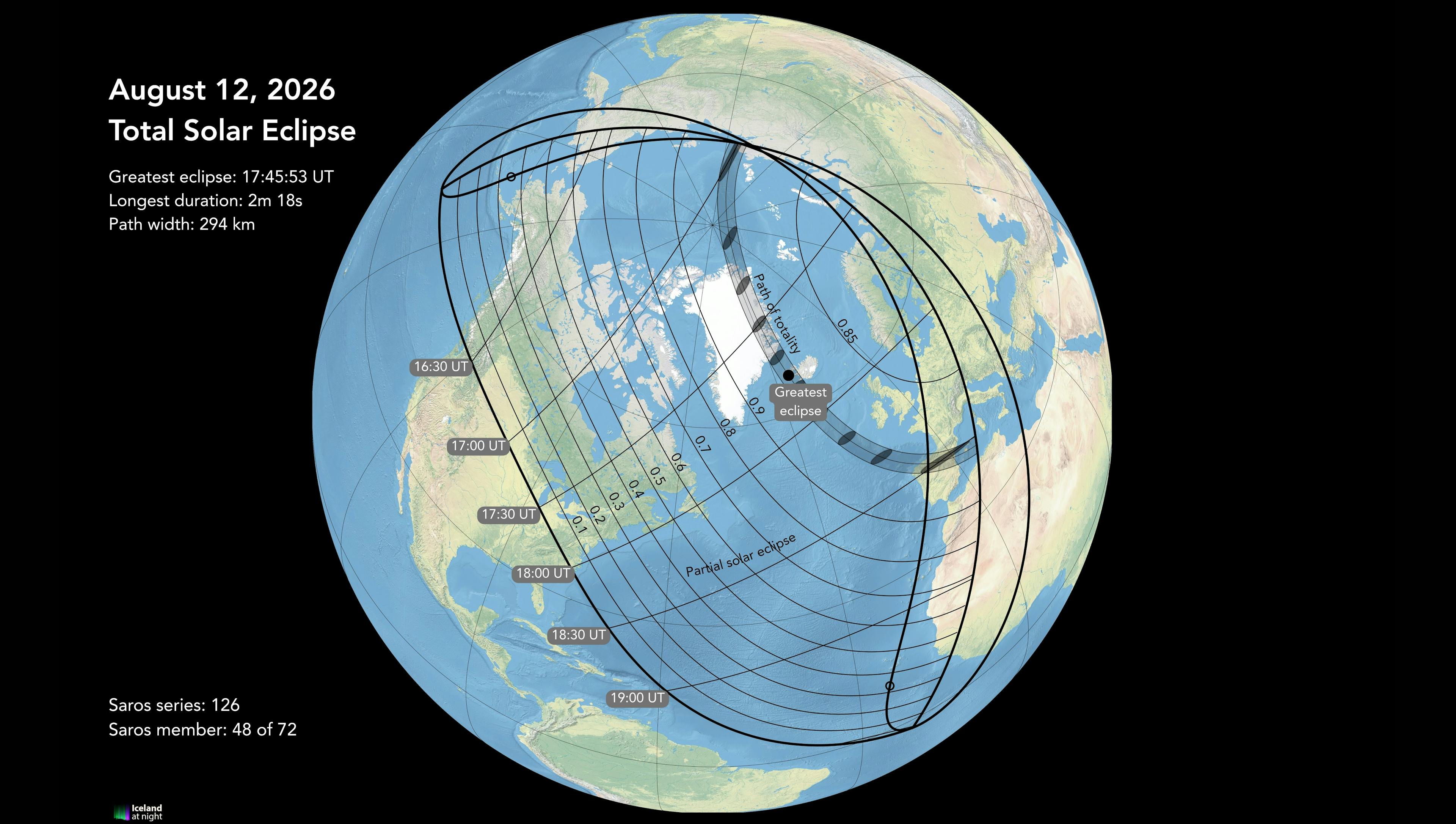
The upcoming event on August 12, 2026, is a significant milestone for European astronomy. A total solar eclipse occurs only when the Moon passes directly between the Sun and Earth, completely obscuring the solar disk. While partial eclipses are relatively common, a total eclipse—where the corona becomes visible—is a rare occurrence for any specific geographic location.
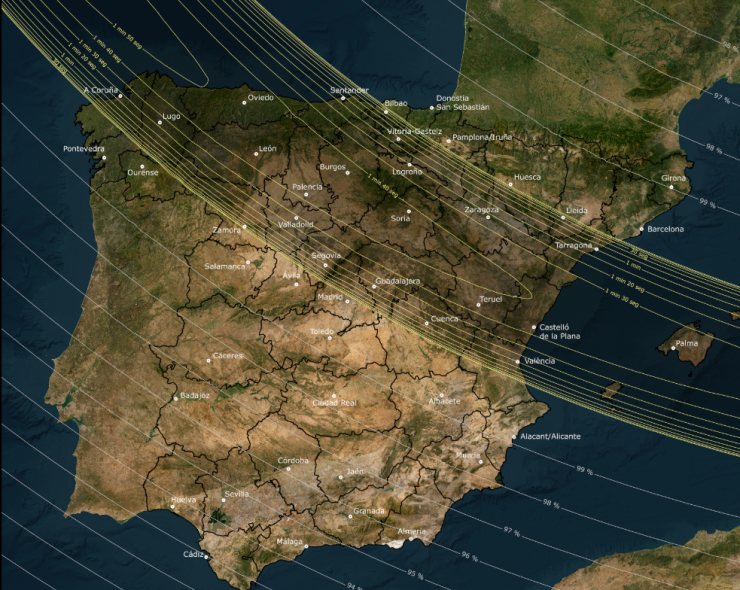
For Spain, this event is particularly historic. The National Geographic Institute has highlighted that this will be the first total solar eclipse visible from the country in over a hundred years IGN verification. The path of totality—the narrow track where the Sun is 100% obscured—will sweep across various regions, turning day into night for a few precious minutes.
The “Moment of Totality” is the only time the Sun’s outer atmosphere, the corona, can be seen with the naked eye (provided the disk is fully covered). This period is invaluable for solar physicists, as it allows them to study the solar wind and the magnetic fields of the Sun without the blinding glare of the photosphere. By educating the public through the Hemisfèric’s projections, the city of Valencia is fostering a scientifically literate audience that can appreciate the event’s importance beyond the visual spectacle.
Bridging the Gap Between Education and Entertainment
The success of the Hemisfèric’s current programming underscores a growing trend in “edutainment,” where high-end consumer electronics and architectural design are used to democratize science. When complex astronomical data is translated into a visual narrative, it removes the barrier to entry for those who may find traditional textbooks intimidating.
This approach transforms the viewer from a passive observer into an active participant. By experiencing the eclipse in a simulated environment, viewers are more likely to seek out official guidance on how to view the actual event safely. It is a critical reminder that while the 2026 eclipse will be breathtaking, looking directly at the Sun without certified solar filters can cause permanent retinal damage.
the integration of such events into the tourism and cultural landscape of Valencia demonstrates how technology can drive civic engagement. The Hemisfèric is not merely a cinema; it is a hub for digital innovation that encourages a global audience to look upward and question the nature of the universe.
Key Takeaways for Future Observers
- Event Date: The total solar eclipse will occur on August 12, 2026.
- Historical Significance: What we have is the first total eclipse in Spain in over a century.
- Educational Resource: “Eclipse: The Moment of Totality” at El Hemisfèric provides a simulated experience of the event.
- Safety First: Always use ISO-certified solar eclipse glasses when viewing a partial or total eclipse (except during the brief window of 100% totality).
As we count down to August 2026, the Hemisfèric continues to serve as a beacon of scientific curiosity. By blending the art of cinema with the rigor of astronomy, it ensures that when the moon finally slides across the sun, the people of Spain and the visiting global community will be ready for the moment of totality.
The next major milestone for this event will be the release of official totality maps and precise timing schedules by the National Geographic Institute as the 2026 date approaches.
Do you plan on traveling to Spain for the 2026 eclipse? Have you experienced an IMAX planetarium show? Share your thoughts and travel plans in the comments below.
Related reading