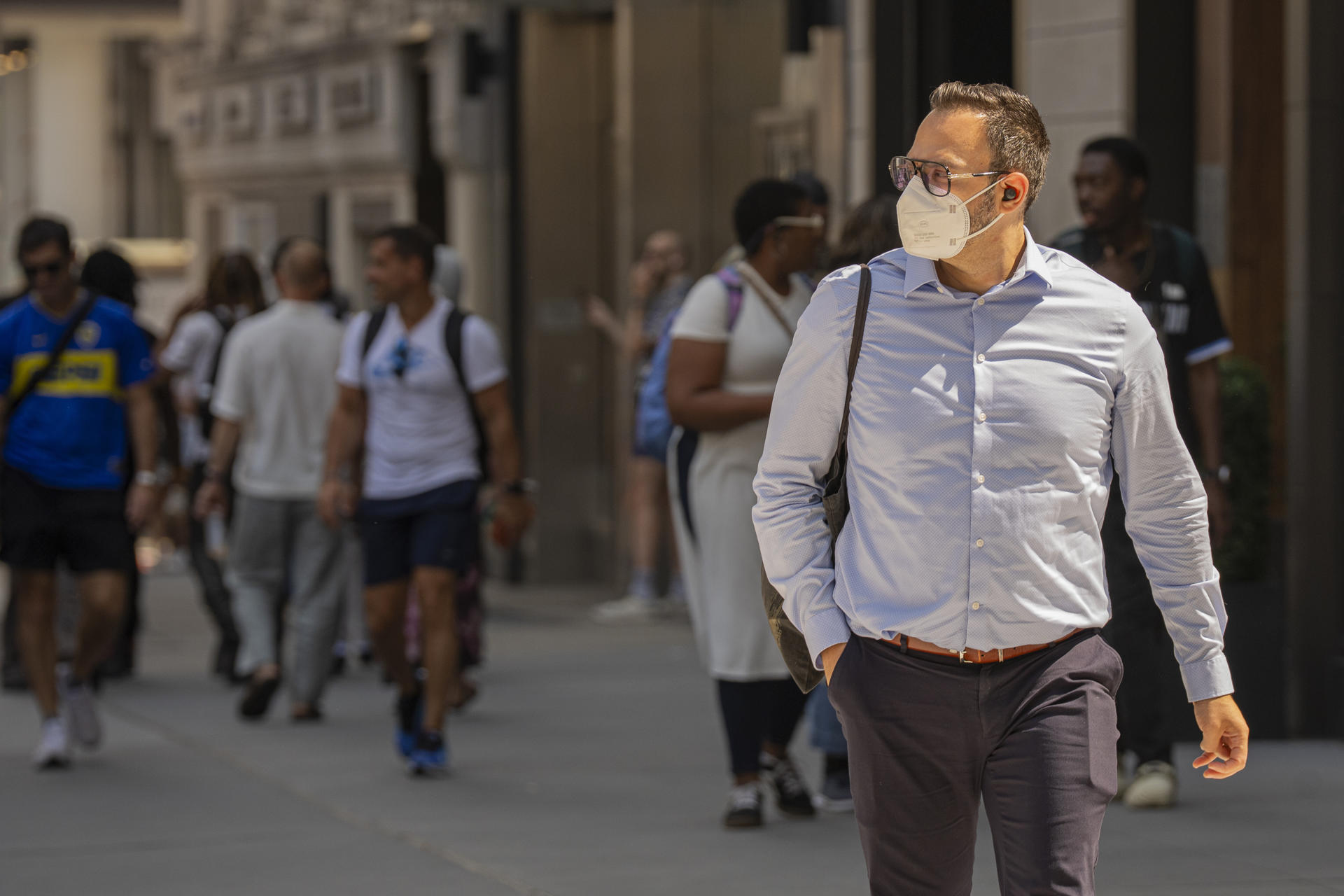
Wildfire smoke originating from Canadian forests continues to drift across the United States border, causing degraded air quality and triggering health warnings across multiple regions. Meteorologists and environmental agencies report that shifting atmospheric patterns are trapping particulate matter in the lower atmosphere, affecting air quality indexes (AQI) in states ranging from the Midwest to the Northeast. According to the U.S. Environmental Protection Agency (EPA), these conditions present significant respiratory risks for vulnerable populations, including those with pre-existing heart or lung conditions, children, and the elderly.
The persistence of these smoke plumes is linked to an exceptionally active wildfire season in Canada. Data from the Canadian Interagency Forest Fire Centre (CIFFC) indicates that millions of hectares have burned throughout the 2024 season, a figure that continues to evolve as new fires ignite in remote, lightning-prone areas. Because these fires are often located in inaccessible terrain, containment efforts remain focused on protecting critical infrastructure rather than total extinguishment, allowing smoke to travel thousands of kilometers via high-altitude wind currents.
Understanding the Impact on Air Quality
When wildfire smoke enters the United States, the primary concern for public health officials is the presence of fine particulate matter, known as PM2.5. These particles are less than 2.5 micrometers in diameter—roughly 3% the diameter of a human hair—allowing them to bypass the body’s natural defenses and enter deep into the lungs or bloodstream. The Centers for Disease Control and Prevention (CDC) notes that exposure to these particles can cause immediate symptoms such as eye irritation, coughing, and wheezing, as well as more severe cardiovascular complications.
Regional air quality monitoring stations have recorded “Unhealthy” and “Very Unhealthy” readings during the recent influxes. Officials in affected jurisdictions, including New York and the upper Midwest, have utilized the AirNow.gov platform to issue alerts, advising residents to limit outdoor exertion and maintain indoor air filtration. The movement of this smoke is highly dynamic, often changing based on localized wind shifts, making it difficult to predict precise impact windows beyond 48 to 72 hours.
Managing Exposure During Smoke Events
Public health guidelines emphasize that indoor environments are the safest refuge during high-smoke events. To mitigate the impact of smoke, health authorities recommend that residents keep windows and doors closed. For those with HVAC systems, upgrading to a MERV-13 rated filter or higher is often recommended to capture the fine particulates carried by the smoke. If central air is unavailable, portable air cleaners equipped with HEPA filters are considered the gold standard for maintaining indoor air quality, according to guidance from the Environmental Protection Agency.
Outside of the home, the use of N95 or P100 respirators is advised for individuals who must remain outdoors, as standard cloth or surgical masks provide minimal protection against the fine particles found in wildfire smoke. Local governments continue to monitor the situation daily, with updates provided through state environmental departments and local emergency management services. Residents are encouraged to check local AQI levels before planning outdoor activities, particularly during the early morning hours when smoke concentrations can sometimes be higher near the ground.
Looking Ahead: Monitoring and Forecasting
The duration of this smoke impact remains tied to the intensity of the Canadian wildfire season and the prevailing jet stream patterns. As the summer progresses, the North American weather pattern—specifically the positioning of high-pressure ridges—will dictate whether the smoke continues to be pushed toward the U.S. or is dispersed over the Atlantic. The BlueSky Canada forecast system, which tracks smoke dispersion, remains a key tool for meteorologists tracking these plumes.
There is no immediate indication of when the wildfire threat will subside, as the fire season in Canada typically lasts until the onset of autumn precipitation. Authorities advise the public to remain vigilant and follow official guidance from local health departments. For those seeking real-time updates, the EPA’s AirNow portal provides the most comprehensive, verified data on air quality, while the National Weather Service provides localized meteorological forecasts regarding the movement of smoke columns.
We will continue to track air quality data and official wildfire reports as they develop. If you have questions about how these conditions are impacting your specific region, please check your local environmental agency’s website for the most accurate, state-specific alerts. Readers are encouraged to share this information with neighbors and community members to ensure everyone stays informed and safe during periods of poor air quality.
Worth a look