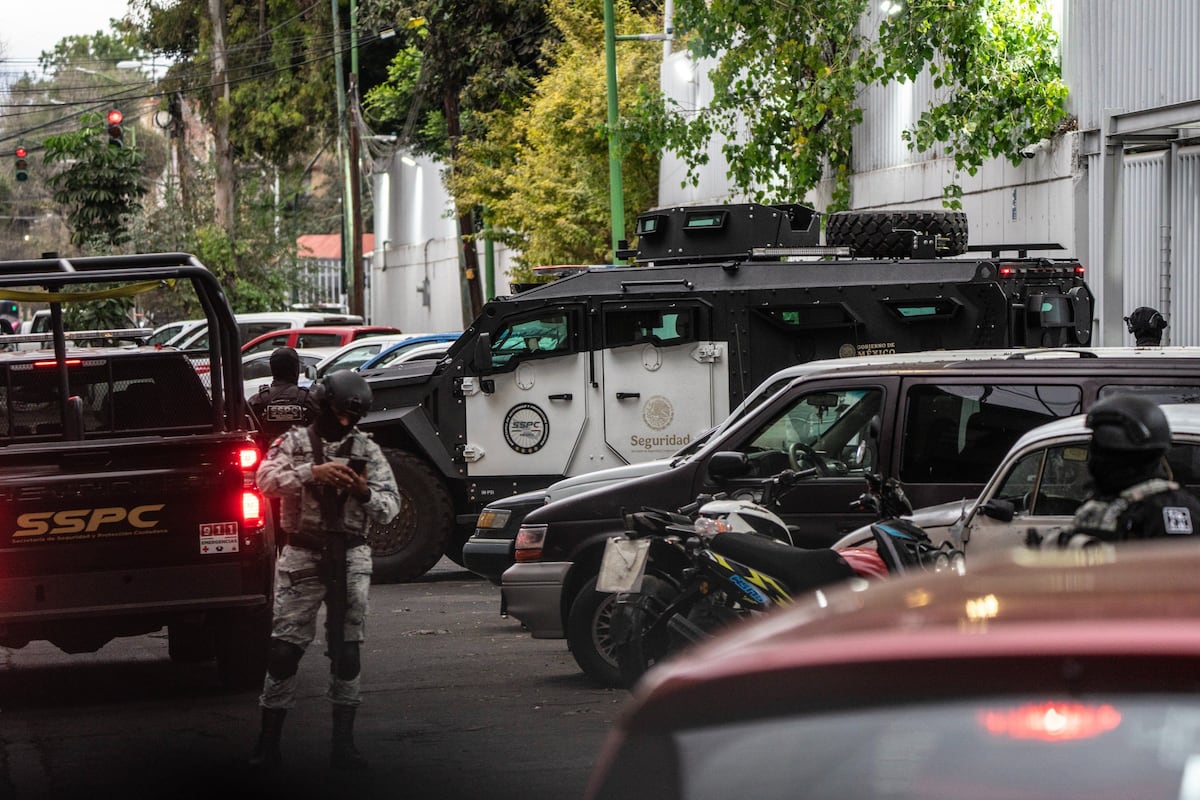
TAPALPA, JALISCO, MEXICO – In a significant blow to Mexico’s criminal landscape, Nemesio Oseguera Cervantes, known as “El Mencho,” the leader of the powerful Cartel Jalisco Nueva Generación (CJNG), was reportedly killed during a military operation on Sunday, February 22, 2026. The operation, conducted in the municipality of Tapalpa in the western state of Jalisco, marks a major victory for the Mexican government as it seeks to demonstrate tangible results in its fight against drug trafficking and organized crime, particularly in the face of ongoing scrutiny from the United States. The death of El Mencho, a former police officer who rose to become one of the world’s most wanted drug lords, has triggered a wave of violence across several Mexican states, including road blockades and the burning of businesses.
The confirmation of El Mencho’s death came after days of intense speculation and a large-scale military deployment to Jalisco. Authorities reported that suspected CJNG members retaliated against the operation with widespread acts of violence, setting buses and commercial establishments ablaze and engaging in clashes with security forces. The unrest has sparked fear among residents in affected areas, prompting increased security measures and travel advisories. The CJNG, under El Mencho’s leadership, had grown into one of the most powerful and ruthless criminal organizations in Mexico, rivaling even the infamous Sinaloa Cartel in terms of influence and operational capacity. The United States Drug Enforcement Administration (DEA) has consistently described the CJNG as a major threat due to its extensive drug trafficking operations and its willingness to employ extreme violence.
The Rise and Reign of ‘El Mencho’
Nemesio Oseguera Cervantes was born on July 17, 1966, in Michoacán, Mexico. His early career began within structures linked to the Milenio Cartel, but following its fragmentation, he consolidated the CJNG as an independent organization with a growing presence across multiple Mexican states and increasingly documented international operations, including drug trafficking and financial crimes. The CJNG quickly distinguished itself through its aggressive tactics, sophisticated weaponry, and its ability to challenge the authority of the state in key regions. Under El Mencho’s command, the cartel expanded its operations beyond drug trafficking to include extortion, kidnapping, and human trafficking, further solidifying its control over local economies and communities.
The U.S. State Department had offered a reward of up to $10 million for information leading to El Mencho’s arrest or conviction, highlighting the international concern surrounding his activities. His organization’s influence extended beyond Mexico, with connections to criminal networks in the United States, Europe, and Asia. The CJNG’s ability to adapt and innovate, coupled with El Mencho’s ruthless leadership, made it a formidable adversary for both Mexican and international law enforcement agencies. The cartel’s use of social media to disseminate propaganda and intimidate rivals further contributed to its notoriety and its ability to project power.
U.S. Involvement and the Operation in Jalisco
The operation that resulted in El Mencho’s death was reportedly supported by intelligence provided by U.S. Authorities. Mexico’s Secretary of National Defense confirmed that U.S. Officials provided “complementary information” that aided in the planning and execution of the raid. A U.S. Defense official further confirmed the involvement of a U.S. Interagency working group, though the precise nature of their role remains unclear. This collaboration underscores the growing cooperation between the two countries in combating transnational criminal organizations, particularly those involved in the drug trade. The United States has long been a key partner in Mexico’s efforts to dismantle drug cartels, providing financial assistance, training, and intelligence support.
The operation in Tapalpa involved a coordinated deployment of military personnel from various branches of the Mexican armed forces. Details surrounding the circumstances of El Mencho’s death remain limited, but authorities have indicated that he was killed in a shootout with security forces. The aftermath of the operation has been marked by widespread unrest, with reports of road blockades, vehicle fires, and clashes between cartel members and law enforcement officials in several states, including Jalisco, Guanajuato, and Michoacán. These acts of violence demonstrate the CJNG’s capacity to retaliate and disrupt public order, even in the wake of its leader’s death.
The Future of the CJNG and Implications for Mexico
The death of El Mencho represents a significant setback for the CJNG, but it does not necessarily signify the end of the cartel. Experts warn that the organization is deeply entrenched and has a robust infrastructure, with multiple layers of leadership and a vast network of operatives. The CJNG is likely to undergo a period of internal struggle as different factions vie for control, potentially leading to increased violence and fragmentation. The cartel’s ability to adapt and evolve will be crucial in determining its future trajectory.
The Mexican government, under President Sheinbaum, has sought to downplay the extent of the violence following El Mencho’s death, stating that “in most of the territory, activities are developing with complete normality.” Yet, reports from the ground paint a different picture, with widespread disruption and fear among the population. The long-term implications of El Mencho’s death for Mexico’s security situation remain uncertain. While it may weaken the CJNG in the short term, it could also create a power vacuum that leads to increased competition among rival cartels and a further escalation of violence. The Mexican government will require to maintain a strong security presence and address the underlying socio-economic factors that contribute to the growth of organized crime in order to effectively combat the threat posed by drug cartels.
The CJNG, described as a criminal enterprise of turbulent ascent, has demonstrated a remarkable ability to adapt and expand its operations. Its success has been attributed to its aggressive tactics, its control over key territories, and its ability to exploit weaknesses in the Mexican state. The cartel’s influence extends beyond the drug trade, encompassing extortion, kidnapping, and other criminal activities that destabilize communities and undermine the rule of law.
The coming weeks and months will be critical in determining the CJNG’s response to El Mencho’s death and the broader impact on Mexico’s security landscape. Authorities are expected to intensify their efforts to dismantle the cartel’s infrastructure and apprehend its remaining leaders. However, the challenges are significant, and the fight against organized crime in Mexico is likely to continue for the foreseeable future. The situation remains fluid, and further developments are expected as the investigation unfolds and the Mexican government assesses the full extent of the CJNG’s capabilities and intentions.
Authorities are urging citizens to remain vigilant and report any suspicious activity to the authorities. The Mexican government has pledged to maintain a strong security presence in affected areas and to provide support to communities impacted by the violence. The international community continues to monitor the situation closely, offering assistance and cooperation to support Mexico address the challenges posed by drug trafficking and organized crime.
The next official update from the Mexican government regarding the investigation into El Mencho’s death and the ongoing security operations is expected on February 28, 2026. We encourage readers to share their thoughts and perspectives on this developing story in the comments section below.
Related reading