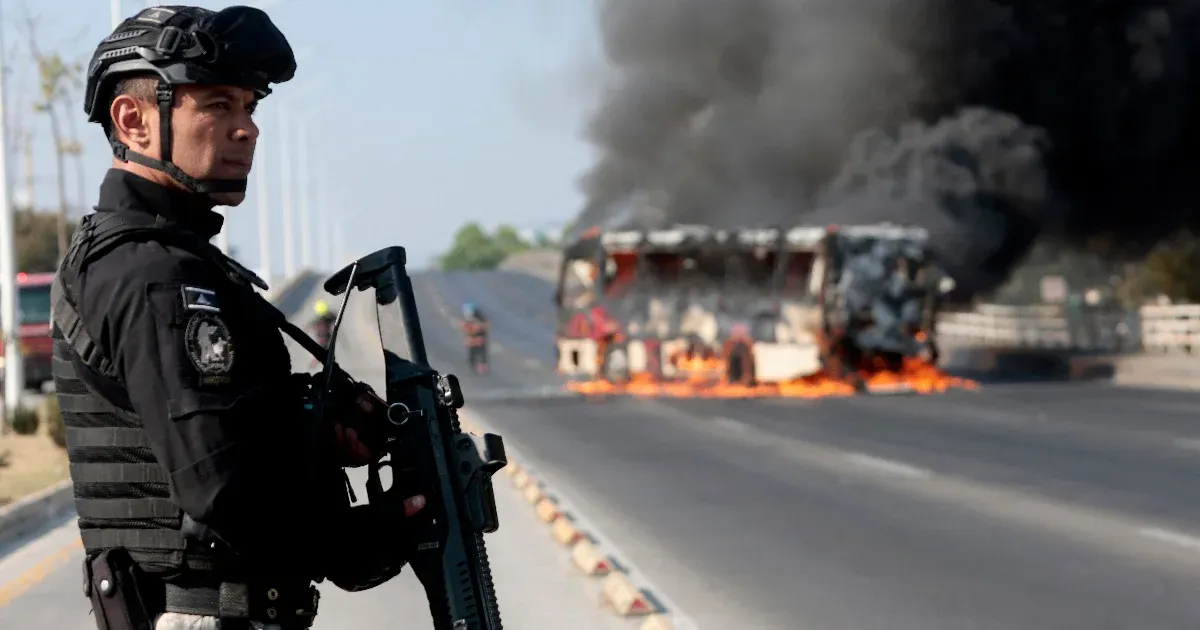
The death of Nemesio Oseguera Cervantes, known as “El Mencho,” leader of the Jalisco Novel Generation Cartel (CJNG), in a military operation on February 22, 2026, marks a significant, though potentially destabilizing, moment in Mexico’s ongoing struggle against drug trafficking. The operation, conducted in Tapalpa, Jalisco, resulted in the death of seven individuals and the arrest of two other cartel members, according to Mexican authorities. While hailed by some as a major victory, security analysts warn that El Mencho’s demise could trigger a violent power struggle within the CJNG and escalate conflicts with rival cartels, potentially spreading instability across multiple regions.
El Mencho’s rise to power was remarkably swift. Beginning his career as a police officer in Jalisco, he leveraged his law enforcement experience and connections to build the CJNG into one of Mexico’s most powerful and ruthless criminal organizations. The cartel quickly expanded its operations beyond traditional drug trafficking, engaging in extortion, kidnapping, and increasingly brazen attacks on government forces. His organization became notorious for its willingness to use extreme violence, challenging the dominance of established cartels like the Sinaloa Cartel and establishing a formidable presence in key drug trafficking routes. The United States offered a $10 million reward for information leading to his capture as early as 2018, highlighting the threat he posed to both Mexican and American security interests. The CJNG’s growing influence and El Mencho’s violent tactics earned him a reputation as one of the most dangerous drug lords in the world.
The Operation and Immediate Aftermath
Details surrounding the military operation remain somewhat limited, but Mexican Defense Secretary Luis Crescencio Sandoval Lozano confirmed that El Mencho was critically wounded during the raid and died en route to Mexico City. According to reports, the operation targeted a remote area near Tapalpa, a region considered a stronghold for the CJNG. The swiftness of the operation and the high-profile target suggest a significant intelligence gathering effort by Mexican security forces. However, the immediate aftermath has been marked by widespread violence and disruption.
In the state of Jalisco, and at least four other states, cartel members responded to El Mencho’s death by blocking roads with burning vehicles, a tactic frequently employed to intimidate the population and disrupt security operations. Jalisco Governor Pablo Lemus Navarro swiftly ordered the suspension of public transportation and urged residents and tourists to remain indoors. A “red alert” was issued by the federal government, leading to the cancellation of public events on Sunday and the suspension of in-person classes on Monday. While the Guadalajara International Airport remained operational, reports indicated significant difficulties in securing transportation to and from the facility. The airport’s official X account confirmed continued operations, but anecdotal reports suggested widespread disruption to ground transportation.
El Mencho’s Legacy and the Future of the CJNG
Nemesio Oseguera Cervantes, born July 17, 1966, leaves behind a legacy of violence and disruption. As detailed by the Wikipedia entry on El Mencho, his career in organized crime began in the 1990s, with a three-year prison sentence in the United States for heroin conspiracy. Upon his return to Mexico, he joined the Milenio Cartel before ultimately forming the CJNG, capitalizing on the fragmentation of other cartels and exploiting vulnerabilities in the Mexican security apparatus. The CJNG distinguished itself through its aggressive expansion, sophisticated operational tactics, and willingness to challenge the authority of the state.
The question now is what the future holds for the CJNG. Experts suggest several possible scenarios. A power vacuum could emerge, leading to internal conflicts as rival factions within the cartel vie for control. This infighting could weaken the organization, creating opportunities for other cartels to expand their influence. Alternatively, a strong successor could emerge, consolidating power and continuing the CJNG’s aggressive expansion. The cartel’s deep roots in Jalisco and its extensive network of corruption within local and state institutions will likely complicate efforts to dismantle the organization. Insight Crime notes that El Mencho’s origins in the Tierra Caliente region of Michoacán and his early involvement in drug trafficking shaped his ruthless approach to criminal enterprise.
The Fentanyl Connection and US Concerns
El Mencho’s death comes at a time of heightened concern in the United States regarding the flow of fentanyl and other synthetic drugs across the border. The CJNG, under El Mencho’s leadership, became a major player in the fentanyl trade, significantly increasing the availability of the deadly opioid in the US market. This has fueled a public health crisis and prompted calls for stronger action against Mexican cartels. Former US President Donald Trump has repeatedly threatened military intervention in Mexico to address the drug problem, a stance that could be revisited in the wake of El Mencho’s death. The US Drug Enforcement Administration (DEA) estimates that fentanyl is now the leading cause of overdose deaths in the United States, with a significant portion of the supply originating from Mexico.
The Mexican government’s success in eliminating El Mencho may be seen as a positive step by the US, but This proves unlikely to resolve the underlying issues driving the drug trade. Demand for illicit drugs in the United States remains high, and cartels will continue to adapt and find new ways to smuggle drugs across the border. Addressing the fentanyl crisis will require a comprehensive approach that includes reducing demand, disrupting supply chains, and strengthening international cooperation.
Impact on Regional Security
The potential for increased violence and instability extends beyond Jalisco. The CJNG has expanded its operations to other states, including Guanajuato, Michoacán, and Guerrero, and has established alliances with local criminal groups. El Mencho’s death could disrupt these alliances and trigger conflicts with rival cartels seeking to exploit the power vacuum. The fragmentation of the CJNG could also create opportunities for smaller, more violent groups to emerge, further complicating the security landscape. The Mexican government will need to deploy additional resources to maintain order and prevent the escalation of violence in these regions.
The situation is further complicated by the upcoming Mexican presidential elections in June 2024. The current administration, led by President Andrés Manuel López Obrador, has adopted a strategy of “hugs, not bullets,” prioritizing social programs and addressing the root causes of crime. However, critics argue that this approach has been ineffective in curbing cartel violence. The next president will face the daunting task of restoring order and addressing the underlying issues that fuel organized crime. The death of El Mencho, while a tactical victory, underscores the deep-seated challenges facing Mexico in its fight against drug trafficking.
The Mexican government has not yet announced any further operations targeting key CJNG figures, but security analysts expect a continued crackdown in the coming weeks and months. The focus will likely be on dismantling the cartel’s financial networks, disrupting its supply chains, and arresting its top lieutenants. The success of these efforts will depend on the government’s ability to overcome corruption, strengthen its intelligence capabilities, and maintain effective coordination with international partners.
The situation remains fluid and unpredictable. The coming weeks will be critical in determining whether El Mencho’s death leads to a period of increased violence and instability or creates an opportunity for a more sustainable peace. The Mexican government’s response will be closely watched by both domestic and international observers.
Authorities are expected to provide further updates on the situation in Jalisco and across Mexico in the coming days. We will continue to monitor developments and provide timely and accurate reporting on this evolving story. Share your thoughts and perspectives in the comments below.
Related reading