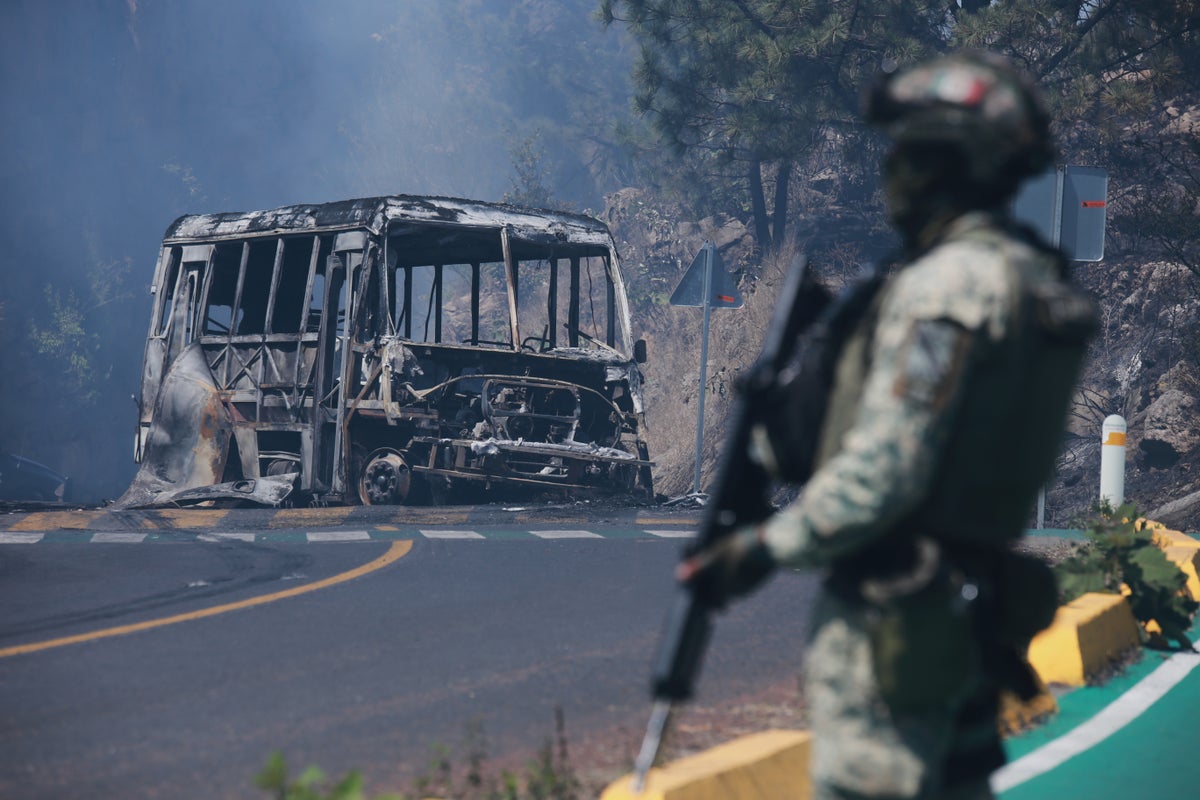
Mexico City – The death of Nemesio Rubén Oseguera Cervantes, known as “El Mencho,” leader of the Jalisco New Generation Cartel (CJNG), in a military operation on Sunday, February 23, 2026, represents a significant, though potentially destabilizing, blow to Mexico’s organized crime landscape. Even as authorities have not yet released detailed information about the operation, the reported success in neutralizing the head of what had develop into the country’s most powerful cartel has triggered a wave of violence across several states, including vehicle burnings and heightened security measures in the capital.
The CJNG, under El Mencho’s leadership, had rapidly expanded its influence throughout Mexico, challenging the dominance of more established cartels and becoming known for its brazen displays of force and sophisticated operational capabilities. The cartel’s activities extended beyond drug trafficking to include extortion, kidnapping, and increasingly, direct confrontations with Mexican security forces. The organization’s reach also extended internationally, with connections to trafficking networks in the United States, Europe, and Asia. The elimination of El Mencho raises questions about the future structure and direction of the CJNG, and whether it will lead to a power vacuum and increased fragmentation within the criminal organization.
Initial reports indicate that the operation to apprehend El Mencho took place in the state of Jalisco, the cartel’s stronghold. The Mexican Army deployed significant resources, including air support, to locate and engage the cartel leader. Details surrounding the circumstances of his death remain limited, but officials have confirmed that he was killed during the operation. Following the announcement, coordinated attacks were reported in several states, including Guanajuato, Michoacán, and Zacatecas, with reports of vehicles set ablaze and roadblocks erected by suspected cartel members. These actions suggest a retaliatory response from CJNG factions seeking to demonstrate their continued power and disrupt government control.
The Rise and Reign of “El Mencho”
Nemesio Rubén Oseguera Cervantes, born in 1966, rose through the ranks of the criminal underworld over several decades. He initially gained prominence within the Milenio Cartel before breaking away in 2011 to form the CJNG. Under his leadership, the cartel quickly distinguished itself through its aggressive tactics, technological sophistication, and a willingness to challenge the authority of the Mexican state. El Mencho cultivated a reputation for ruthlessness and maintained tight control over the organization’s operations, reportedly enforcing strict discipline among its members. His leadership style, combined with the cartel’s strategic focus on lucrative trafficking routes and emerging criminal markets, propelled the CJNG to become one of the most formidable criminal organizations in Mexico.
The CJNG’s expansion was fueled by its ability to adapt to changing security conditions and exploit vulnerabilities within the Mexican state. The cartel invested heavily in weaponry, including high-caliber firearms and military-grade equipment, allowing it to effectively confront rival cartels and security forces. It also developed a sophisticated network of informants and collaborators within government institutions, providing it with intelligence and protection from law enforcement efforts. The cartel’s influence extended beyond the drug trade, with involvement in illegal mining, extortion of businesses, and the trafficking of other illicit goods. This diversification of criminal activities further strengthened its financial base and expanded its reach across Mexico.
Immediate Aftermath and Security Response
In the wake of El Mencho’s death, the Mexican government has deployed additional security forces to key areas across the country, particularly in states where the CJNG maintains a strong presence. Federal troops have been stationed at strategic locations, including airports, highways, and government buildings, to prevent further attacks and maintain public order. Authorities have also increased surveillance and intelligence gathering efforts to monitor the activities of remaining cartel members and identify potential successors to El Mencho. The National Guard has been mobilized to support local law enforcement agencies in maintaining security and responding to incidents of violence.
The burning of vehicles, reported in multiple states, is widely seen as a direct response to the military operation and a demonstration of the CJNG’s continued capacity for disruption. These acts of arson are intended to intimidate the population and send a message to the government that the cartel remains a force to be reckoned with. The attacks have also raised concerns about the potential for further escalation of violence and the risk of civilian casualties. Authorities are investigating the incidents and working to identify those responsible, but the decentralized nature of the CJNG and its network of collaborators make it challenging to apprehend all those involved.
Potential Scenarios for the CJNG’s Future
The death of El Mencho creates significant uncertainty about the future of the CJNG. Several scenarios are possible, ranging from a smooth transition of power to a violent internal struggle for control. One possibility is that a designated successor, previously groomed by El Mencho, will assume leadership of the cartel. However, identifying a clear successor is complicated by the cartel’s decentralized structure and the presence of multiple high-ranking commanders. Another scenario is that a power vacuum will emerge, leading to infighting among rival factions vying for control of the organization. This could result in increased violence and fragmentation within the CJNG, potentially weakening its overall strength but also making it more unpredictable.
Experts suggest that the fragmentation of the CJNG could also create opportunities for other criminal organizations to expand their influence. Rival cartels may attempt to exploit the power vacuum to gain control of key trafficking routes and territories previously dominated by the CJNG. This could lead to increased competition and conflict among criminal groups, further destabilizing the security situation in Mexico. The Mexican government faces the challenge of preventing this scenario by maintaining a strong security presence and disrupting the activities of rival cartels. The long-term impact of El Mencho’s death on the CJNG and the broader criminal landscape in Mexico remains to be seen, but the situation is highly fluid and requires careful monitoring.
International Implications and US Concerns
The CJNG’s activities have significant international implications, particularly for the United States, which is a major destination for the cartel’s illicit drugs. The cartel’s control over key trafficking routes and its ability to produce and transport large quantities of fentanyl have contributed to the opioid crisis in the United States. The US Drug Enforcement Administration (DEA) has identified the CJNG as a major threat to national security and has been working with Mexican authorities to disrupt its operations. The death of El Mencho is expected to have a short-term impact on the cartel’s drug trafficking activities, but it is unlikely to eliminate the threat entirely.
US law enforcement agencies are concerned that the fragmentation of the CJNG could lead to increased competition among criminal groups and a greater flow of drugs into the United States. They are also monitoring the situation closely to identify potential successors to El Mencho and assess their impact on the cartel’s operations. The US government has pledged to continue providing support to Mexico in its efforts to combat drug trafficking and organized crime, but the long-term success of these efforts will depend on addressing the underlying factors that contribute to the problem, such as poverty, corruption, and lack of economic opportunity. The ongoing cooperation between the US and Mexico is crucial for mitigating the international consequences of the CJNG’s activities and preventing the further spread of illicit drugs.
The Mexican government has not yet announced any specific plans for addressing the long-term challenges posed by the CJNG’s fragmentation. However, officials have indicated that they will continue to prioritize the dismantling of criminal organizations and the strengthening of law enforcement institutions. The government is also exploring strategies for addressing the root causes of crime, such as poverty and lack of opportunity, but these efforts are likely to take time to yield results. The situation remains volatile, and the potential for further violence and instability is high. The coming weeks and months will be critical in determining the future trajectory of the CJNG and the broader security landscape in Mexico.
Authorities are expected to provide further updates on the situation in the coming days, including details about the military operation and the investigation into the retaliatory attacks. The Mexican government has also pledged to increase transparency and accountability in its efforts to combat organized crime. The international community is closely monitoring the situation and offering support to Mexico in its efforts to maintain security and stability. The death of El Mencho marks a turning point in the fight against organized crime in Mexico, but it is only one step in a long and complex process.
Key Takeaways:
- Nemesio Rubén Oseguera Cervantes, “El Mencho,” leader of the CJNG, was killed in a military operation on February 23, 2026.
- The CJNG had become Mexico’s most powerful cartel, known for its violence and sophisticated operations.
- El Mencho’s death has triggered retaliatory attacks in several states, including vehicle burnings and roadblocks.
- The future of the CJNG is uncertain, with potential scenarios ranging from a smooth transition of power to a violent internal struggle.
- The situation has significant international implications, particularly for the United States, due to the cartel’s involvement in drug trafficking.
The Mexican government is expected to provide further updates on the situation as the investigation progresses. We will continue to monitor developments and provide updates as they become available. Share your thoughts and perspectives on this developing story in the comments below.
Worth a look