A ‘Latin American Mona Lisa’ Rises in El Salvador, Crafted from Recycled Plastic
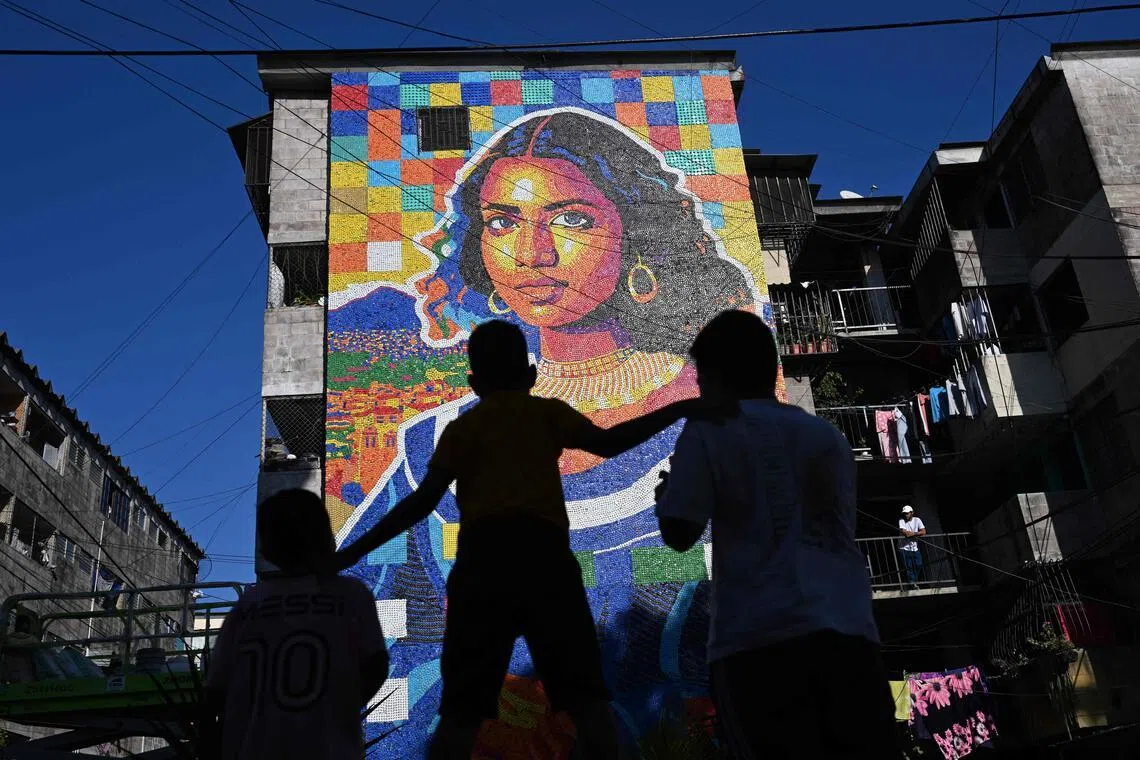
San Salvador, El Salvador – A striking mural depicting a distinctly Latin American interpretation of Leonardo da Vinci’s iconic Mona Lisa has transformed a modest apartment building in the Zacamil neighborhood of Mejicanos, El Salvador. Created entirely from over 100,000 recycled plastic bottle caps, the artwork is the latest project by Venezuelan artist Oscar Olivares, and stands as a powerful statement on both artistic expression and environmental responsibility. The mural, measuring 13 meters (approximately 43 feet) in height, is already garnering international attention, prompting conversations about art, sustainability, and community revitalization in a region undergoing significant change.
Olivares, known for his innovative use of recycled materials, conceived of the project as a way to connect with the local community and offer a fresh perspective on a globally recognized masterpiece. “I wanted to portray a Latin American Mona Lisa,” Olivares told AFP. The project wasn’t simply about replicating a famous painting. it was about reimagining it through a cultural lens and utilizing a readily available resource – plastic waste – to create something beautiful and meaningful. The mural’s location in Zacamil, a suburb of San Salvador, is particularly poignant, as the area has historically been impacted by gang violence, though recent security measures have begun to shift the landscape.
From Plastic Waste to Renaissance Inspiration
The creation of the mural was a collaborative effort, involving local residents who spent months collecting, washing, and sorting the plastic bottle caps. This community participation is central to Olivares’s artistic philosophy, transforming the project from a solo endeavor into a shared experience. The sheer scale of the artwork is impressive, requiring more than three weeks to complete. Olivares drew inspiration not only from da Vinci’s Renaissance masterpiece but as well from the pointillist techniques of French artist Paul Signac, utilizing a vibrant spectrum of colors and varying cap sizes to achieve a textured, almost mosaic-like effect.
Instead of the subdued tones of the Italian countryside that form the backdrop of the original Mona Lisa, Olivares opted for a brighter, more vibrant setting. The mural’s background features depictions of homes, a striking blue mountain, and a colorful checkerboard sky, reflecting the unique character of Latin American landscapes and communities. The Mona Lisa herself is rendered with a sun-kissed complexion, her enigmatic smile brought to life through the use of red, orange, and yellow bottle caps. Her attire and jewelry evoke the grace and style of a modern Latina woman, further emphasizing the artwork’s cultural identity.
El artista venezolano Oscar Olivares creó un mural con tapas plásticas en un edificio de apartamentos en Mejicanos, El Salvador. La obra de arte, de más de 13 metros de altura, es considerada el mural de tapas de botellas más alto del mundo. pic.twitter.com/JSvz24L6FC
— AFP Noticias (@AFP) February 22, 2026
A Broader Artistic Vision and Environmental Message
This isn’t Olivares’s first foray into large-scale art created from recycled materials. He has previously completed similar murals in Venezuela, Mexico, Saudi Arabia, France, and Italy, utilizing over two million plastic bottle caps in more than two dozen projects. His work consistently aims to raise awareness about the global plastic waste crisis and demonstrate the potential for creative reuse. The artist hopes his murals will inspire viewers to reconsider their relationship with plastic and explore innovative solutions for reducing waste. MSN reports that the mural is being hailed as a symbol of hope and resilience in a community striving for positive change.
The choice of location in Zacamil is also significant, given the recent security improvements in the area. President Nayib Bukele’s administration has implemented a controversial security crackdown aimed at curbing gang activity in El Salvador. Whereas the effectiveness and human rights implications of these measures have been widely debated, they have demonstrably altered the security landscape in neighborhoods like Zacamil. The mural, represents not only an artistic achievement but also a symbol of renewal and progress in a community reclaiming its space.
The ‘New Renaissance’ and the Power of Art
Olivares views his work within the context of a broader cultural shift. “The Mona Lisa is an ordinary woman, and she’s an icon of the Italian Renaissance,” he explained to AFP, “and now we are living through a new Renaissance, both in El Salvador and the world.” This “new Renaissance,” according to Olivares, is characterized by a renewed focus on creativity, sustainability, and community engagement. The mural serves as a tangible expression of this vision, demonstrating the power of art to inspire hope and drive positive change.
The project’s success hinges on the active participation of the local community. Residents not only contributed the bottle caps but also assisted with the washing and sorting process, fostering a sense of ownership and pride in the artwork. This collaborative approach underscores Olivares’s belief that art should be accessible to all and that it should serve as a catalyst for social connection. The mural is more than just a visual spectacle; it’s a testament to the power of collective action and the transformative potential of art.
Key Takeaways
- Venezuelan artist Oscar Olivares has created a large-scale mural of the Mona Lisa using over 100,000 recycled plastic bottle caps in Zacamil, El Salvador.
- The artwork, measuring 13 meters tall, is inspired by both Leonardo da Vinci and the pointillist style of Paul Signac.
- The mural’s location in a formerly gang-controlled neighborhood highlights a period of change and revitalization in the area.
- Olivares’s work aims to raise awareness about plastic waste and promote sustainable practices through artistic expression.
- The project involved significant community participation, fostering a sense of ownership and pride among local residents.
As the ‘Latin American Mona Lisa’ continues to attract visitors and generate discussion, it stands as a powerful symbol of artistic innovation, environmental consciousness, and community resilience. Olivares is currently planning his next mural project, with potential locations being considered in several South American countries. Further updates on his work and the ongoing impact of the El Salvador mural can be found on his official website, which is expected to launch in March 2026. We encourage readers to share their thoughts on this remarkable artwork and its message in the comments below.