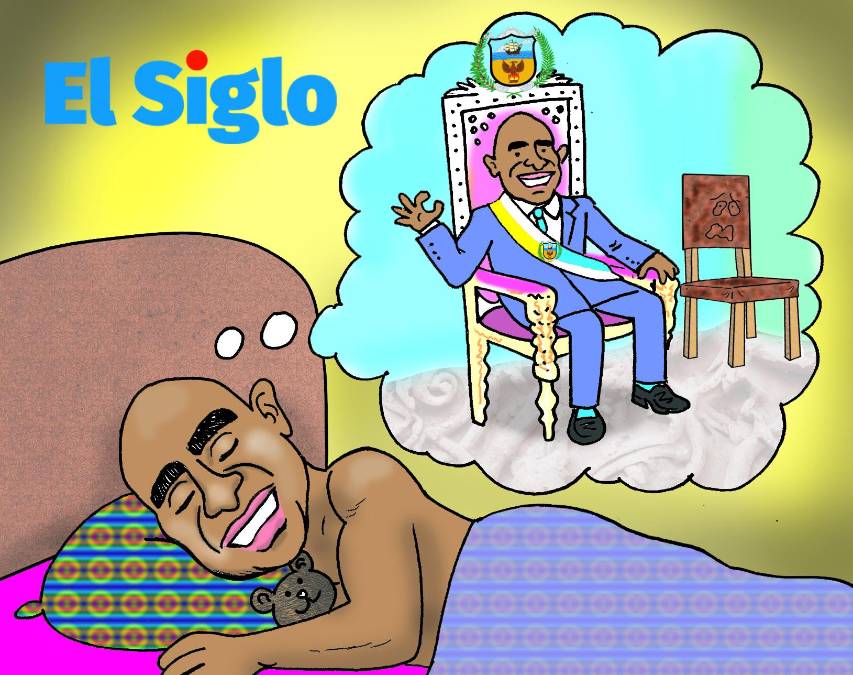
Panama’s political landscape is once again stirred by the ambitions of Colón Province, this time fueled by a proposal from Deputy Jairo “Bolota” Salazar to pursue independence from the rest of the nation. The idea, first floated publicly in late February 2026, has ignited a national debate about regional autonomy, economic viability, and the historical relationship between Colón and Panama City. A recent political cartoon published by El Siglo on February 28, 2026, visually captured the essence of Salazar’s vision, depicting Colón as a nation unto itself.
Salazar, a long-time representative of the province, argues that Colón possesses the necessary infrastructure, a skilled workforce, and economic strength to function as an independent country. He contends that the province, strategically positioned with significant port facilities and a vital connection to the Panama Canal, contributes substantially to the national economy but doesn’t receive equitable benefits in return. This sentiment of perceived marginalization has long simmered within Colón, and Salazar’s proposal appears to have tapped into a deep well of regional pride and frustration.
The Roots of Colón’s Independence Aspirations
The idea of Colón separating from Panama isn’t entirely new. Historically, Colón has often felt like a distinct entity, shaped by its unique demographics, economic drivers, and cultural identity. The province’s proximity to the Panama Canal has made it a crucial hub for international trade, but also a region grappling with socio-economic challenges, including unemployment and crime. According to reports from Midiario, Salazar emphasized Colón’s capacity to thrive independently, citing its robust professional base and economic contributions.
Jairo “Bolota” Salazar, born in Colón on April 13, 1975, has a long history of political involvement in the province. As detailed by Foco Panamá, Salazar’s political career began in 1998 with the Partido Revolucionario Democrático (PRD), where he has remained a member. He served as a representative for the Barrio Norte corregimiento from 2009 to 2019 before being elected as a deputy to the National Assembly in 2019, representing circuit 3-1. His political trajectory demonstrates a consistent commitment to advocating for the interests of Colón.
Salazar’s Proposal and the National Response
Salazar’s proposal, made during a session of the National Assembly, has sparked a wide range of reactions. Supporters argue that independence would allow Colón to control its own resources, prioritize its development needs, and address its specific challenges more effectively. They point to the province’s strategic importance in global trade and its potential to attract foreign investment as an independent nation. Critics, however, raise concerns about the economic and logistical implications of separation, questioning Colón’s ability to sustain itself without the support of the central government. They also warn of potential disruptions to trade and the operation of the Panama Canal.
The debate extends beyond economic considerations. Concerns have been raised about the potential impact on national unity and the precedent that Colón’s independence could set for other provinces. Some fear that it could lead to fragmentation and instability within Panama. The proposal has also reignited discussions about historical grievances and the unequal distribution of wealth and opportunities across the country.
The Cartoon’s Commentary
The February 28, 2026, cartoon in El Siglo serves as a visual commentary on Salazar’s proposal. While the specific details of the cartoon are not available without viewing the image itself, the newspaper reports that it is “inspired by the dream of Deputy Jairo ‘Bolota’ Salazar of Colón becoming an independent country.” This suggests the cartoon likely depicts a symbolic representation of Colón breaking away from Panama, potentially highlighting both the aspirations and the challenges associated with such a move. Political cartoons in Panama, as elsewhere, often employ satire and symbolism to convey complex messages and provoke public discussion.
A History of Political Controversy Surrounding Salazar
Jairo “Bolota” Salazar is no stranger to controversy. Foco Panamá reports several incidents that have drawn scrutiny. In November 2019, Salazar was reportedly involved in a confrontation with police officers in Los Lagos, Colón, allegedly threatening them during an altercation. The same year, questions arose regarding an individual working at Salazar’s gym also appearing on the payroll of the National Assembly. In 2020, a fellow PRD member, Kayra Harding, filed a complaint against Salazar alleging physical and verbal assault during a party meeting. These incidents have contributed to a complex and often contentious public image for the deputy.
Economic Considerations for an Independent Colón
The economic viability of an independent Colón is a central point of contention. The province’s economy is heavily reliant on the Panama Canal, port activities, and the Colón Free Zone, one of the largest free trade zones in the world. While Colón generates significant revenue, it also faces challenges such as high unemployment and poverty rates. Salazar argues that an independent Colón could negotiate more favorable trade agreements, attract foreign investment, and manage its resources more effectively. However, critics question whether the province has the financial resources and administrative capacity to operate independently, particularly in areas such as defense, healthcare, and education.
The Colón Free Zone, in particular, plays a crucial role in the province’s economy. Established in 1953, it is a major hub for international trade, attracting businesses from around the globe. The future of the Free Zone in the event of independence would be a key issue to resolve, as its operations are currently governed by Panamanian law and regulations.
What Happens Next?
As of late February 2026, Salazar’s proposal remains under debate within the National Assembly and among the Panamanian public. It is unclear whether the proposal will gain sufficient support to move forward. The Panamanian government has not yet issued an official response to Salazar’s proposal, but it is expected to address the issue in the coming weeks. The debate is likely to continue, with proponents and opponents making their case to the public and lawmakers. The next step will likely involve a formal review of the proposal by the National Assembly’s legal and political affairs committees.
The situation is fluid and could evolve rapidly. The outcome will have significant implications for the future of Colón, Panama, and the broader region. The debate highlights the ongoing challenges of balancing regional autonomy with national unity and economic development.
The conversation surrounding Colón’s potential independence is a complex one, steeped in history, economics, and political ambition. As the debate unfolds, it will be crucial for all stakeholders to engage in constructive dialogue and consider the long-term implications of any decision.
Here’s a developing story. Check back for updates.
Keep reading