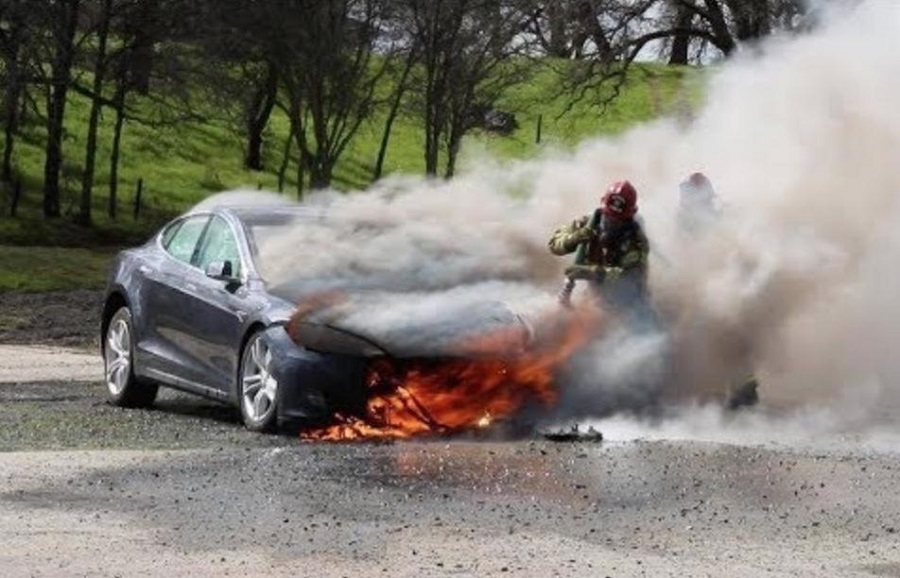
Electric vehicle safety remains a focal point for automotive regulators and emergency responders following recent public discussions regarding battery-related fire risks. While concerns regarding post-collision fires often circulate on social media, international safety data and automotive engineering standards emphasize that electric vehicles (EVs) are subject to rigorous testing protocols before reaching the consumer market. Experts and safety organizations maintain that the risk of fire in EVs is not inherently higher than that of internal combustion engine vehicles, though the management of lithium-ion battery fires requires specialized training for first responders.
Understanding Battery Safety and Collision Risks
The core of the current discussion involves how modern lithium-ion batteries respond to high-impact collisions. According to the National Highway Traffic Safety Administration (NHTSA), all vehicles sold in the United States must meet Federal Motor Vehicle Safety Standards (FMVSS), which include stringent crash tests designed to evaluate fuel system integrity and electrical safety. These tests ensure that high-voltage systems are equipped with automated disconnects that isolate the battery pack in the event of a severe accident.

When a collision occurs, the primary safety goal is the prevention of “thermal runaway”—a condition where a cell’s internal temperature rises uncontrollably. Automotive manufacturers utilize advanced battery management systems (BMS) to monitor voltage and temperature in real-time. If the BMS detects a fault, it is programmed to shut down the system to mitigate fire risks. Engineering reports from the SAE International indicate that while high-voltage batteries are complex, their housing is engineered to withstand significant kinetic force, often exceeding the requirements of traditional gasoline fuel tank protections.
Emergency Response and Fire Suppression
The perception of increased fire risk is often linked to the difficulty of extinguishing lithium-ion blazes compared to conventional fires. The National Fire Protection Association (NFPA) notes that while EVs do not catch fire more frequently than internal combustion engine vehicles, they do require different tactical approaches. Firefighting crews are increasingly trained to use large volumes of water to cool the battery pack, as conventional fire suppression foam may not penetrate the protective casing of an EV battery.

In many regions, fire departments are adopting specialized equipment, such as fire blankets and remote-controlled nozzles, to manage these incidents effectively. Data from the Insurance Institute for Highway Safety (IIHS) suggests that as the fleet of electric vehicles grows, the integration of these specialized training protocols into local emergency service departments is becoming a standardized practice to ensure public safety.
Contextualizing EV Fire Statistics
Public apprehension regarding EV fires is often driven by high-profile incidents that receive significant media attention. However, when comparing incident rates, statistical analysis often tells a different story. According to a report by the National Road Safety Partnership Program, data consistently shows that internal combustion vehicles are statistically more likely to experience a fire event than electric vehicles, largely due to the presence of highly flammable fuels and complex, pressurized fuel systems.
The distinction between a “fire incident” and a “collision-induced fire” is vital for consumers to understand. Most vehicle fires—regardless of powertrain—are caused by maintenance neglect, electrical faults in non-traction components, or arson, rather than battery-related defects. Consumers are encouraged to consult their vehicle owner’s manual for specific safety guidance and to ensure that any collision damage is inspected by a certified technician who is qualified to handle high-voltage systems.
What Happens Next for EV Safety Regulation
Regulatory bodies continue to refine safety standards as battery technology evolves. The United Nations Economic Commission for Europe (UNECE) maintains the Global Technical Regulation (GTR) on Electric Vehicle Safety, which serves as a benchmark for manufacturers worldwide. These regulations are updated periodically to incorporate advancements in battery chemistry and crash-test performance.

For vehicle owners, the best course of action following any significant impact is to have the vehicle towed to an authorized service center. Manufacturers provide specific emergency response guides for first responders, which are available through official company portals. These guides outline the exact location of high-voltage lines and the procedures for disabling the power supply safely.
As the transition to electrified transportation continues, the focus remains on transparent communication between manufacturers, regulatory agencies, and the public. Updates regarding safety recalls or improvements in battery design are typically published through official government safety databases. Readers are encouraged to monitor these official channels for the most accurate and up-to-date information regarding their specific vehicle models.
Do you have questions about vehicle safety or recent industry developments? Share your thoughts or join the conversation in the comments section below.