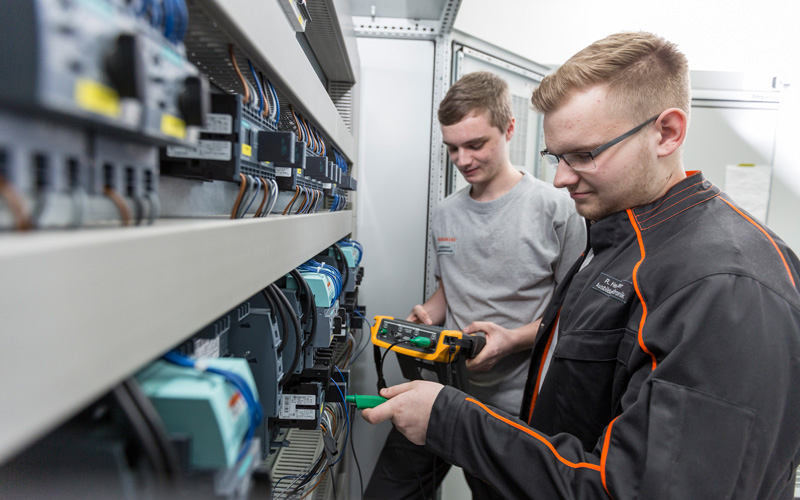
Ingram Micro Services GmbH is accepting applications for its 2026 apprenticeship intake for Electronics Technicians for Devices and Systems (Elektroniker für Geräte und Systeme) at its Flensburg facility. The positions, listed via the regional recruitment portal Küstenfischer.de, utilize the German dual education system to train technicians in the assembly, maintenance, and repair of complex electronic hardware.
The recruitment drive targets candidates for the 2026 cycle, providing a pipeline of skilled labor for the company’s technical services division. As a global leader in technology distribution and lifecycle services, Ingram Micro Services GmbH integrates these apprentices into a workflow that involves high-precision electronics, quality assurance, and industrial hardware diagnostics.
The role of an Elektroniker für Geräte und Systeme is a recognized vocational qualification in Germany, regulated by the Industrie- und Handelskammer (IHK), or Chamber of Industry and Commerce. According to IHK standards, this training focuses on the development and production of electronic devices, ranging from small sensors to large-scale industrial control systems.
What Does an Electronics Technician for Devices and Systems Do?
Technicians in this role are responsible for the entire lifecycle of electronic components. At a facility like Ingram Micro Services GmbH in Flensburg, this typically involves the installation of electronic parts on circuit boards, the soldering of components, and the execution of rigorous testing protocols to ensure hardware meets manufacturer specifications.

According to the official vocational profile for the trade, these professionals must master the use of measuring instruments such as oscilloscopes and multimeters to identify faults in circuitry. They are tasked with reading complex technical drawings and schematics to assemble devices that are often used in global IT infrastructure.
The work at Ingram Micro specifically aligns with the company’s role as a technology aggregator and service provider. This means apprentices are exposed to a vast array of hardware from different global vendors, providing a broader technical experience than that found in a single-product manufacturing plant.
How the German Dual Education System Works
The apprenticeship for the 2026 intake follows the “Dual System,” a cornerstone of the German economy that combines theoretical classroom instruction with practical on-the-job training. This model is designed to eliminate the gap between academic knowledge and industrial application.
Apprentices split their time between a vocational school (Berufsschule) and the company. In the classroom, students study mathematics, physics, and electronic theory. At the Ingram Micro facility in Flensburg, they apply these theories by working on actual client hardware under the supervision of certified master technicians.
The training period typically lasts 3.5 years, though high-performing students can often shorten this duration through an accelerated examination process. The program culminates in a final examination administered by the Industrie- und Handelskammer (IHK), which grants the official state-recognized certification.
Requirements for the 2026 Apprenticeship in Flensburg
While specific individual requirements can vary, the standard prerequisites for an Elektroniker für Geräte und Systeme apprenticeship in Germany generally include a strong foundation in STEM subjects. Candidates are typically expected to have completed a Realschule (intermediate secondary school) or an Abitur (university-entrance qualification).
According to industry standards, a high aptitude for mathematics and physics is critical, as the role requires calculating electrical loads, understanding voltage drops, and analyzing circuit behavior. Manual dexterity is also a primary requirement, as the assembly of micro-electronics requires precision soldering and handling of fragile components.
Ingram Micro Services GmbH emphasizes the need for reliability and a structured approach to work, given that the electronics industry operates under strict quality control and safety regulations. Candidates applying through Küstenfischer.de are generally encouraged to demonstrate a genuine interest in hardware and a willingness to engage in continuous technical learning.
Career Prospects Following Certification
Completion of the apprenticeship opens several pathways for professional growth. Many technicians transition directly into full-time roles within the company, specializing in areas such as quality management, hardware engineering, or technical support.
For those seeking further advancement, the German system provides a clear trajectory toward becoming a “Meister” (Master Craftsman). A Meister certification allows a technician to train their own apprentices and manage technical departments. Alternatively, graduates may pursue a degree in Electrical Engineering at a University of Applied Sciences (Fachhochschule), with their apprenticeship often counting toward practical experience requirements.
The demand for electronics technicians remains high across Europe due to the ongoing digital transformation of industrial processes. Skills in device and system electronics are transferable across sectors, including automotive electronics, medical technology, and renewable energy systems.
The Strategic Role of Flensburg in Tech Services
Flensburg’s position in Northern Germany makes it a strategic hub for logistics and technical services. By offering these apprenticeships, Ingram Micro Services GmbH contributes to the regional “Fachkräfte” (skilled worker) pool, reducing the reliance on external labor imports for highly specialized technical roles.

The presence of global firms like Ingram Micro in Flensburg provides local students with access to international corporate standards and advanced technology that might not be available in smaller regional workshops. This integration of global corporate resources with local vocational training is a key driver of economic stability in the Schleswig-Holstein region.
The use of regional portals like Küstenfischer.de for these listings indicates a targeted effort to recruit local talent who are likely to remain in the region after their training, thereby supporting the long-term technical infrastructure of the city.
Prospective applicants for the 2026 cycle should monitor official company portals and regional job boards for specific application deadlines and required documentation, which typically includes a CV and the most recent school reports.
The next confirmed milestone for this recruitment cycle is the opening of the formal application window for the 2026 start date. Interested candidates are encouraged to prepare their credentials in accordance with German vocational application standards.
Do you have experience with the German dual education system, or are you considering a technical apprenticeship in Europe? Share your thoughts in the comments below.