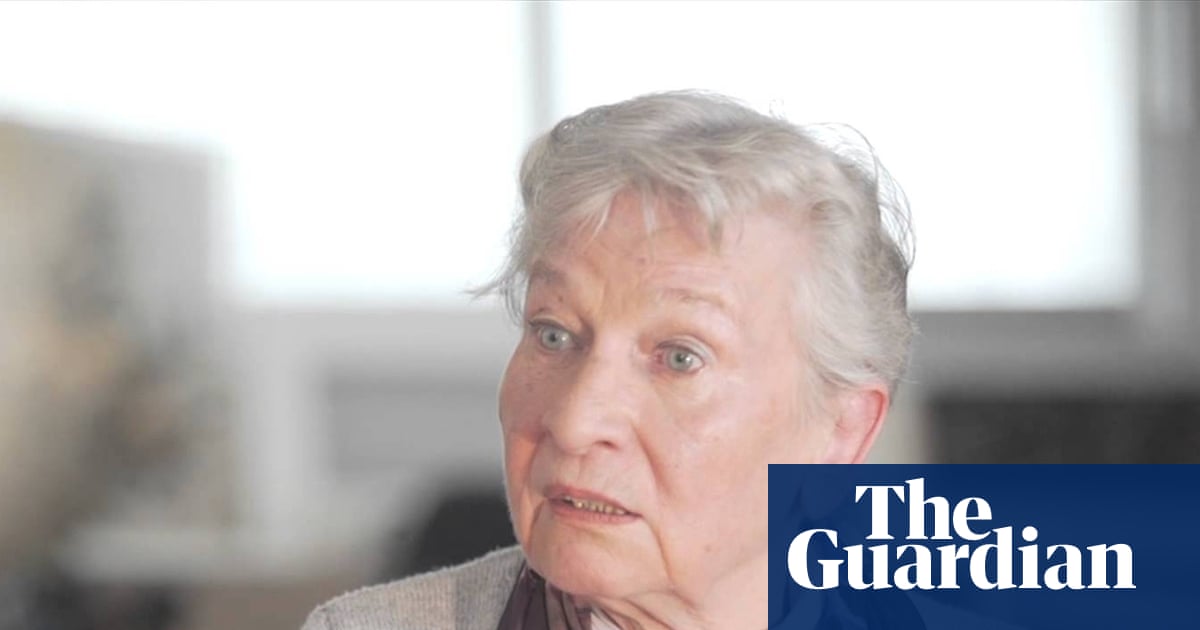
The world of electronic music is in mourning following the death of Éliane Radigue, a pioneering French composer and central figure in the development of musique concrète. Radigue passed away on February 24, 2026, at the age of 94, as confirmed by the Groupe de Recherche de Musique Concrète (INA GRM) in Paris. Her decades-long career, marked by a relentless pursuit of sonic innovation and a deeply meditative approach to composition, leaves behind a legacy that continues to inspire artists across genres.
Radigue’s influence extends far beyond the realm of electronic music. She challenged conventional notions of musical structure, embracing long-form compositions, subtle shifts in timbre, and the inherent beauty of feedback and drone. Her work, often described as minimalist, was anything but simple, demanding attentive listening and offering a profound emotional resonance. She carved a unique path, developing a sound world that was both intensely personal and universally accessible, influencing composers and sound artists for generations.
Born in Paris in 1932, Radigue’s initial musical explorations began with piano lessons. However, a pivotal moment arrived in the early 1950s when she encountered the groundbreaking electroacoustic compositions of Pierre Schaeffer on the radio. This discovery ignited a passion for sound experimentation that would define her artistic trajectory. She subsequently sought out Schaeffer, beginning an apprenticeship at the Studio d’Essai, a hub for the burgeoning musique concrète movement. This early immersion in manipulating recorded sounds – cutting, splicing, and editing tape – laid the foundation for her future work, even as she later distinguished herself from the movement’s core tenets.
Early Years and the Foundations of Musique Concrète
Musique concrète, pioneered by Schaeffer and Pierre Henry, represented a radical departure from traditional musical composition. Instead of creating music from written notation, composers worked directly with recorded sounds – “concrete” sounds from the real world – transforming them through manipulation and arrangement. Radigue quickly became adept at these techniques, working alongside both Schaeffer and Henry in the early 1960s. However, she maintained a distinct artistic independence, stating in a 2019 interview, as reported by Yahoo Entertainment, “I’ve always done what I wanted to as an artist, independent of my surroundings…I was never concerned with making music like theirs.” This commitment to her own vision would become a hallmark of her career.
The Studio d’Essai provided Radigue with a fertile ground for experimentation. She found a particular affinity for the patient, deliberate process of tape manipulation, a practice that resonated with her childhood appreciation for long, slow movements in classical music. This early work involved meticulously assembling soundscapes from fragments of recorded material, creating textures and atmospheres that were both evocative and abstract. It was a period of intense learning and discovery, shaping her understanding of sound as a malleable and expressive medium.
The Synthesizer and a New Sonic Landscape
A transformative chapter in Radigue’s artistic journey began in 1970 with a guest composition residency at New York University. There, she encountered the synthesizer, specifically the ARP 2500 modular system, sharing a studio with composers Laurie Spiegel and Rhys Chatham. Initially skeptical of the instrument, Radigue gradually recognized its potential to create the nuanced, organic sounds she sought. As detailed in reporting by The Guardian, she “dug under its skin,” mastering the complexities of the ARP 2500 and harnessing its capabilities to generate her signature sonic landscapes.
The synthesizer became central to Radigue’s work for the next three decades. She employed it not to create conventional melodies or harmonies, but to explore the subtle nuances of timbre, resonance, and feedback. Her compositions often featured long, sustained tones that slowly evolved over time, creating a hypnotic and immersive listening experience. This approach, characterized by its meditative quality and its emphasis on the physicality of sound, set her apart from many of her contemporaries. The ARP 2500, with its complex patching system and its capacity for generating rich, evolving textures, proved to be the ideal instrument for realizing her artistic vision.
Recognition and Later Works
Radigue’s innovative work garnered increasing recognition throughout the 1970s and 80s, attracting the attention of prominent composers in the United States, including Philip Glass and Steve Reich. Reich, known for his own pioneering work in minimalist music, acknowledged Radigue’s influence, stating, “What my generation did wasn’t a revolution. It was a restoration of harmony and rhythm in a whole new way, but it did bring back those essentials that people wanted, that people craved, but in a way they hadn’t heard.” This acknowledgement highlights the shared spirit of experimentation and the pursuit of new sonic possibilities that characterized the work of these influential composers.
In the 2000s, Radigue shifted her focus towards acoustic instruments, embarking on the “Occam Ocean” series. This project involved collaborations with solo musicians and ensembles, resulting in drone-based soundscapes inspired by the vastness of the sea. These compositions were conceived as antidotes to the frenetic pace of modern life, offering listeners a space for contemplation and immersion. The Occam series continued to evolve, with the latest installment, “Occam XXV,” performed by Frédéric Blondy, released in 2023 by Organ Reframed.
Radigue’s dedication to her craft and her unwavering commitment to artistic independence earned her widespread acclaim. She was celebrated for her ability to create deeply moving and intellectually stimulating music that challenged conventional boundaries and expanded the possibilities of sound. Her influence can be heard in the work of countless artists across a wide range of genres, from electronic music and experimental sound art to contemporary classical composition.
Key Takeaways
- Éliane Radigue was a pioneering figure in musique concrète and electronic music, known for her meditative and immersive compositions.
- She began her career working with Pierre Schaeffer and Pierre Henry, but quickly established her own distinct artistic voice.
- The ARP 2500 synthesizer became central to her work for three decades, allowing her to explore the nuances of timbre and feedback.
- In later years, she shifted her focus to acoustic instruments, creating the “Occam Ocean” series of drone-based soundscapes.
- Radigue’s legacy continues to inspire artists and challenge listeners to reconsider their relationship with sound.
The passing of Éliane Radigue marks the end of an era in electronic music. Her contributions to the field are immeasurable, and her work will undoubtedly continue to resonate with audiences for generations to come. Further information about her life and work can be found through the INA GRM, the Paris-based experimental music center that announced her death. As the music world reflects on her remarkable career, we are reminded of the power of sound to transport, transform, and inspire.
The INA GRM has not yet announced details regarding a memorial service or public tribute. Updates will be posted on their Instagram page as they become available. We invite readers to share their memories and reflections on Éliane Radigue’s music in the comments below.
Worth a look