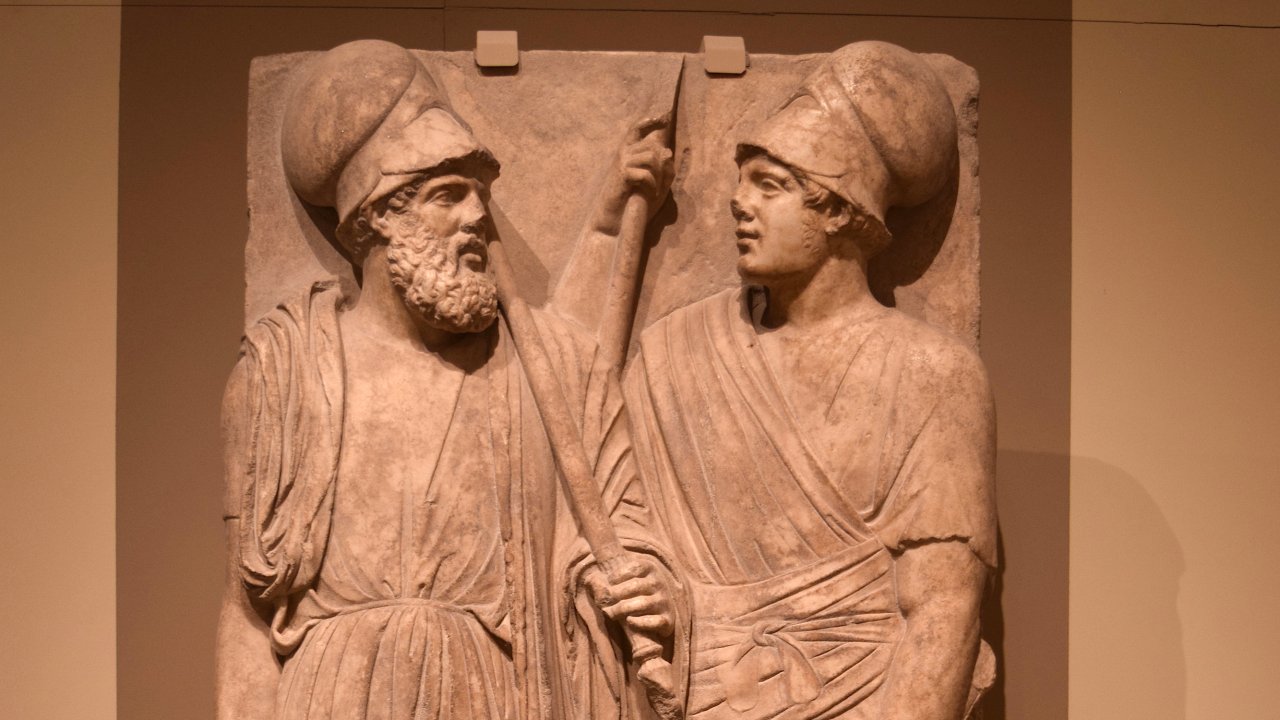
The Sacred Band of Thebes was an elite military unit of 300 soldiers from the Greek city-state of Thebes, organized into 150 pairs of male lovers during the 4th century BCE. This specialized force played a decisive role in the Battle of Leuctra in 371 BCE, a conflict that effectively ended Spartan hegemony over the Greek mainland. According to historical accounts, the unit was designed to leverage the psychological bonds of companionship to ensure unparalleled bravery and cohesion on the battlefield.
Historians and classical scholars, drawing from the writings of Plutarch and Xenophon, identify the Sacred Band as one of the most effective infantry units in ancient warfare. Unlike standard Greek hoplite formations, which relied on a broad, uniform line of heavily armed citizens, the Sacred Band was a concentrated strike force. By pairing soldiers in intimate relationships, Theban commanders aimed to eliminate the possibility of retreat, theorizing that a soldier would fight with extreme ferocity to avoid showing cowardice in front of his partner.
The existence and effectiveness of the unit marked a significant shift in the geopolitical landscape of the Greek peninsula. For much of the 5th century BCE, Sparta had maintained undisputed military supremacy. The rise of Thebes, fueled by the tactical innovations and the specialized training of the Sacred Band, challenged this status quo and reshaped the power dynamics between the various Greek city-states.
Why was the Sacred Band of Thebes organized into pairs?
The organizational structure of the Sacred Band was rooted in the social and military philosophies of the time. Theban military leaders, most notably the general Gorgidas, believed that the traditional bond between soldiers was insufficient to withstand the pressures of high-intensity combat. By formalizing these bonds through romantic and social partnerships, the state created a unit where the duty to the city was inextricably linked to the duty to one’s companion.
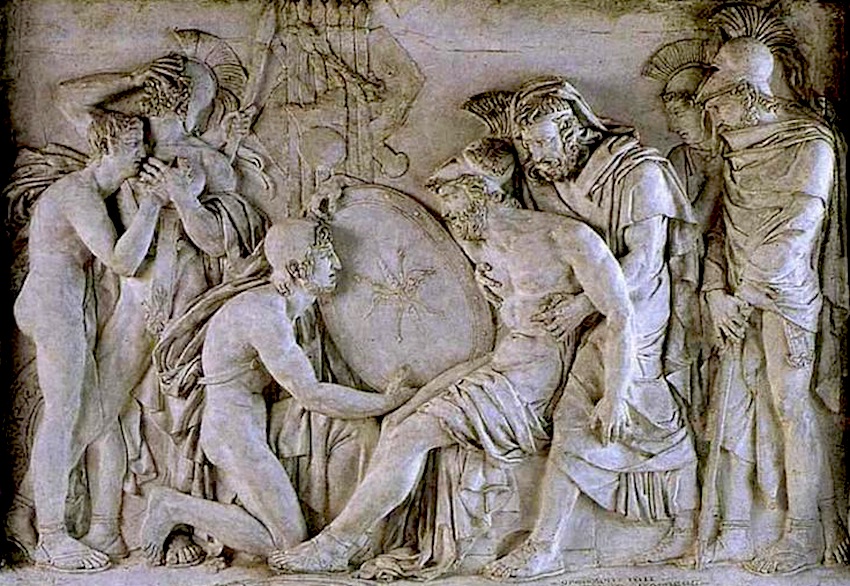
Plutarch, the Greco-Roman biographer, noted that the men of the Sacred Band were motivated by a desire to protect their partners at all costs. In the context of ancient Greek warfare, where the phalanx—a dense block of infantry—depended entirely on the stability of the line, the psychological stability of the individual soldier was paramount. If a single soldier fled, the entire formation could collapse, leading to a massacre. The Sacred Band was intended to be an unbreakable anchor within the larger Theban army.
This practice was not an isolated phenomenon but was part of a broader cultural framework in certain Greek city-states regarding male companionship and military service. However, the Theban implementation was unique in its systematic integration into an elite, state-sanctioned military unit. This approach transformed personal emotion into a strategic military asset, creating a highly disciplined and motivated group of professional warriors.
How did the unit impact the Battle of Leuctra?
The Battle of Leuctra in 371 BCE serves as the most significant historical demonstration of the Sacred Band’s capabilities. At the time, the Spartan army was considered invincible in open combat. However, the Theban general Epaminondas introduced a revolutionary tactical innovation known as the “oblique phalanx” to counter the Spartan strength.

Instead of meeting the Spartan line with a uniform front, Epaminondas concentrated his strongest troops—including the Sacred Band—on the left flank. He deepened this section of the phalanx, creating a massive column of men designed to punch through the Spartan line at its most critical point: the position of the Spartan king and his elite guard. According to Britannica, this concentrated force successfully shattered the Spartan ranks, leading to a decisive Theban victory.
The Sacred Band was positioned at the very heart of this offensive strike. Their ability to maintain formation and advance under intense pressure allowed the Theban forces to break the Spartan center. The defeat at Leuctra was not merely a tactical loss for Sparta; it was a systemic failure that stripped the city of its ability to command the Greek world. The loss of Spartan prestige and manpower following the battle allowed Thebes to emerge as a dominant power in Greece for a brief period.
What were the tactical differences between Theban and Spartan warfare?
The success of the Sacred Band and the Theban military was largely due to their departure from the rigid, traditional methods used by the Spartans. While the Spartans relied on superior individual training and a standardized, deep phalanx, the Thebans utilized more complex, asymmetrical tactics.
The following table compares the primary military characteristics of the two powers during the mid-4th century BCE:
| Feature | Spartan Military | Theban Military (Sacred Band Era) |
|---|---|---|
| Primary Formation | Standard, uniform phalanx | Oblique phalanx (asymmetrical) |
| Tactical Focus | Endurance and individual discipline | Concentrated force and shock tactics |
| Unit Composition | Citizen-soldiers (Spartiates) | Specialized elite pairs (Sacred Band) |
| Strategic Goal | Maintaining traditional dominance | Disrupting enemy command structures |
Epaminondas’s ability to manipulate the battlefield through depth and timing allowed the Thebans to overcome the Spartan advantage in experience. By targeting the Spartan elite with a concentrated mass of highly motivated soldiers, the Thebans proved that tactical intelligence could overcome traditional brute strength.
What was the historical role of companionship in Greek warfare?
To understand the Sacred Band, one must look at the broader social structures of Ancient Greece. The concept of male-centric social bonds was prevalent in many poleis (city-states), often serving as a method of education, social bonding, and military preparation. These relationships were frequently viewed through the lens of paideia—the process of upbringing and education intended to produce virtuous citizens.
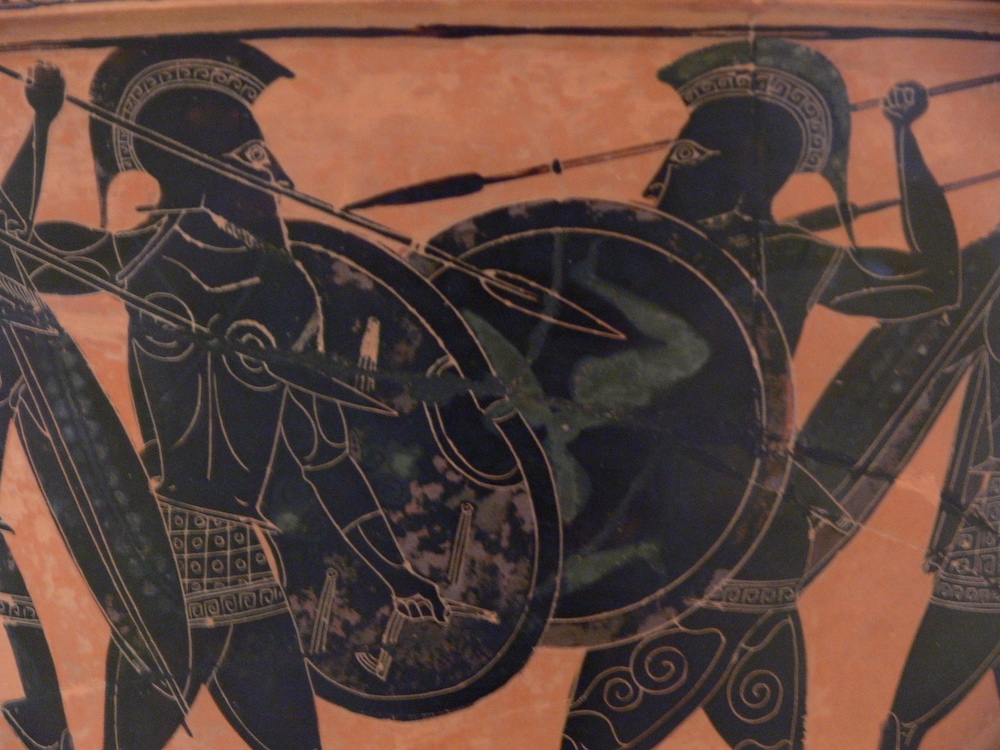
In many Greek military traditions, the presence of a close companion was seen as a way to foster arete, or excellence. The presence of a peer or a loved one encouraged soldiers to perform beyond their natural limits. While the Sacred Band was the most formalized version of this concept, the underlying principle—that social and emotional ties enhance military cohesion—was a recognized element of Greek martial culture.
However, historians caution against projecting modern definitions of sexuality onto these ancient institutions. The Sacred Band was fundamentally a military tool. The primary objective was the preservation of the state and the success of the phalanx. The romantic bonds were utilized as a mechanism for loyalty, ensuring that the individual’s survival was tied to the survival of their partner and, by extension, the unit.
The eventual downfall of the Theban military
The dominance of Thebes was relatively short-lived. While the Sacred Band and Epaminondas’s tactics had broken Spartan power, they could not prevent the eventual rise of Macedonia under Philip II. The same tactical innovations that the Thebans used—such as the deep phalanx and specialized strike forces—would later be refined and scaled by the Macedonians to create the most formidable military in the ancient world.
The Sacred Band met its end at the Battle of Chaeronea in 338 BCE. During this conflict, the Macedonian forces led by Philip II and his son, Alexander the Great, faced the combined forces of the Greek city-states. According to historical records, the Sacred Band fought to the last man, refusing to retreat even as the Theban lines collapsed under the Macedonian onslaught. Their death at Chaeronea marked the end of Theban independence and the beginning of the Macedonian era in Greece.
The legacy of the Sacred Band remains a subject of intense study for military historians. It serves as a case study in how psychological factors and social organization can be integrated into military doctrine to achieve unexpected strategic results. Their ability to transform personal devotion into a weapon of war remains one of the most unique chapters in the history of ancient combat.
Next Historical Checkpoint: The Battle of Mantinea (362 BCE), which would further test the capabilities of the Theban military following the victory at Leuctra.
What are your thoughts on the use of psychological tactics in ancient warfare? Share your views in the comments below and share this article with your network.
Keep reading