The intersection of religious mysticism and political power in Tudor England often led to violent conclusions, a reality exemplified by the life and death of Elizabeth Barton. Known to history as the “Nun of Kent,” Barton rose from the obscurity of domestic service to become a figure of significant influence, challenging the matrimonial and ecclesiastical ambitions of King Henry VIII.
Barton’s ascent began not in a convent, but in the household of Thomas Cobb, a farmer in Aldington who worked for Archbishop William Warham. Around 1525, at the age of 19, Barton claimed to experience vivid visions and divine revelations following a period of severe illness characterized by seizures, paralysis, and a stomach ailment that nearly stopped her breath Wikipedia.
These revelations initially aligned with Catholic orthodoxy, urging the faithful to pray to the Virgin Mary and undertake pilgrimages. However, as Henry VIII sought to annul his marriage to Catherine of Aragon to marry Anne Boleyn, Barton’s prophecies shifted from general spiritual guidance to direct political confrontation. This transition from a “holy maid” to a political dissident ultimately led to her execution in April 1534.
The Rise of the Holy Maid of Kent
Elizabeth Barton’s early life was marked by poverty and servitude. Her transition into a recognized visionary occurred during a time of immense religious tension in England. Her claims of receiving divine revelations gained her a following among both the clergy and the laity, who viewed her as an ecstatic conduit for God’s will Britannica.
The nature of her visions followed a pattern common among “holy maids” of the late medieval period. By predicting local events, such as the death of a child in her household, she established a reputation for accuracy that lent weight to her broader religious pleas for people to remain within the Catholic Church Wikipedia.
For a woman in the 16th century, being a visionary provided a rare platform for public speech. However, this visibility came with inherent risks. Scholars note that young, unschooled women in such positions were often susceptible to manipulation by the male clergy who sought to utilize their “divine” messages to further institutional or political goals Christian Science Monitor.
Conflict with Henry VIII and the Break from Rome
The turning point in Barton’s life occurred as King Henry VIII began the process of seizing control of the Church in England from Rome. Henry’s desire for an annulment from Catherine of Aragon was not merely a personal matter but a political necessity to secure a male heir and consolidate absolute power as the head of a modern national church Christian Science Monitor.
Barton became a vocal opponent of this plan. Her prophecies grew increasingly precise and threatening, warning the King of dire consequences if he proceeded with the annulment and pursued Anne Boleyn Britannica. On at least one occasion, she is reported to have admonished the King in person, directly challenging his authority and his matrimonial policy.
By 1534, Barton’s messages were no longer in tune with the interests of the Crown. Her opposition to the break with the Pope in Rome placed her in direct conflict with the state’s trajectory toward the English Reformation Wikipedia.
Trial, Execution, and the “Mad Maid” Legacy
The King’s response to Barton’s dissent was swift and severe. Once she was perceived as a threat to his political and religious restructuring, the narrative surrounding her shifted. The woman once hailed as the “Holy Maid of Kent” was rebranded by the state and Protestant propaganda as the “Mad Maid of Kent” Wikipedia.

Elizabeth Barton was executed on April 20, 1534 (though some records cite April 21) in London Wikipedia Britannica. Her death served as a warning to other Catholic loyalists and dissenters who opposed Henry VIII’s ecclesiastical reforms.
The legacy of Elizabeth Barton continues to be a subject of interest for modern historians and scholars. Her life illustrates the precarious position of female visionaries in the Tudor era and the way in which religious devotion could be weaponized or dismissed as madness depending on the political needs of the monarchy.
| Year | Event | Significance |
|---|---|---|
| 1506 | Birth | Born in the parish of Aldington, Kent. |
| 1525 | Onset of Visions | Began experiencing trances and prophecies while working as a servant. |
| 1530-1533 | Political Opposition | Began railing against Henry VIII’s plan to break with Rome and marry Anne Boleyn. |
| 1534 | Execution | Executed in London on April 20/21 for her prophecies against the King. |
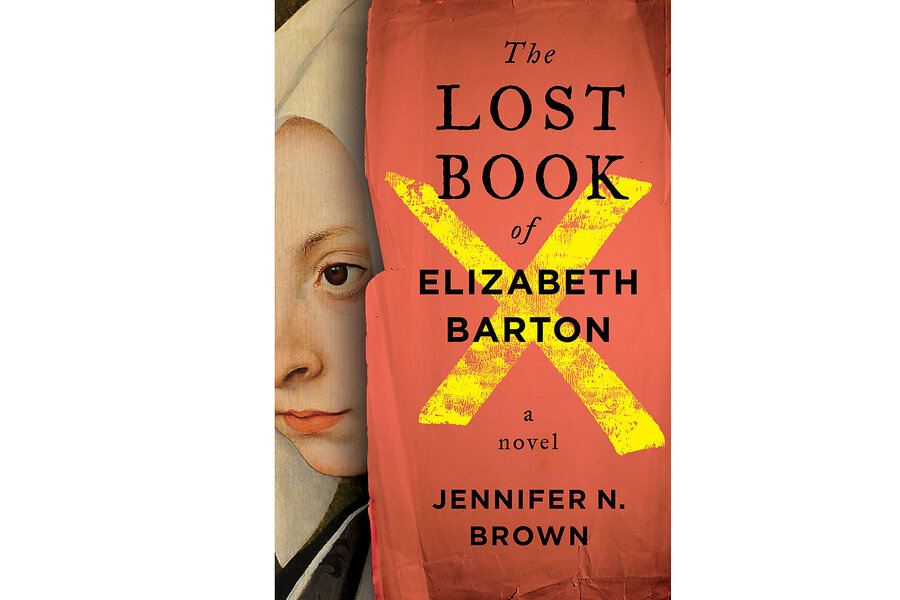
For those interested in the intersection of history and fiction, the story of Elizabeth Barton has inspired contemporary works, such as “The Lost Book of Elizabeth Barton” by Jennifer N. Brown, which explores the trail of scholars attempting to uncover the truth behind her life and the records she left behind Christian Science Monitor.
As historians continue to analyze the records of the Tudor period, the case of Elizabeth Barton remains a primary example of the volatility of religious expression during the English Reformation. We invite readers to share their thoughts on the role of dissent in the Tudor era in the comments below.
Related reading