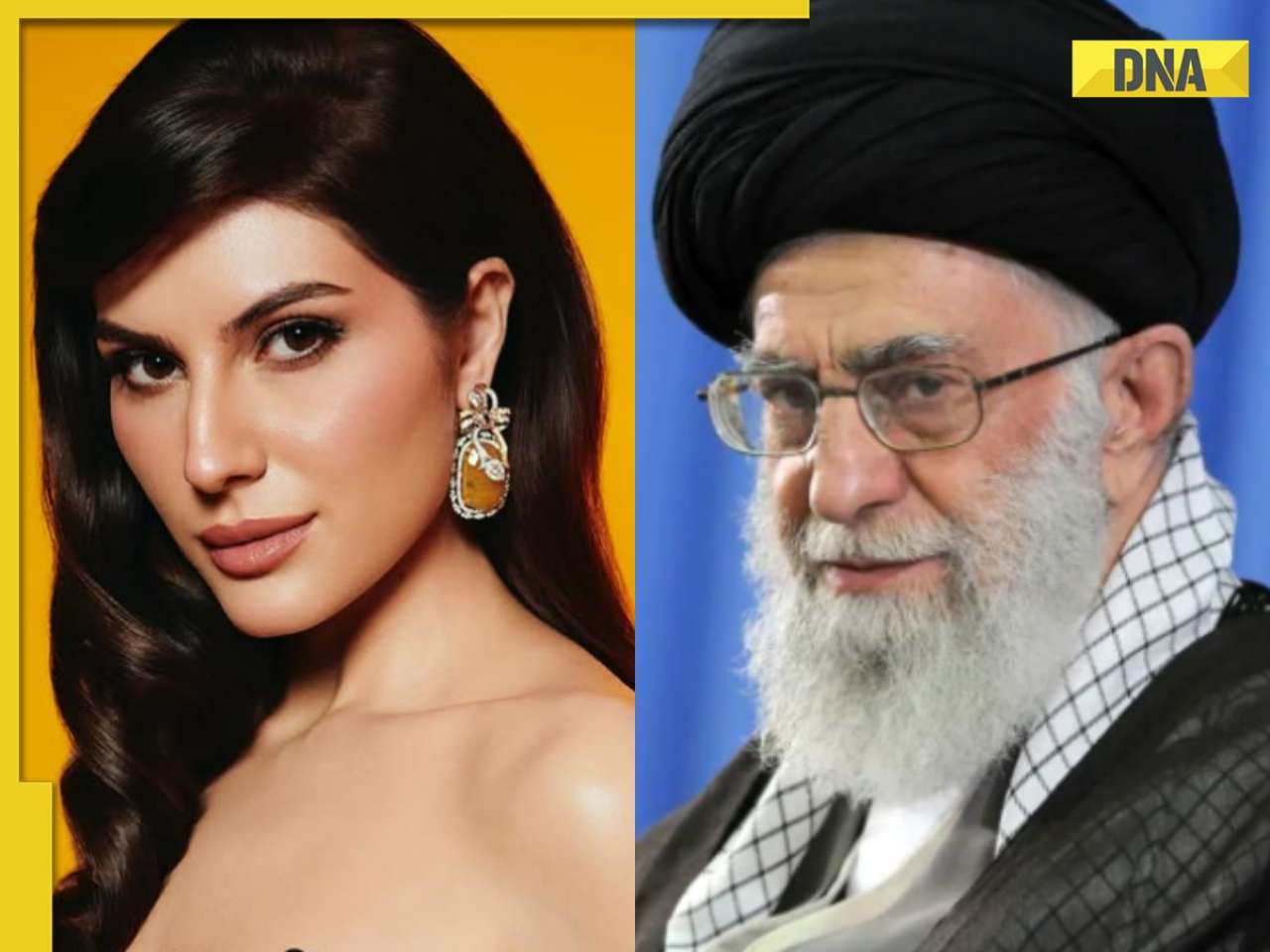
The recent death of Iran’s Supreme Leader Ayatollah Ali Khamenei in a joint strike by the United States and Israel has sent ripples across the Middle East, escalating existing tensions and sparking both mourning and cautious optimism. Amidst the unfolding crisis, Iranian-born actress Elnaaz Norouzi has emerged as a vocal critic of the regime, offering a stark perspective on the internal realities of Iran and the hopes for a future free from the current leadership. Norouzi, who now works internationally, including hosting the game show *Wheel of Fortune* with Akshay Kumar, has long been an outspoken opponent of the Islamic Republic, participating in protests and consistently criticizing its policies.
Norouzi’s recent comments, made in an interview with ANI, highlight a deep-seated discontent within Iran, a sentiment often obscured by state-controlled media. She asserts that many Iranians are experiencing a “glimpse of hope” for change after decades of living under a regime she describes as oppressive. This sentiment is particularly poignant given the circumstances of Khamenei’s death and the potential for a shift in the country’s political landscape. The actress’s willingness to speak out, however, comes at a personal cost, as she fears for her safety should she ever return to her homeland. The situation underscores the risks faced by dissidents and those who challenge the authority of the Iranian government.
The Shadow of Khamenei’s Rule and the Hope for Change
Ayatollah Ali Khamenei, who died on February 28, 2026, had served as Iran’s Supreme Leader since 1989, succeeding Ayatollah Ruhollah Khomeini. His tenure was marked by a firm grip on power, a conservative religious ideology, and a contentious foreign policy. Reports indicate that his son, Mojtaba Khamenei, has been named as his successor, a move Norouzi criticized as undemocratic, stating he was “not chosen by the people.” This transition of power occurs during a period of heightened instability, with Iran launching retaliatory strikes against US bases in the region following the attack that killed Khamenei, further intensifying the conflict.
Norouzi’s perspective is rooted in her personal experience growing up in Iran. Born in the early 1990s in Tehran, she moved to Germany with her family at the age of eight. While her parents have since relocated, many of her relatives remain in Iran, making her acutely aware of the conditions they face. Her last visit to the country was in 2018, and she believes she can no longer return due to her outspoken criticism of the regime. “If I go to Iran, they will kill me,” she stated in a recent interview with the Indian Express.
“He Had Killed So Many People” – A Critique of Khamenei’s Legacy
Norouzi’s condemnation of Khamenei is particularly forceful, accusing him of widespread atrocities committed “in the name of religion.” She believes that many mourning his death, including those protesting in India, are unaware of the extent of his alleged crimes. “They do not know what atrocities this person (Khamenei) had committed… He had killed so many people,” she asserted. While specific details of these alleged atrocities require further independent investigation, the claim reflects a long-standing narrative of human rights abuses and political repression under Khamenei’s leadership. Human rights organizations, such as Amnesty International and Human Rights Watch, have consistently documented concerns regarding Iran’s human rights record, including allegations of arbitrary arrests, torture, and executions. Human Rights Watch’s Iran page provides detailed reports on these issues.
Norouzi emphasizes that the majority of Iranians do not support the current regime, describing the population as “educated and aware” and yearning for a different political future. She believes that the current tensions have been brewing for decades, and that many outside observers misunderstand the internal dynamics of Iran. This perspective challenges the often-simplified portrayal of Iran as a monolithic entity uniformly supportive of its government. Her observations align with various polls and surveys, though access to reliable data within Iran is limited, which suggest widespread dissatisfaction with the economic situation and political restrictions.
The Current Situation and Fears for the Future
The immediate aftermath of Khamenei’s death has been marked by retaliatory strikes from Iran against US assets and allies in the region, including Israel, Bahrain, Kuwait, Qatar, Saudi Arabia, the United Arab Emirates, and Jordan. These attacks, utilizing ballistic missiles and drones, have significantly widened the conflict in West Asia and heightened risks for civilians and expatriates. The situation remains highly volatile, with the potential for further escalation. Lara Dutta, a Bollywood actress, recently shared on social media that she and her daughter are stranded in Dubai due to the escalating conflict, highlighting the broader impact of the crisis on individuals and families in the region.
Despite the uncertainty, Norouzi believes that the majority of Iranians are cautiously optimistic about the possibility of change. She notes that people have been instructed to stay home for their safety, but similarly understand that the strikes are targeted at the Islamic Revolutionary Guard Corps (IRGC) and the leadership, not the general population. She spoke to her family in Iran and confirmed they are currently safe. This suggests a degree of public awareness regarding the specific targets of the attacks and a hope that the conflict could ultimately lead to a more favorable outcome for the Iranian people.
The Role of the IRGC and International Involvement
The Islamic Revolutionary Guard Corps (IRGC) has been a central pillar of the Iranian regime, playing a significant role in both domestic repression and regional foreign policy. The US government has designated the IRGC as a terrorist organization, citing its support for militant groups and its involvement in attacks against US interests. The State Department’s list of Foreign Terrorist Organizations includes the IRGC. The targeting of the IRGC in the recent strikes suggests a deliberate attempt to weaken the regime’s ability to project power and maintain control.
The involvement of the United States and Israel in Khamenei’s death has drawn both condemnation and support from various international actors. While some countries have expressed concern over the escalation of violence, others have welcomed the removal of a key figure perceived as a destabilizing force in the region. The international community is now grappling with the challenge of managing the fallout from the strikes and preventing a wider conflict. Diplomatic efforts are underway to de-escalate tensions and find a peaceful resolution, but the path forward remains uncertain.
Norouzi’s story serves as a powerful reminder of the human cost of political repression and the courage of those who dare to speak out against injustice. Her perspective offers a valuable insight into the complex realities of Iran and the hopes for a more democratic future. The situation remains fluid, and the coming days and weeks will be critical in determining the trajectory of the conflict and the fate of the Iranian people.
The next key development to watch will be the official announcement regarding the full composition of Iran’s new leadership structure and any subsequent policy changes. Readers are encouraged to share their thoughts and perspectives on this evolving situation in the comments below.
Keep reading