
SpaceX Starship V3 Launch: How Tonight’s Test Flight Could Reshape Human Space Exploration
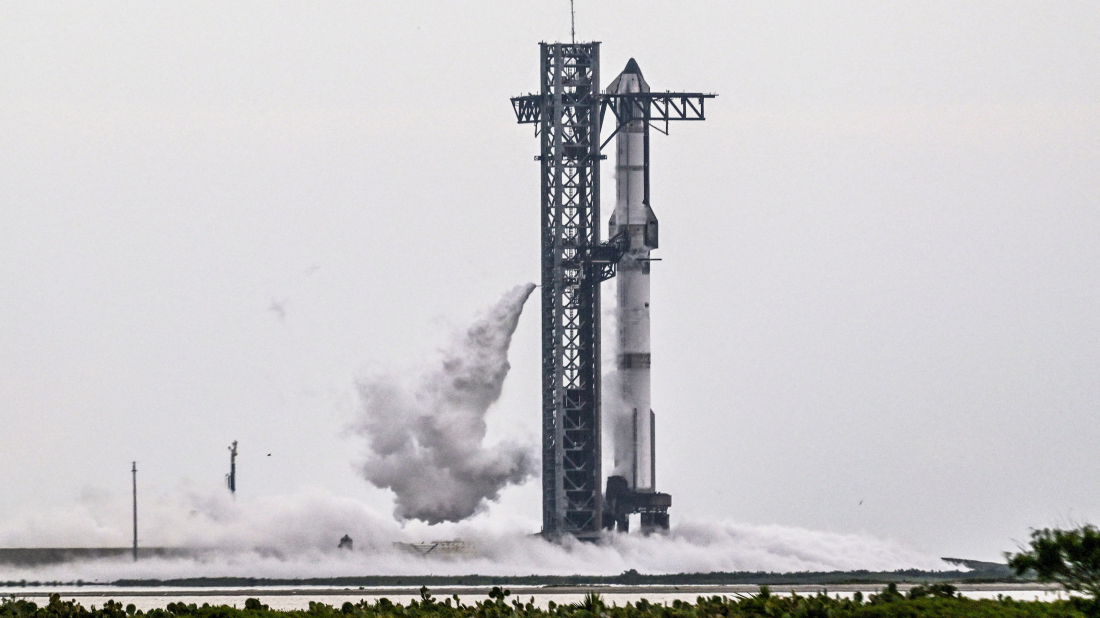
San Francisco, USA — Tonight, SpaceX is poised to make history with the launch of its Starship V3, the most powerful rocket ever built and a critical step toward establishing human presence on the Moon and Mars. Scheduled for liftoff from the company’s Starbase facility in Boca Chica, Texas, this test flight represents a major milestone in Elon Musk’s vision to revolutionize space travel. With a height of 123 meters—taller than the Statue of Liberty—and equipped with cutting-edge propulsion technology, the Starship V3 is designed to carry astronauts and cargo beyond Earth’s orbit, potentially as early as 2028 for NASA’s Artemis IV mission to the Moon.
This launch follows years of iterative testing, with SpaceX refining the Starship design after 11 previous flights, each providing critical data to address challenges like stage separation, heat shield integrity, and reusability. Tonight’s attempt marks the first time the Raptor 3 engines, a significant upgrade from the previous Raptor 2 models, will power both the Super Heavy booster and the upper Starship spacecraft. If successful, it could accelerate timelines for both commercial spaceflight and government-led missions, including those aimed at establishing a sustainable human presence on the Moon.
The launch window opens at 22:30 GMT (17:30 CDT), offering a 90-minute opportunity for SpaceX to achieve orbit—a feat that has eluded previous Starship prototypes. While the primary goal is to validate the rocket’s performance, the company has also hinted at ambitious secondary objectives, including a controlled re-entry and splashdown in the Pacific Ocean. For space enthusiasts and industry observers alike, tonight’s event is more than a test. it’s a pivotal moment in the global space race, with implications for both scientific discovery and commercial space tourism.
Why Tonight’s Launch Matters: The Science and Stakes
SpaceX’s Starship program is the cornerstone of Musk’s long-term ambitions, which include:
- Lunar Gateway Support: NASA has contracted SpaceX to develop a Starship-derived lunar lander for the Artemis program, with the goal of returning humans to the Moon’s surface by 2026 and establishing a permanent base by the 2030s.
- Mars Colonization: Starship is designed to be fully reusable, drastically reducing the cost of interplanetary travel. Musk has stated that the ultimate goal is to transport 1 million people to Mars within the next few decades.
- Satellite Megaconstellations: Starship’s massive payload capacity (up to 150 metric tons to low Earth orbit) could enable rapid deployment of next-generation satellite networks, including SpaceX’s Starlink constellation.
The Starship V3 incorporates several key improvements over its predecessors:

- Raptor 3 Engines: These new engines offer 20% higher efficiency and improved reliability, critical for sustained burns during lunar and Martian transfers.
- Enhanced Thermal Protection: The heat shield has been upgraded to withstand the extreme re-entry temperatures expected during returns from the Moon.
- Structural Reinforcements: The rocket’s carbon composite structure has been stress-tested to handle the rigors of multiple launches and landings.
Expert Insight: “This launch is about proving that Starship can operate as a fully integrated system—not just as two separate stages, but as a cohesive vehicle capable of reaching orbit and returning safely,” said Dr. Sarah Walker, director of SpaceX’s Dragon mission management. “If we achieve even 80% of our objectives tonight, it will be a monumental step forward.”
Starship V3: The Rocket Redefining Space Travel
The Starship V3 is a two-stage, fully reusable launch vehicle consisting of:

- Super Heavy Booster: The first stage, powered by 33 Raptor 3 engines, provides the initial thrust to escape Earth’s atmosphere. Standing at 70 meters tall, it is the largest and most powerful booster ever built.
- Starship Upper Stage: The second stage, also known as the “Ship,” measures 50 meters in height and is equipped with 6 Raptor 3 engines. It is designed for in-space refueling, enabling missions to the Moon and beyond.
One of the most innovative features of the Starship V3 is its in-space refueling capability. Unlike traditional rockets that carry all their fuel at launch, Starship is designed to be refueled in orbit by tanker variants of the same vehicle. This approach could reduce the cost of Mars missions by up to 90%, according to SpaceX’s internal estimates.
For context, the Starship V3’s 123-meter height surpasses the 110-meter Saturn V, the rocket that carried astronauts to the Moon during the Apollo program. However, unlike Saturn V—which was used only once per mission—Starship is designed to be reused up to 100 times, drastically lowering the per-launch cost.
From Failure to Breakthrough: The Evolution of Starship
SpaceX’s journey to this point has been marked by both setbacks and remarkable progress. The company’s first Starship prototype, SN8, made headlines in December 2020 when it achieved a high-altitude test flight but crashed upon landing. Subsequent flights—including SN9, SN10, and SN11—revealed critical areas for improvement, particularly in propulsive landing control and heat shield integrity.
A turning point came in April 2023 with the IFT-4 (Integrated Flight Test 4), where Starship achieved stage separation for the first time. However, the upper stage failed to complete its orbit due to a propellant leak. The most recent successful test, IFT-9 in May 2025, demonstrated the first reused Super Heavy booster and achieved a controlled splashdown in the Indian Ocean, though the upper stage did not reach orbit.
Tonight’s launch is the first attempt with the Starship V3, which incorporates lessons from these previous flights. “We’ve learned more in the past two years than we did in the previous decade,” Musk stated in a January 2026 interview with Axios. “The V3 is not just an incremental upgrade—it’s a fundamental redesign of how we approach rocket science.”
Who Stands to Gain—and Lose—From Tonight’s Success
The success of Starship V3 has far-reaching implications for multiple stakeholders:
- NASA: The agency has $2.9 billion in contracts with SpaceX to develop the Human Landing System (HLS) for Artemis missions. A successful Starship launch could accelerate NASA’s timeline for returning astronauts to the Moon by at least two years.
- Commercial Space Industry: Companies like Blue Origin and Rocket Lab are watching closely, as Starship’s success could shift the balance of power in the launch market. SpaceX’s ability to offer lower-cost, high-capacity launches threatens to disrupt traditional players.
- Scientific Community: Researchers in fields like astrophysics, planetary science, and materials engineering could benefit from Starship’s ability to deliver large payloads to the Moon and Mars, enabling ambitious experiments and infrastructure deployment.
- Global Space Agencies: Countries like China, Japan, and the UAE are investing heavily in lunar exploration. A successful Starship could prompt these nations to reconsider their partnerships or accelerate their own programs.
However, risks remain. The Federal Aviation Administration (FAA) has imposed strict safety requirements on SpaceX, including environmental impact assessments and public notification protocols. Any failure tonight could delay future launches and subject SpaceX to additional regulatory scrutiny.
Beyond Tonight: The Roadmap to the Moon and Mars
Assuming tonight’s launch is successful, SpaceX has outlined the following milestones:
- Orbital Validation (Q3 2026): Additional test flights to refine in-space operations, including propellant transfer demonstrations and long-duration engine burns.
- Lunar Mission Preparation (2027): Development of the Starship HLS variant, specifically designed for NASA’s Artemis program. This version will include additional landing legs and lunar-specific avionics.
- Artemis IV (2028): The first crewed mission to the Moon using Starship, with astronauts landing near the lunar south pole to explore water ice deposits.
- Mars Mission Feasibility Studies (2029–2030): SpaceX plans to conduct uncrewed cargo missions to Mars as early as 2030, followed by crewed missions in the late 2030s.
For those following along, SpaceX will provide live updates via:
Key Takeaways: What Tonight’s Launch Means for Space Exploration
- Historical Moment: Tonight’s launch is the first test of the Starship V3, the most advanced rocket in SpaceX’s fleet, with ambitions to carry humans to the Moon and Mars.
- Technological Leap: The Raptor 3 engines and in-space refueling capability represent breakthroughs that could reduce the cost of interplanetary travel by up to 90%.
- NASA Dependency: A successful launch could accelerate NASA’s Artemis IV mission to the Moon by at least two years, with astronauts potentially landing in 2028.
- Global Competition: SpaceX’s progress threatens to reshape the global space industry, with implications for competitors like Blue Origin and China’s CNSA.
- Regulatory Scrutiny: The FAA and other agencies will closely monitor the launch, as any failure could lead to additional safety requirements or delays.
- Long-Term Vision: Elon Musk’s ultimate goal is to establish a self-sustaining city on Mars, and tonight’s launch is a critical step toward that vision.
How to Follow Tonight’s Launch—and What to Watch For
SpaceX will broadcast the launch live, with coverage beginning approximately one hour before liftoff. Key events to watch for include:
- T-0: Liftoff from Starbase in Boca Chica, Texas.
- Stage Separation (approximately 2 minutes and 30 seconds into flight).
- Booster Ascent and Landing Attempt (the Super Heavy booster will attempt a controlled splashdown in the Gulf of Mexico).
- Upper Stage Orbit Insertion (if successful, the Starship will achieve orbit and attempt a transatlantic re-entry and splashdown).
Safety Note: Residents near Boca Chica should be aware that SpaceX may conduct controlled debris dispersion in the event of a failure. The company has established a public safety zone and provides real-time updates via its launch tracker.
Next Steps: SpaceX has not yet announced a date for the next Starship test flight, but industry analysts expect another attempt within 6–8 weeks, pending data review from tonight’s launch. For official updates, monitor:
What do you think about SpaceX’s ambitions for Mars? Share your thoughts in the comments below—or tag @SpaceX to join the conversation.
Related reading