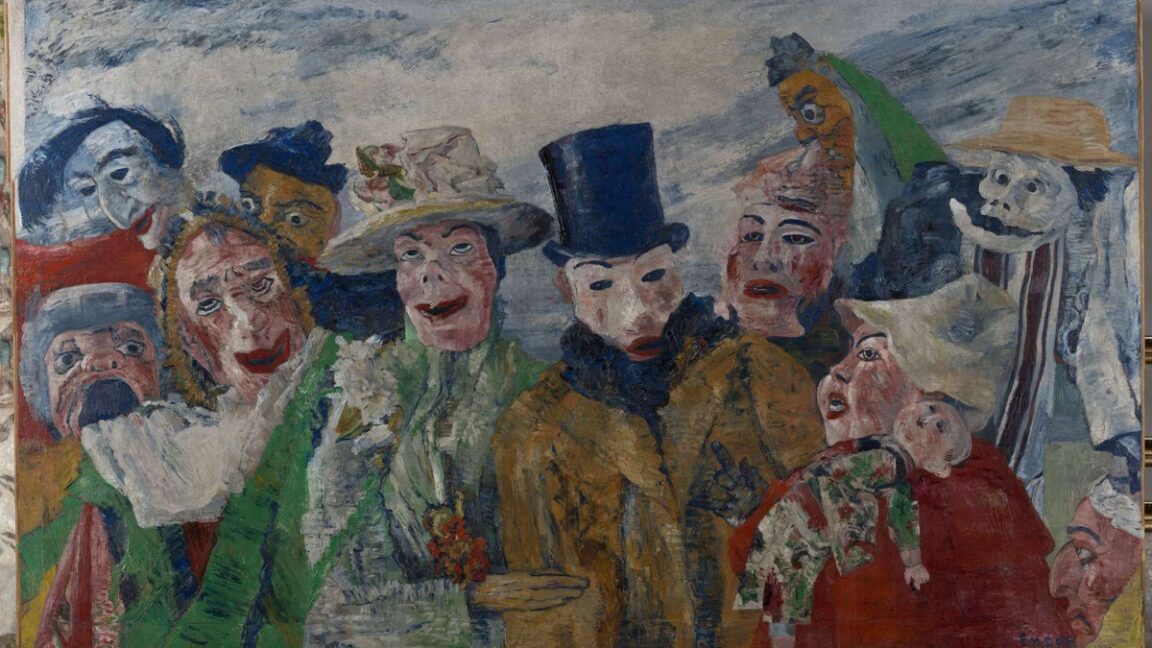
Unlocking the Secrets of Emerald Green: How Light and Humidity Threaten Masterpieces
Emerald green, a vibrant hue beloved by 19th-century artists, is notoriously unstable. Recent research has pinpointed exactly how this gorgeous pigment degrades, offering crucial insights for art conservation. Let’s delve into the science behind preserving these masterpieces for generations to come.
The Puzzle of Emerald Green Degradation
It was already known that emerald green fades and changes over time, but understanding the specific culprits – light versus humidity – remained a challenge. Researchers sought to unravel this mystery, focusing on the degradation pathways affecting this historically significant pigment.
A Close Look at The Intrigue
The study centered around The Intrigue (1890) by James Ensor, a captivating work housed in the Royal Museum of Fine Arts in Antwerp, Belgium. Scientists meticulously collected microscopic paint samples from altered emerald-green areas of the painting.
These samples underwent rigorous analysis using advanced techniques, including:
* Fourier transform infrared imaging: this method provides a detailed chemical fingerprint of the paint.
* Synchrotron radiation X-ray analysis: A powerful technique revealing the pigment’s atomic structure and changes over time.
Researchers also examined historical and commercial emerald-green pigment samples,even sourcing paint from a tube once used by Edvard Munch.
Recreating History: Paint Mockups and Aging Tests
To further understand the degradation process, the team recreated emerald-green paints using both commercial and lab-made pigments mixed with linseed oil. These paints were applied to polycarbonate substrates, mimicking the conditions of a painting.
Additionally, paint was squeezed directly from a historical Munch tube onto a substrate. Once dry, these mockups were subjected to controlled aging tests simulating:
- exposure to UV light (representing indoor lighting).
- High humidity levels.
The Findings: Light and Humidity – Distinct Degradation pathways
The results revealed that light and humidity trigger different, yet equally damaging, processes in emerald-green paints.
* Humidity’s impact: It leads to the formation of arsenolite, a compound that makes the paint brittle and prone to flaking.
* Light’s Impact: It causes the oxidation of trivalent arsenic within the pigment, resulting in a dulling of the color and the formation of a thin, white surface layer.
Crucially, analysis of the samples from The Intrigue confirmed that photo-oxidation – degradation caused by light – is the primary driver of deterioration in that particular painting. This suggests light poses the greatest threat to this masterpiece, and potentially others from the same era.
Implications for Art Conservation
These findings are invaluable for art conservators.You can now tailor preservation strategies to specifically address the threats facing emerald-green pigments. For paintings like The Intrigue, minimizing light exposure is paramount.
Understanding these degradation pathways allows for proactive conservation efforts,ensuring these vibrant works of art endure for future generations. This research underscores the power of scientific analysis in safeguarding our cultural heritage.
Source: Miliani et al., 2025. DOI: 10.1126/sciadv.ady1807
Related reading