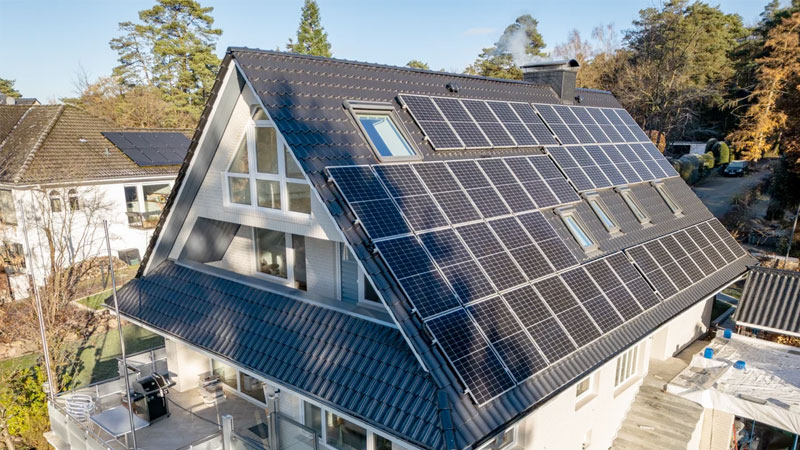
German Home Achieves Energy Independence with Integrated Renewable System
Maschen, Germany – A single-family home in Maschen, Lower Saxony, is demonstrating the potential of complete energy self-sufficiency through an innovative system combining solar thermal collectors, a heat pump, a wood-fired boiler, battery storage, and even integration with a swimming pool’s heating system. The project, spearheaded by WÄRME AUS DER NATUR Niemann GmbH & Co. KG and utilizing technology from TWL-Technologie GmbH, showcases a pathway toward drastically reduced energy costs and a move away from reliance on fossil fuels. This integrated approach is gaining traction as homeowners and builders seek greater control over energy consumption and a reduced carbon footprint, particularly in light of fluctuating energy prices and growing environmental concerns.
The core of the system lies in the hybrid photovoltaic-thermal (PVT) collectors manufactured by TWL-Technologie GmbH. These collectors simultaneously generate both electricity and thermal energy, maximizing the utilization of solar resources. The thermal energy produced is directly fed into the heat pump system, boosting its efficiency, while excess electricity is stored in a 90-kilowatt-hour battery for later use. This combination significantly increases the proportion of self-generated energy used by the household, reducing reliance on the grid. The project highlights a growing trend in residential energy systems: moving beyond simple solar panel installations to more sophisticated, integrated solutions.
The homeowner’s previous reliance on oil heating has been eliminated, a significant step towards decarbonizing home heating. A wood-fired boiler serves as a backup heat source for extremely cold periods or peak demand, providing a resilient and sustainable energy supply. This bivalent system ensures consistent heating even during prolonged periods of low sunlight. According to the German Association of Energy and Water Industries (BDEW), heat pumps are becoming increasingly popular in Germany, with installations rising significantly in recent years, driven by government incentives and growing awareness of their efficiency. BDEW data shows a substantial increase in heat pump installations in 2022.
How the System Works: A Detailed Look
The installation features 44 insulated PRISMA PVT 3.0 collectors, designed to generate both electricity and heat. These collectors can achieve a solar thermal output of up to 60°C (140°F) during the summer months. The electricity generated is used to power the home or stored in the battery system, while the thermal energy is channeled to an 18kW M-TEC brine-to-water heat pump. The M-TEC heat pump incorporates integrated energy management, optimizing the use of available energy sources. This intelligent control system ensures that the heat pump operates at peak efficiency, maximizing energy savings.
A particularly innovative aspect of the system is its integration with the home’s swimming pool. During the swimming season (March to October), the thermal energy from the PVT collectors is used to maintain a consistent water temperature of 30°C (86°F). A heat exchanger directly transfers the thermal energy to the pool water when the solar thermal output is sufficient. During transitional periods, when the solar thermal output is lower, the heat pump supplements the heating process. This dual-purpose use of the solar thermal energy further enhances the system’s overall efficiency.
Beyond direct heating, the swimming pool itself functions as a seasonal thermal energy storage unit. During the warmer months, excess thermal energy is stored in the 100,000-liter (approximately 26,417 gallons) pool. This stored energy is then extracted by the heat pump during the heating season, providing a consistent and efficient heat source. Even during winter, the insulated PVT collectors can maintain a brine temperature of up to +15°C (59°F), allowing for continued heat extraction from the pool. This innovative use of the swimming pool as a thermal battery significantly reduces the need for supplemental heating.
The Role of the Wood-Fired Boiler and Rainwater Harvesting
While the PVT collectors and heat pump form the core of the energy system, a wood-fired boiler provides a crucial backup. Christian Holst, Product Manager at TWL, explains that this combination creates “a robust and sustainable combination of renewable energy sources and regionally available fuel.” TWL-Technologie GmbH emphasizes the importance of utilizing locally sourced resources to enhance the system’s sustainability. The wood-fired boiler ensures a reliable heat supply even during extended periods of low solar irradiance or exceptionally cold weather.
The project extends beyond energy generation and conservation to encompass broader sustainability practices. The homeowners have also implemented a rainwater harvesting system, reducing their reliance on municipal water supplies. They have installed charging infrastructure for an electric vehicle, promoting sustainable transportation. This holistic approach to sustainability demonstrates a commitment to minimizing environmental impact across multiple facets of daily life. The increasing adoption of electric vehicles in Germany is supported by government incentives and a growing charging infrastructure network, as reported by the Federal Motor Transport Authority (KBA). KBA data shows a significant rise in registered electric vehicles in recent years.
TWL-Technologie GmbH and the Future of Integrated Energy Systems
TWL-Technologie GmbH, founded in 2002 and based in Freihung, Germany, specializes in thermal storage and solar thermal collectors. The company’s PRISMA® PVT product line, developed in 2022, represents a significant advancement in integrated renewable energy technology. TWL’s commitment to sustainability is evident in its own operations, with a 150 m² solar array on its roof providing 80% of the building’s heating needs, supplemented by a pellet boiler. The company also generates 900 MWh of electricity annually from PV systems installed on its factory buildings.
Jörg Niemann, Managing Director of WÄRME AUS DER NATUR Niemann GmbH & Co. KG, praises the TWL collectors, stating they are “cool, function very well, and the price is right.” He also highlights the competent support provided by the TWL team. This positive feedback underscores the importance of both product quality and customer service in the successful implementation of renewable energy systems. WÄRME AUS DER NATUR Niemann GmbH & Co. KG is actively involved in installing and maintaining these types of systems, contributing to the growing adoption of sustainable energy solutions in Germany.
TWL-Technologie GmbH will be showcasing its solutions at the Woche der Wärmepumpe (Heat Pump Week) in Hamburg from March 25-27 and at the IFH/Intherm trade fair in Nuremberg from April 14-17 (Hall 4, Stand 126). These events provide opportunities for industry professionals and homeowners to learn more about the latest advancements in renewable energy technology and explore potential solutions for their own energy needs.
Key Takeaways
- Energy Independence: This project demonstrates the feasibility of achieving near-complete energy self-sufficiency for a single-family home.
- Integrated Systems: Combining PVT collectors, heat pumps, battery storage, and a wood-fired boiler maximizes energy efficiency and resilience.
- Seasonal Storage: Utilizing a swimming pool as a seasonal thermal energy storage unit significantly enhances the system’s performance.
- Sustainability Focus: The project incorporates rainwater harvesting and electric vehicle charging infrastructure, promoting a holistic approach to sustainability.
The success of this project in Maschen provides a compelling case study for the wider adoption of integrated renewable energy systems. As energy costs continue to rise and concerns about climate change intensify, homeowners and builders are increasingly seeking innovative solutions to reduce their environmental impact and achieve greater energy independence. Further developments in battery technology and smart grid integration are expected to further enhance the performance and affordability of these systems in the coming years. The next major industry event to watch is Intersolar Europe in Munich in June 2024, where new technologies and trends in the solar energy sector will be showcased.
What are your thoughts on this innovative approach to home energy? Share your comments below, and let’s discuss the future of sustainable living!
Worth a look