
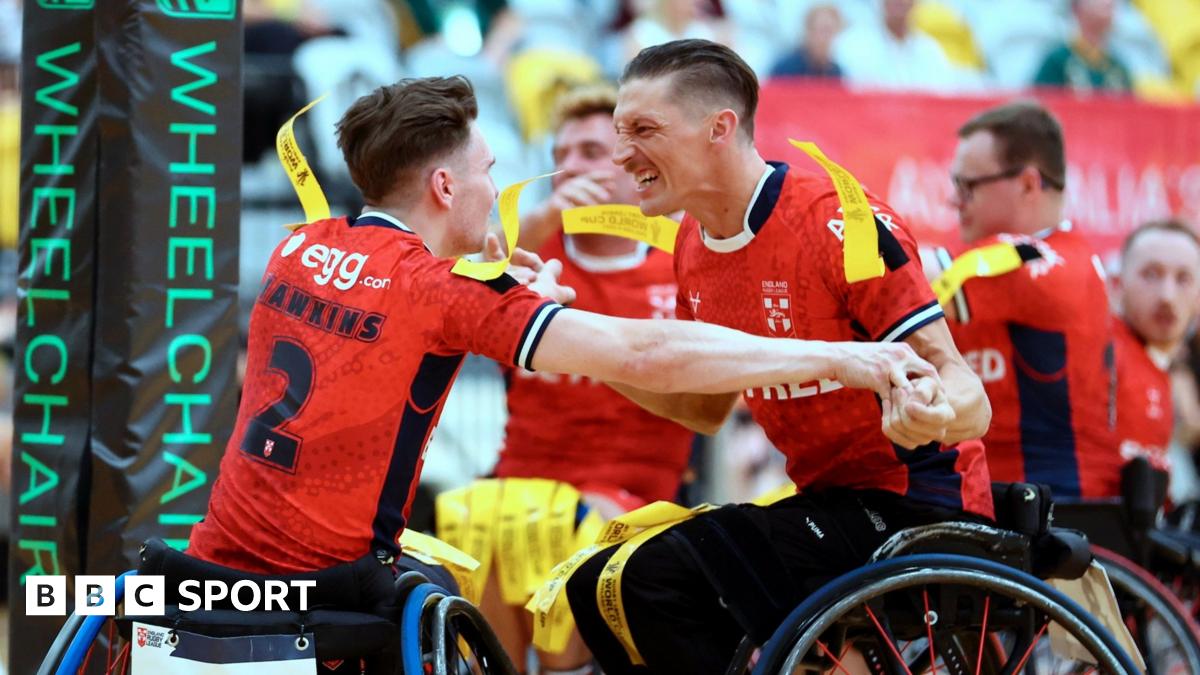
The Rise of Wheelchair Rugby League: A Deep Dive into Australia vs. England and the Future of the Sport
Wheelchair rugby league is experiencing a surge in global recognition, and the recent Test series between australia and England serves as a compelling illustration of its growing competitiveness and captivating nature. This isn’t simply a modified version of the game; it’s a dynamic, fiercely contested sport demanding incredible athleticism, strategy, and teamwork. The November 2025 encounter, marked by dramatic shifts in momentum and a nail-biting finish, highlights the evolution of the ’Wheelaroos’ (Australia’s national team) and the continued dominance – though increasingly challenged – of England. This article provides an in-depth look at the series, the sport itself, and its exciting trajectory towards the 2026 Wheelchair Rugby League World cup hosted in Australia.
Understanding Wheelchair Rugby League: Beyond Adaptation
Many perceive wheelchair rugby league as an adaptation for players with disabilities. While accessibility is fundamental, it’s crucial to understand that the sport has developed its own unique skillset and tactical nuances. Players utilize specifically designed wheelchairs, engineered for speed, agility, and impact. The rules are largely consistent with able-bodied rugby league, with key modifications to accommodate wheelchair use - for example, a tackle is completed when the ball carrier’s wheelchair is stopped, and offloads are a critical component of attacking play.
The physicality is remarkable. Players experience significant G-forces during collisions,requiring extraordinary upper body strength and core stability.Strategic positioning, swift passing, and the ability to anticipate opponent movements are paramount. It’s a full-contact sport demanding a high level of fitness and tactical awareness. The game isn’t about what players can’t do; it’s about showcasing what they can achieve.
A Series of Momentum Swings: Australia vs. England (November 2025)
The second Test of the series was a rollercoaster of emotions. Diab Karim’s early try ignited Australian hopes, but england responded with a powerful display led by Rob Hawkins, who continued his remarkable form from the first Test where he secured a hat-trick.Hawkins, alongside Finlay O’Neill, initially put England in a commanding position. Though, Australia demonstrated resilience, with Bayley McKenna scoring twice, and contributions from Adam Tannock and Dan Anstey leveling the score.
The second half witnessed a dramatic shift as england mounted a spirited comeback.Jack Brown proved instrumental, scoring twice and providing crucial assists for captain Lewis King, who ultimately completed his own hat-trick. At 42-42, the tension was palpable. Zac Schumacher and Anstey again brought the scores level, setting the stage for a grandstand finish. Ultimately, it was a moment of brilliance from England substitute Mason Billington – a cool, calculated pass – that created the opportunity for Coyd to score the winning try.
This match wasn’t just about individual brilliance; it was a testament to the tactical adaptability of both teams.Australia’s ability to recover from setbacks and England’s unwavering determination showcased the high level of competition now characterizing international wheelchair rugby league.
Key Players and Emerging Talent
The series highlighted several key players. Rob Hawkins‘ consistent try-scoring ability makes him a constant threat. Lewis King’s leadership and playmaking skills are vital for England. For Australia, Bayley McKenna’s dynamic runs and Diab Karim’s early impact demonstrated the ‘Wheelaroos’ growing attacking prowess.
Though, the emergence of new talent is equally significant. Players like Jack Brown and Mason Billington are injecting fresh energy into the England squad, while Australia is actively developing a pipeline of promising athletes. the increasing depth of talent across both teams suggests a highly competitive future for the sport.
the 2026 World Cup: A Turning Point for Wheelchair Rugby League?
Australia hosting the 2026 Wheelchair Rugby League World cup represents a




