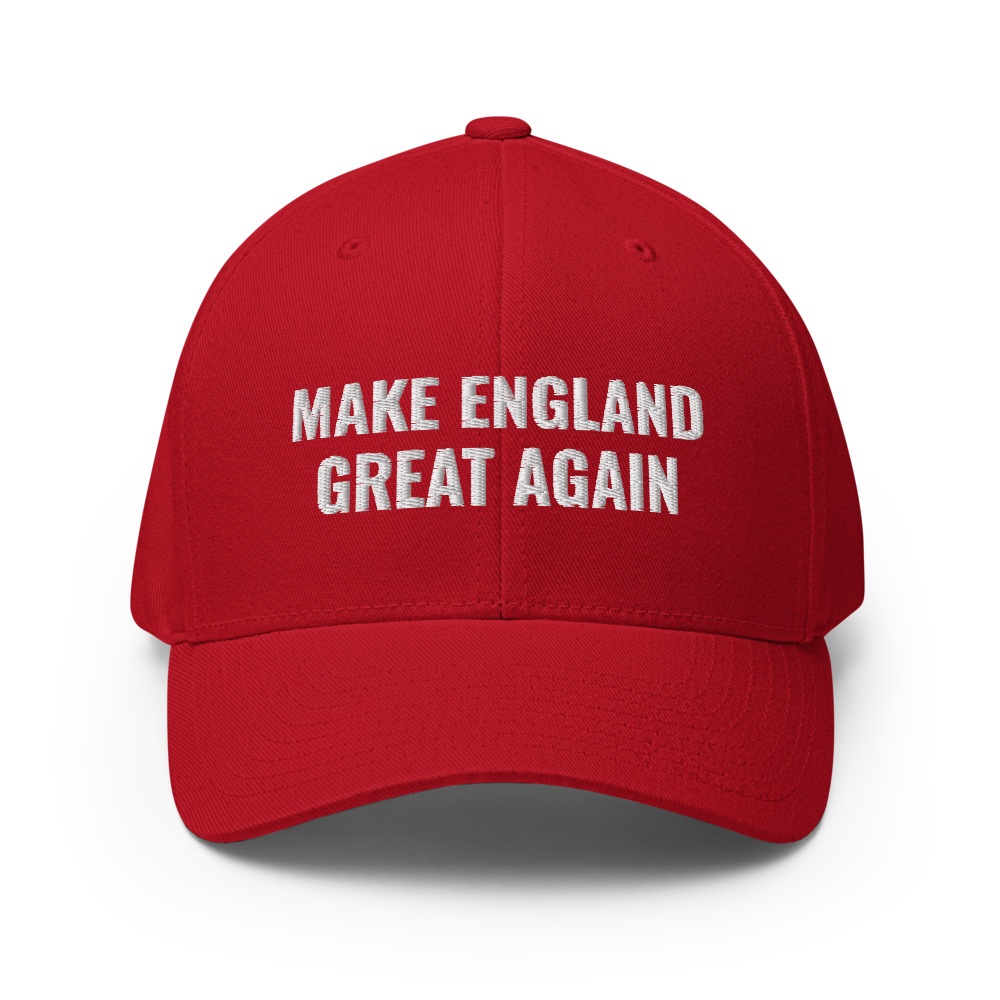
English football supporters attending the 2018 FIFA World Cup in Russia garnered international attention during the semi-final match against Croatia for displaying a satirical banner referencing Donald Trump’s political branding. The supporters modified the former U.S. President’s “Make America Great Again” slogan to read “Make England Great Again,” a move that became a notable sub-plot during the tournament held in the Russian Federation.
The incident occurred in Moscow’s Luzhniki Stadium on July 11, 2018, as England faced Croatia for a spot in the World Cup final. According to reports from the BBC, the match ended in a 2-1 victory for Croatia after extra time, effectively ending England’s run in the competition. The banner, which utilized the signature font and color scheme associated with the 2016 Trump presidential campaign, was captured by television cameras and subsequently circulated widely across social media platforms, highlighting the intersection of global politics and international sports culture.
Contextualizing the Fan Culture at the 2018 World Cup
The display of the “Make England Great Again” banner was part of a broader trend of fan expression observed during the 2018 tournament. England’s journey to the semi-finals, their best performance in the competition since 1990, generated significant media coverage both for the team’s on-field performance and the behavior of the traveling support. As noted by Reuters, the tournament in Russia was marked by a generally positive atmosphere, with thousands of English fans traveling to host cities despite initial concerns regarding security and potential hooliganism.

The use of political slogans in sporting arenas is not a new phenomenon, but the 2018 World Cup saw an increase in fans utilizing global political imagery to create “ludiek” (playful or satirical) messages. This specific banner served as a reflection of the pervasive nature of American political discourse, which, by 2018, had become a staple of global pop culture and meme-based humor. The modification of the slogan was viewed by many spectators as a lighthearted attempt to rally national pride following a period of relative underperformance by the England squad in previous international tournaments.
The Impact of Political Messaging in Sports
While the banner was widely interpreted as satire, the presence of political slogans in FIFA-sanctioned events has historically been a point of contention. FIFA regulations strictly prohibit the display of political, religious, or personal messages on equipment or within the stadium perimeter. However, fan-made banners in the stands typically fall into a different regulatory category unless they are deemed offensive, discriminatory, or inciting violence.
In this instance, the banner was treated as a fan expression rather than a violation of tournament rules. The FIFA Disciplinary Code outlines the parameters for conduct within stadiums, focusing heavily on preventing hate speech and discriminatory behavior. Because the “Make England Great Again” sign did not target specific protected groups or promote extremist ideologies, it remained on display throughout the match without intervention from stadium security or tournament officials.
Fan Reception and Social Media Amplification
The digital footprint of the banner proved to be more significant than its physical presence in the stadium. As the image circulated on platforms such as X (formerly Twitter) and Instagram, it generated a polarized response. For some, it was a humorous nod to the ubiquity of American political marketing; for others, it served as a critique of the nationalist sentiment that had been a recurring theme in both U.S. and UK politics during the late 2010s.

The intersection of the World Cup and political satire underscores how modern sports fans utilize international stages to signal national identity. The 2018 tournament, as reported by The Guardian, provided a platform for such expressions, as England fans sought to reconcile their team’s resurgence with the broader cultural conversations occurring back home. The “Make England Great Again” banner remains a frequently cited example of how the “Three Lions” support evolved in the digital age, moving from traditional chanting to more visually driven, meme-oriented displays of identity.
Legacy of the 2018 Tournament for England Supporters
The 2018 World Cup is viewed by historians of the game as a turning point for the England national team’s relationship with its supporters. Under the management of Gareth Southgate, the team fostered a more open and accessible environment, which was reflected in the behavior of the fans. While the semi-final loss to Croatia was a disappointment, the tournament was largely credited with repairing the image of the English traveling support.
Looking ahead, the role of fan-led displays remains a subject of interest for international sporting bodies. As stadiums become increasingly connected via social media, the ability of fans to influence the global narrative through banners and slogans has only grown. Future tournaments, including the 2026 FIFA World Cup, will likely continue to see this blend of sports fandom and political commentary, as supporters find new ways to engage with the global stage.
Readers interested in the history of international football tournaments or official FIFA documentation regarding spectator conduct can visit the official FIFA website for further information. Please share your thoughts on the evolution of fan culture in the comments section below.
Related reading