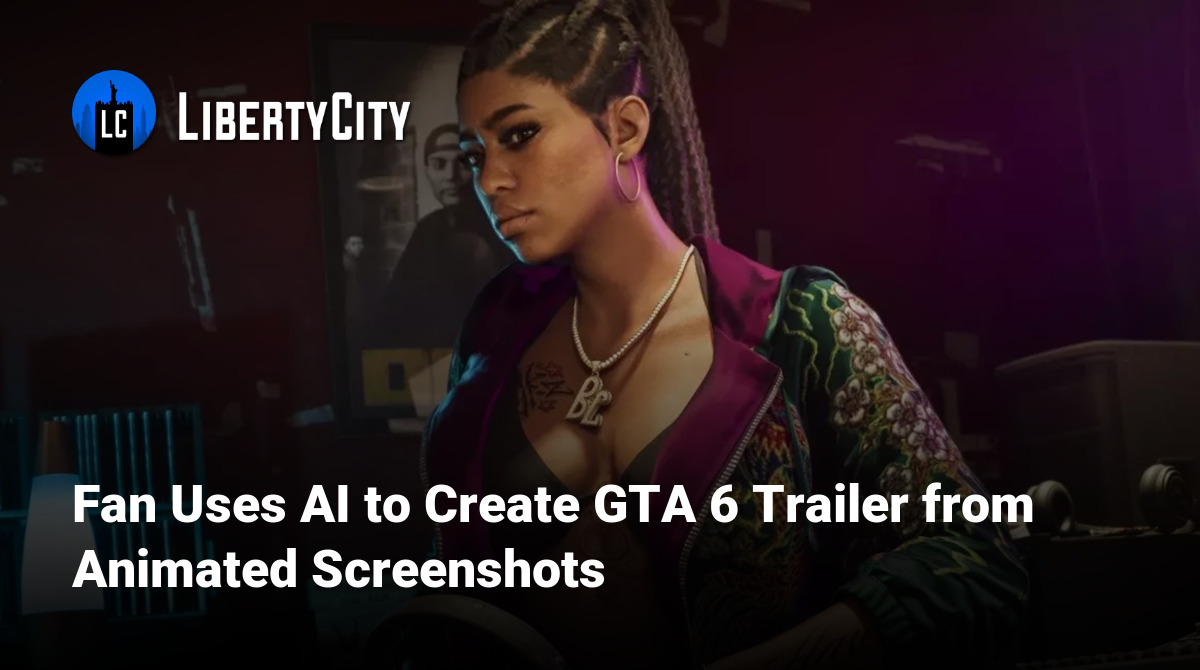
Generative artificial intelligence is enabling independent developers and entrepreneurs to attempt the creation of high-fidelity, open-world environments previously reserved for multi-billion-dollar studios. This technological shift allows smaller teams to use AI-driven asset generation and procedural world-building to target the visual complexity seen in upcoming major titles, such as Rockstar Games’ Grand Theft Auto VI.
The emergence of these AI-assisted development workflows marks a significant departure from traditional game production. Historically, creating a sprawling, photorealistic urban environment required thousands of artists and years of manual labor. Now, developers are utilizing large language models (LLMs), diffusion models for texture generation, and neural radiance fields (NeRFs) to automate much of the heavy lifting involved in environmental design and character animation.
While the comparison to Grand Theft Auto VI serves as a benchmark for graphical fidelity and systemic complexity, the industry is currently navigating the distinction between AI-generated visual simulations and fully functional, interactive game software. Most current “AI-driven” projects focus on accelerating the creation of assets—such as buildings, vehicles, and NPC (non-player character) dialogue—rather than replacing the underlying game engine logic.
Bridging the AAA-Indie Fidelity Gap
The primary driver behind this trend is the staggering cost of “AAA” game development. Major studios like Rockstar Games, the developer of the Grand Theft Auto series, operate with budgets that often exceed hundreds of millions of dollars. For instance, industry analysts frequently cite the massive scale of resources required for open-world titles to maintain high levels of immersion and detail.
Entrepreneurs are leveraging AI to disrupt this economic model. By using generative tools, a small team can produce high-resolution textures and 3D models that would traditionally require a massive art department. Tools like NVIDIA’s DLSS (Deep Learning Super Sampling) and various AI-powered plugins for Unreal Engine 5 allow developers to maintain high frame rates and visual clarity even when working with complex, procedurally generated environments.
This capability allows indie developers to move into the “AA” or “AAA-lite” space. Instead of focusing on simple, stylized graphics, they can now aim for the photorealism that consumers expect from modern consoles. However, the challenge remains in the “systems” of the game—the complex AI behaviors, physics, and interconnected world logic that define a title like Grand Theft Auto.
The Technology Behind AI-Driven World Building
The process of building a modern open-world game involves several distinct layers, each of which is being transformed by artificial intelligence:

- Environment and Texture Generation: Diffusion models, similar to those used in Midjourney or Stable Diffusion, are being applied to create seamless, high-resolution textures for roads, walls, and terrain. This reduces the time artists spend on repetitive tiling tasks.
- Procedural Content Generation (PCG): Modern engines like Unreal Engine 5 use advanced algorithms to populate vast landscapes with vegetation, rocks, and buildings. AI enhances these algorithms, allowing for more organic and less repetitive distributions of objects.
- NPC Intelligence and Dialogue: One of the most significant shifts is the integration of LLMs to power NPC interactions. Instead of relying on pre-written, branching dialogue trees, developers are experimenting with “dynamic NPCs” that can respond to player actions in real-time using natural language processing.
- Animation and Motion Capture: AI-driven motion synthesis can take a single video clip of a human movement and translate it into a complex 3D animation, potentially lowering the cost of high-quality character movement.
Despite these advancements, experts note that a “game” is more than its visual assets. A functional game requires robust collision detection, complex pathfinding, and stable memory management—areas where purely generative models still struggle to provide reliable, playable results.
Economic Shifts and the Future of Gaming Jobs
The ability for a single entrepreneur to mimic the output of a large studio raises questions about the future of the gaming workforce. While AI increases productivity, it also threatens traditional roles in concept art, 3D modeling, and environmental design.
Industry leaders are divided on the impact. Some argue that AI will act as a “force multiplier,” allowing creators to focus on high-level design and storytelling rather than technical minutiae. Others express concern that the automation of entry-level art and coding tasks could shrink the pipeline for new talent entering the industry. The economic reality is that as the barrier to entry for high-fidelity graphics lowers, the market for open-world games is expected to become increasingly crowded.
This competition will likely shift the focus from “who can make the best graphics” to “who can provide the most unique gameplay experiences.” As visual fidelity becomes a commodity aided by AI, the value of original mechanics, compelling narratives, and unique world-building will likely increase.
Legal and Ethical Hurdles in AI Development
The use of generative AI in game development is currently facing significant legal scrutiny. Most generative models are trained on massive datasets of existing images, code, and text, often without the explicit consent of the original creators. This has led to ongoing debates and potential litigation regarding intellectual property and copyright infringement.
For developers attempting to build “GTA-like” experiences, the legal landscape is particularly complex. Using AI to mimic the specific art style or character archetypes of a protected franchise could lead to trademark or copyright disputes. Furthermore, the question of who owns the copyright to an asset generated entirely by an AI remains unsettled in many jurisdictions, including the United States.
Developers are increasingly looking toward “clean” datasets—models trained on licensed or public-domain content—to mitigate these risks. However, these models are often more expensive to train or less capable than their counterparts trained on the broader internet.
Frequently Asked Questions
Can AI actually build a complete game like GTA 6?
Currently, no. While AI can generate assets, textures, and even some code, it cannot yet manage the complex integration, systemic logic, and massive optimization required for a functional AAA open-world game. AI is a tool used within a game engine, not a replacement for the engine or the developer.

How does AI help in making games look more realistic?
AI helps by automating the creation of high-resolution textures, improving lighting through techniques like neural rendering, and using upscaling technologies to make lower-resolution images look much sharper on modern displays.
Will AI replace human game developers?
Most industry analysts suggest AI will change the nature of the work rather than replace it entirely. It is expected to automate repetitive, time-consuming tasks, allowing developers to spend more time on creative direction and complex problem-solving.
Is it legal to use AI-generated assets in commercial games?
The legal status is currently evolving. While using AI tools is common, the copyrightability of the output and the legality of the training data are subjects of ongoing legal challenges. Developers are advised to use tools with clear licensing agreements.
The next major milestone for the industry will be the official release and technical analysis of Grand Theft Auto VI, which is expected to set the new standard for what is possible in open-world gaming. We will continue to monitor updates from Take-Two Interactive and major engine developers regarding AI integration.
What do you think about the rise of AI-driven indie games? Are they a threat to traditional studios or a new frontier for creativity? Let us know in the comments below and share this article with your fellow tech enthusiasts.
Keep reading
- Critical macOS Screen Sharing Vulnerability: Apple Releases Urgent Security Updates
- Messenger Services: New Challenges for Security Authorities
- Inflatable Planetarium Installed in Ballon-Saint-Mars Ahead of Eclipse (newsdirectory3.com)
- Run Hide Fight: Trailer, Release Date, and Jonathan Majors Update (archyde.com)