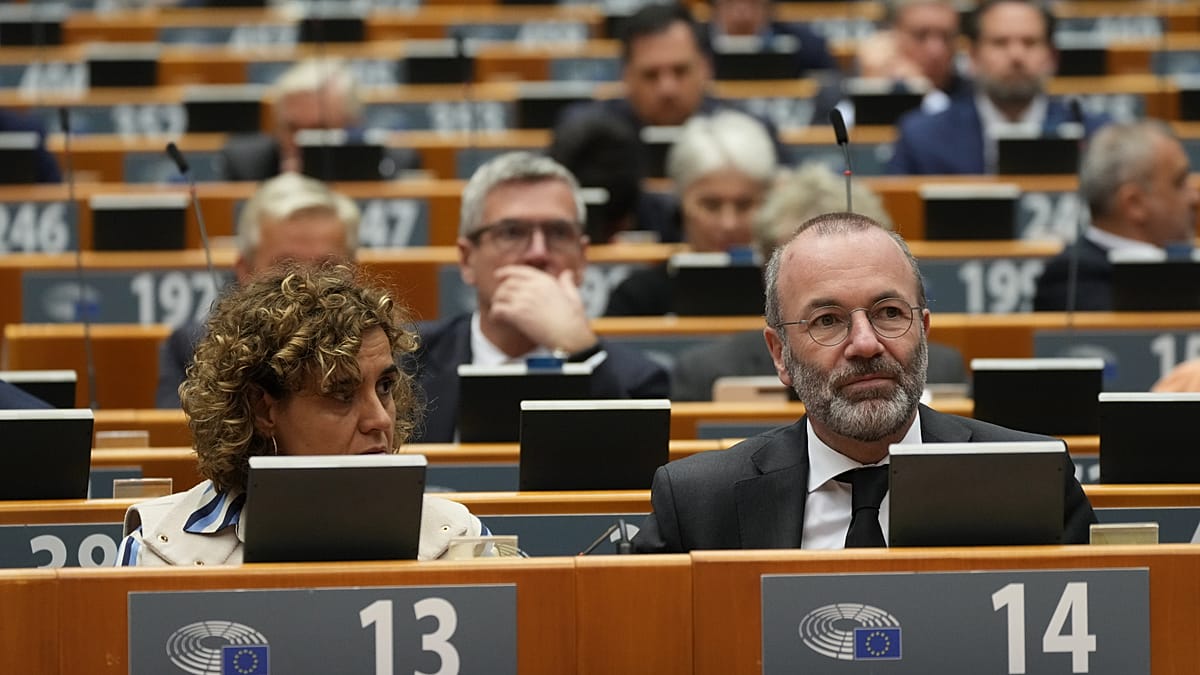
EPP’s Alliance with the Right Raises Concerns Over EU Migration Policy
Brussels – A growing controversy is unfolding within the European Parliament as evidence emerges of increased cooperation between the center-right European People’s Party (EPP) group and far-right factions, including Germany’s Alternative for Deutschland (AfD), on key migration legislation. The collaboration, revealed through internal chat logs and confirmed meeting minutes, has sparked outrage among social democrats and liberals, traditionally the EPP’s allies, and raises questions about the future of the EU’s approach to asylum and border control. The shift in tactics comes after months of deadlock on a proposed law intended to streamline deportation processes, prompting the EPP to seek support from parties previously considered outside the mainstream.
The core of the dispute centers around a legislative proposal to establish so-called “return hubs” – facilities in countries outside the European Union where asylum seekers whose claims have been rejected would be held pending deportation. This concept, championed by several EU member states, has faced staunch opposition from human rights groups and the Social Democrats, who argue it could violate international law and compromise the safety of vulnerable individuals. The EPP’s decision to engage with the AfD and other right-wing parties to overcome this impasse has been met with accusations of compromising democratic principles and normalizing extremist views.
Research by the Deutsche Presse-Agentur (dpa) uncovered a WhatsApp group where EPP members discussed amendments to the migration proposal with representatives from the European Conservative and Reformist (ECR) group, Patriots for Europe (PfE), and the Europe of Sovereign Nations (ESN) – the latter of which includes AfD MEPs. According to dpa, the EPP actively solicited and incorporated suggestions from the AfD, including proposals to broaden authorities’ powers when verifying the age of asylum seekers, potentially through the use of medical testing. The collaboration culminated in a face-to-face meeting on March 4th involving MEPs from all four groups, where they jointly drafted a revised bill for consideration in committee.
A Breakdown of the Alliance
The EPP, the largest political group in the European Parliament, traditionally forms an informal alliance with the Social Democrats and Liberals, allowing them to control the legislative agenda. This arrangement was intended to prevent cooperation with far-right parties. However, the failure to reach a consensus on migration policy fractured this alliance, creating an opening for the AfD and other right-wing groups to exert influence. The ECR, representing conservative and nationalist parties, includes MEPs aligned with Italian Prime Minister Giorgia Meloni’s Brothers of Italy party. PfE includes representatives from Marine Le Pen’s Rassemblement National in France. These groups, often critical of the EU’s open-door immigration policies, saw an opportunity to push for stricter border controls and faster deportations.
The AfD, founded in 2013, has become a significant political force in Germany, advocating for anti-immigration policies and questioning the country’s membership in the European Union. The party has been accused of harboring extremist views and has faced scrutiny over its ties to far-right movements. Mary Khan, an AfD MEP, played a key role in the negotiations, advocating for measures to tighten age verification procedures for asylum seekers.
Weber Defends Collaboration, Claims ‘Firewall’ Remains
Manfred Weber, head of the EPP and a prominent figure in the CSU (Christian Social Union in Bavaria), has repeatedly asserted that a “firewall” exists to prevent cooperation with extremist parties. However, the revelations of the WhatsApp group and the in-person meeting have cast doubt on his claims. Speaking to Bild, Weber acknowledged the existence of the chat logs but downplayed their political significance, stating that the AfD “plays no role when it comes to majorities and content.” He further clarified that he sets the EPP’s strategy but does not control the internal communications of his staff.
This explanation has failed to quell the criticism, with opponents arguing that even indirect collaboration with the AfD legitimizes its extremist ideology. The incident has also raised concerns about the internal dynamics within the EPP, with some members reportedly uncomfortable with the alliance. The proposed return regulation, if enacted, would allow for the establishment of processing centers in countries outside the EU, where asylum claims would be assessed. Rejected applicants would then be deported to their countries of origin or, if that is not possible, held in these centers.
Germany’s Federal Interior Minister Alexander Dobrindt (CSU) is a strong proponent of the “return hubs” concept, viewing it as a way to alleviate the burden on the European asylum system. He has collaborated with four other EU countries to develop a roadmap for implementation. However, critics, including human rights organizations, warn that the plan could violate fundamental rights and raise ethical concerns. The European Council on Refugees and Exiles (ECRE) has expressed particular concern about the potential for abuse and the lack of adequate safeguards for asylum seekers.
Implications for EU Migration Policy
The EPP’s willingness to collaborate with the AfD represents a significant shift in the political landscape of the European Parliament. It signals a growing frustration with the traditional consensus-building process and a willingness to explore alternative alliances to achieve policy goals. This development could have far-reaching consequences for the EU’s approach to migration, potentially leading to stricter border controls, faster deportations, and a more restrictive asylum system.
The controversy also highlights the challenges facing the European Union in addressing the complex issue of migration. The influx of refugees and migrants in recent years has strained the resources of member states and fueled political tensions. The failure to agree on a common asylum policy has exacerbated these challenges, leading to a patchwork of national approaches and increasing pressure on frontline states. The debate over “return hubs” exemplifies the deep divisions within the EU over how to manage migration flows and balance humanitarian concerns with security considerations.
The vote in the relevant committee, secured shortly after the MEPs’ meeting, represents a breakthrough for the creation of EU return centers. The proposed regulation suggests that rejected asylum seekers who cannot be sent back to their countries of origin should be held in centers outside the EU. The implications of this policy are still being debated, with concerns raised about the legal and ethical implications of establishing such facilities in third countries.
Key Takeaways
- The EPP’s collaboration with the AfD and other right-wing parties marks a significant departure from its traditional alliances.
- The move was driven by a deadlock in negotiations over a proposed law to establish “return hubs” for asylum seekers.
- Manfred Weber defends the collaboration as a tactical necessity, but critics argue it legitimizes extremist views.
- The controversy raises concerns about the future of EU migration policy and the protection of asylum seekers’ rights.
The situation remains fluid, with further debate and scrutiny expected as the migration proposal moves forward. The European Parliament is scheduled to vote on the bill in the coming weeks, and the outcome will likely have a significant impact on the EU’s approach to migration for years to come. The next key checkpoint will be the parliamentary vote, expected before the conclude of April, where the full extent of the EPP’s alliance will be tested. Readers are encouraged to follow the developments and engage in constructive dialogue about the future of migration policy in Europe.
Related reading