
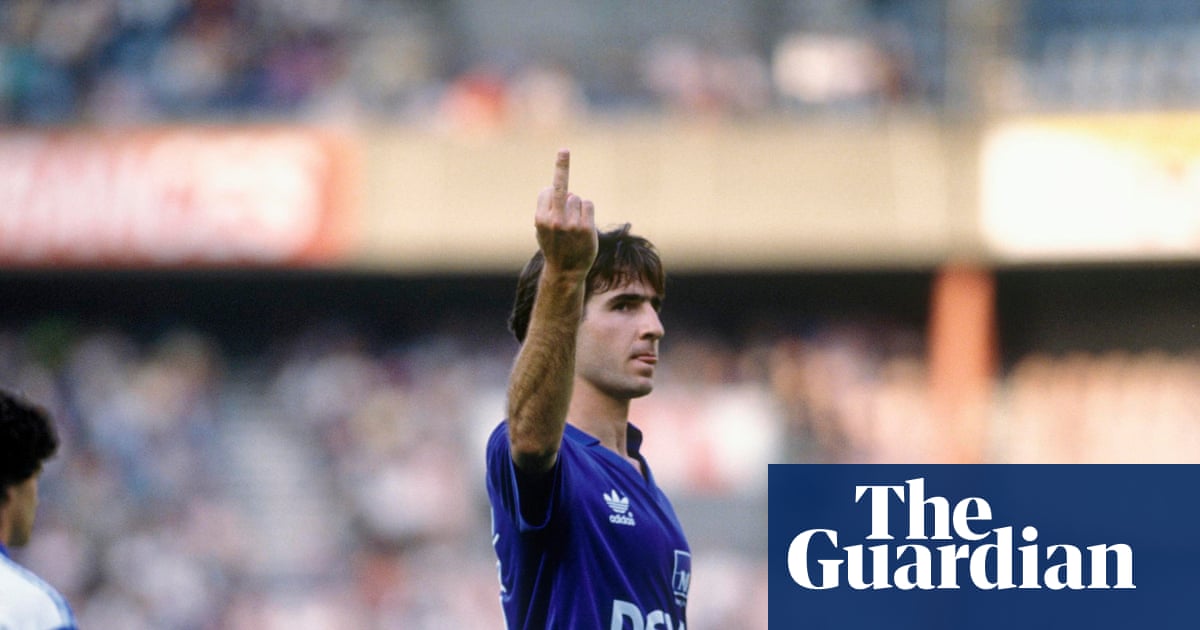
The glamour of the French Riviera has always played host to the world’s most provocative cinema, but this year, the Cannes Film Festival is welcoming a subject whose own life has been a masterclass in provocation. Eric Cantona, the man who redefined the role of the modern footballer through a blend of sublime technical skill and volatile unpredictability, is the center of a new, highly anticipated feature film that aims to dissect the myth of “The King.”
The documentary, titled Cantona, arrives at a poignant moment in sporting history. This weekend marks exactly 30 years since Cantona struck the audacious volley from the edge of the penalty area to secure the 1996 FA Cup final for Manchester United. That single moment of brilliance didn’t just seal a victory over their fiercest rivals, Liverpool; it cemented a legacy of triumph and turbulence that continues to fascinate fans and critics alike three decades later.
Directed by the duo of David Tryhorn and Ben Nicholas—notably the only British directors included in the festival’s official selection this year—the film eschews the traditional tropes of the sports documentary. Rather than a chronological list of achievements, the filmmakers have crafted a cinematic portrait that mirrors Cantona’s own artistic leanings, blending archival footage with a brooding electronic soundtrack and intimate shots of the former striker in his element as a painter.
For those of us who have covered the intersection of celebrity and sport for years, Cantona remains a unique study in contradiction. He was the catalyst for Manchester United’s dominance in the 1990s, yet he was equally famous for his willingness to walk away from the game or confront the establishment. The new film delves deep into this duality, framing his tenure in Manchester not just as a professional success, but as a complex “love story” between a rebellious artist and his mentor, manager Alex Ferguson.
The Ferguson Connection: A Bond Forged in Forgiveness
At the heart of the documentary is the intricate relationship between Cantona and Sir Alex Ferguson. In the high-pressure environment of the Premier League, the bond between the two was an anomaly—a partnership built on mutual respect and a shared, uncompromising will to win. The film explores how Ferguson managed a personality that many other managers would have found impossible to handle.

A central pillar of this narrative is the infamous “flying kick” incident at Crystal Palace in 1995. In one of the most shocking moments in English football history, Cantona launched himself at a spectator who had been heckling him. The fallout was immediate and severe, resulting in a lengthy suspension and a period of intense public scrutiny. However, the documentary highlights the pivotal role Ferguson played in persuading Cantona to return to the pitch.
This act of forgiveness from the manager is presented as the turning point that allowed Cantona to transform his mythology. The film suggests that the trust Ferguson placed in him during his darkest professional hour fueled the remarkable comeback that followed, leading to two more outstanding seasons that helped establish Manchester United as the dominant force in English football.
Beyond the Pitch: The Volatility of a French Icon
While his time in Manchester is the primary focus, Cantona provides essential context by flashing back to his tempestuous early career in France. The documentary paints a picture of a young man who was often at odds with authority long before he reached Old Trafford. His time at Marseille is revisited, detailing the suspensions and conflicts that characterized his early years.

The film does not shy away from his clashes with the French national team management. Viewers are treated to accounts of his outspoken nature, including the period when he berated the national team manager as “incompetent.” These segments serve to illustrate that the “King” of Manchester was not a sudden creation of the Premier League, but a fully formed personality whose intensity often overwhelmed the rigid structures of professional sport.
Perhaps most intriguing is the film’s exploration of the periods when Cantona simply quit the sport. By treating football as a choice rather than a destiny, the documentary reinforces the idea of Cantona as an artist who happened to play football, rather than a footballer who happened to be an artist. This perspective is reinforced by the film’s visual style, which frequently juxtaposes his goals with his philosophical insights and his passion for painting.
The 1996 Legacy and the Art of the Comeback
The timing of the film’s release coincides with the 30th anniversary of the 1996 FA Cup final, a match that serves as a symbolic bookend to Cantona’s journey. For Manchester United, the victory over Liverpool represented an unprecedented second league and cup double. For Cantona, the winning goal was the ultimate validation of his resilience.
The documentary uses this match to analyze what it means to achieve a “remarkable comeback.” By weaving together new interviews and extensive archival footage, Tryhorn and Nicholas examine how Cantona managed to evolve from a disgraced figure in the eyes of the media back into a beloved icon. The film suggests that his ability to embrace his flaws—and his refusal to apologize for his nature—is precisely what made him a symbol of individuality in an increasingly sanitized sporting world.
As the film prepares to “take Cannes by storm,” it invites the audience to look past the statistics and the trophies. It asks whether the sport would have been as vibrant without the disruption Cantona provided. By focusing on the human element—the forgiveness, the anger, and the artistic drive—the documentary elevates the story from a sports biography to a study of the human spirit.
Key Takeaways: The Legacy of Eric Cantona
- Cinematic Approach: The documentary Cantona avoids sports clichés, utilizing an electronic soundtrack and artistic imagery to mirror the subject’s personality.
- The Ferguson Influence: The film frames the relationship between Eric Cantona and Alex Ferguson as a “love story” based on mutual respect and forgiveness.
- Defining Moments: Key events explored include the 1996 FA Cup final victory over Liverpool and the 1995 Crystal Palace “flying kick” incident.
- Early Career Turbulence: The narrative connects his Manchester success to his volatile early years in France and his conflicts with Marseille and the national team.
- Artistic Identity: The film highlights Cantona’s transition from football to painting, portraying him as an artist in all aspects of his life.
As the festival continues, the industry will be watching to see how Cantona is received by the critics. While the football world celebrates the 30th anniversary of that legendary 1996 volley, the cinematic world gets a deeper look at the man who made the goal possible. The film is expected to move into wider distribution following its Cannes premiere, offering a global audience a chance to revisit the era of the “King.”
We will continue to monitor the official festival reports for any further announcements regarding the film’s release dates and potential award nominations. Share your thoughts in the comments below—was Eric Cantona the most influential player in Premier League history, or was his personality too disruptive for the game?