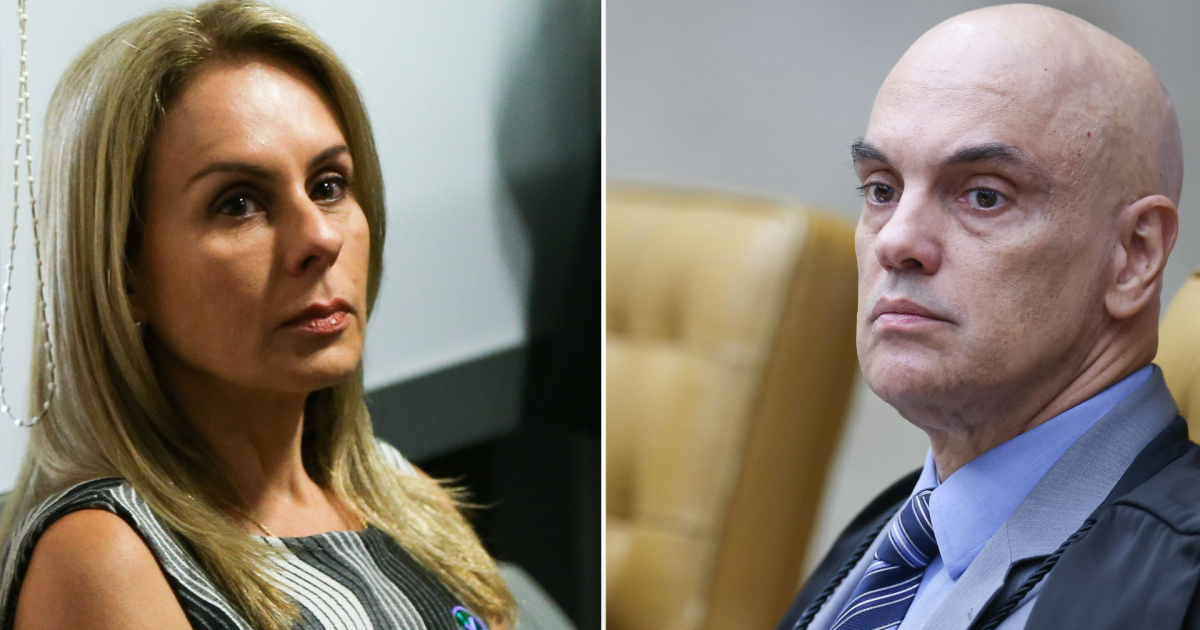
Brasília – The wife of Brazilian Supreme Court Justice Alexandre de Moraes, Viviane Barci de Moraes, has denied receiving messages from banker Daniel Vorcaro on his mobile phone, a claim that contradicts initial reports surrounding an ongoing investigation into potential undue influence. The denial comes as a parliamentary inquiry committee (CPMI) probes alleged irregularities within the Brazilian Social Security system (INSS) and the potential involvement of financial institutions and political figures.
According to a statement released to CNN Brasil, Viviane Barci de Moraes stated she “did not receive the messages in question.” This directly challenges earlier reporting that suggested Vorcaro had sent screenshots to Justice Moraes. The controversy centers on messages reportedly extracted from Vorcaro’s phone detailing discussions about the sale of Banco Master, a financial institution currently under scrutiny. The timing of these alleged communications coincides with a period when Banco Master was being acquired by BRB (Banco de Brasília), raising questions about potential conflicts of interest.
Justice Moraes Cites File Organization in Initial Response
Justice Moraes initially addressed the reports in a statement released by the Supreme Court last Friday, March 6th. He argued that the organization of files provided to the CPMI indicated the messages were linked to contacts other than his own. He claimed the screenshots were found within folders belonging to individuals other than himself, and therefore were not directly sent to him. This explanation, although, has faced scrutiny from both the Federal Police (PF) and political figures involved in the inquiry. The core of the dispute revolves around the interpretation of digital forensic evidence and the reliability of file organization as proof of communication.
The initial reports, as detailed by O Globo, indicated a potential exchange of messages with limited visibility between Vorcaro and Moraes on the day of Vorcaro’s arrest. These messages were reportedly retrieved through a technical analysis of Vorcaro’s phone conducted by the Federal Police. The timing of these alleged communications is particularly sensitive, given the ongoing investigation into Banco Master and its dealings with the INSS.
Contradictory Evidence: Contact “Vivi Moraes” Found in Relevant Folder
However, further examination of the files revealed that the contact information for Viviane Barci de Moraes, listed as “Vivi Moraes” on Vorcaro’s phone, was located in the same folder as a screenshot from Vorcaro’s notes application. The message within the screenshot, sent on the day of Vorcaro’s arrest, read: “Alguma novidade? Conseguiu ter notícia ou bloquear?” (Any news? Were you able to find out or block?). This discovery adds a layer of complexity to the case, suggesting a potential connection between the messages and Justice Moraes’ wife, despite her denial.
Experts consulted by CNN Brasil have pointed out that the way files are organized after data extraction from a mobile phone does not automatically identify the recipient of a message. This represents due to the technical procedures employed during digital forensics investigations, which prioritize preserving the integrity of the evidence – a process known as maintaining the chain of custody. These procedures often reorganize files based on technical criteria, potentially obscuring the original context of communications.
The Role of the CPMI and Ongoing Investigation
The CPMI investigating the INSS is tasked with examining potential irregularities in the allocation of funds and the influence of financial institutions. The involvement of Banco Master and its owner, Daniel Vorcaro, has brought increased scrutiny to the bank’s operations and its relationship with political figures. The committee is seeking to determine whether any undue influence was exerted to benefit Banco Master in its dealings with the INSS. The investigation has expanded to include scrutiny of contracts awarded to companies associated with individuals connected to Justice Moraes, further intensifying the political pressure surrounding the case.
The contract between Banco Master and Viviane Barci de Moraes, worth 129 million reais (approximately $26.5 million USD as of March 8, 2026), has turn into a central point of contention. The timing of this contract, awarded in April 2025, coincided with the ongoing acquisition of Banco Master by BRB, raising questions about potential conflicts of interest and the justification for the substantial payment to Justice Moraes’ wife. The CPMI is seeking to understand the nature of the services provided by Viviane Barci de Moraes to Banco Master and whether the contract was awarded fairly and transparently.
Reported Meetings Between Vorcaro and Justice Moraes
Adding another dimension to the investigation, messages intercepted by the Federal Police indicate that Daniel Vorcaro mentioned meetings with someone identified as “Alexandre Moraes” in April 2025. These conversations, which took place with his then-fiancée, Martha Graeff, suggest a direct line of communication between the banker and the Supreme Court Justice. According to reporting by Jornal Grande Bahia, Vorcaro informed Graeff he was going to meet “Alexandre Moraes” near his residence during a holiday period. Further reports suggest Justice Moraes visited Vorcaro’s home in Brasília on at least two occasions.
The Federal Police investigation is ongoing, and authorities are continuing to analyze the evidence collected from Vorcaro’s phone and other sources. The CPMI is expected to continue its hearings and investigations in the coming weeks, with a focus on uncovering the full extent of the alleged irregularities and identifying any individuals involved in potential wrongdoing. The case has sparked a national debate about transparency, accountability, and the potential for undue influence in Brazil’s political and financial systems.
Digital Forensics and the Chain of Custody
Understanding the complexities of digital forensics is crucial to interpreting the evidence in this case. The “chain of custody” refers to the documented and unbroken record of who handled the evidence, when, and what changes were made. Maintaining this chain is essential to ensure the admissibility of digital evidence in court. As experts have noted, the reorganization of files during the extraction process can craft it difficult to determine the original context of communications, highlighting the importance of careful analysis and expert testimony.
The debate over the interpretation of the digital evidence underscores the challenges of investigating complex financial crimes in the digital age. The reliance on forensic analysis and the potential for ambiguity in digital records require a meticulous approach and a thorough understanding of the technical aspects of the investigation. The CPMI’s ability to effectively analyze the evidence and draw credible conclusions will be critical to ensuring accountability and restoring public trust.
The investigation into the alleged communications between Daniel Vorcaro and Justice Alexandre de Moraes, and the role of Viviane Barci de Moraes, remains a developing story. The CPMI is scheduled to hold further hearings next week, where key witnesses are expected to testify. The Federal Police are continuing their investigation, and additional evidence may come to light in the coming weeks. The outcome of this investigation could have significant implications for Brazil’s political landscape and its financial system.
As the CPMI continues its work, the public will be closely watching for further developments. The case highlights the importance of transparency and accountability in government and the need for robust oversight of financial institutions. The investigation serves as a reminder of the potential for conflicts of interest and the importance of safeguarding the integrity of Brazil’s democratic institutions.
Key Takeaways:
- Viviane Barci de Moraes, wife of Justice Alexandre de Moraes, denies receiving messages from banker Daniel Vorcaro.
- The controversy centers on messages reportedly extracted from Vorcaro’s phone related to the sale of Banco Master.
- The CPMI is investigating potential irregularities within the Brazilian Social Security system (INSS).
- Digital forensic evidence is central to the case, with experts noting the challenges of interpreting file organization.
- The investigation is ongoing, with further hearings and analysis expected in the coming weeks.
Stay tuned to World Today Journal for continued coverage of this developing story. We encourage readers to share their thoughts and perspectives in the comments section below.
Keep reading