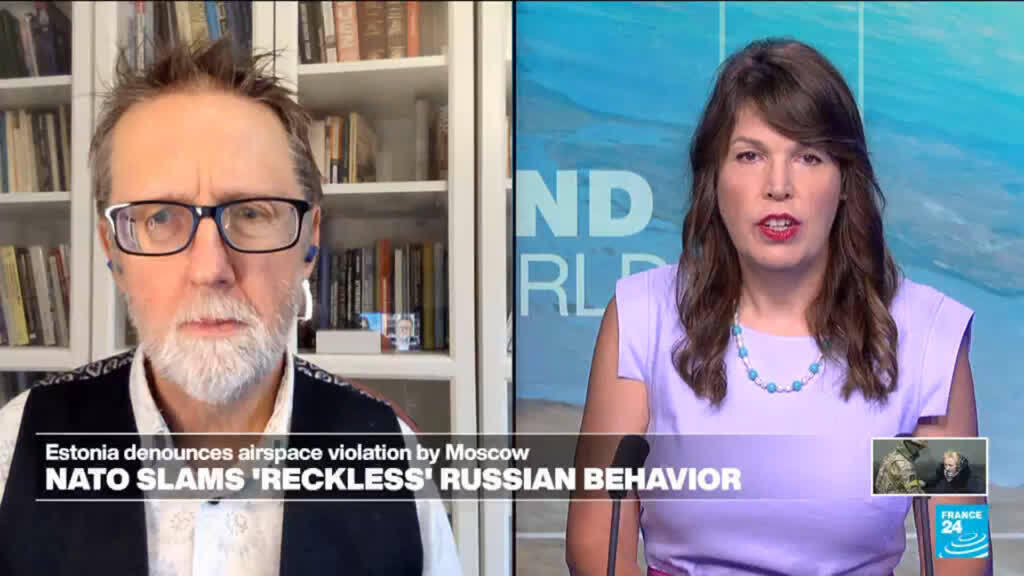
Estonia Airspace Violation: A Deep Dive into Russian Incursions and NATO Response
On September 20, 2025, at approximately 12:39 GMT, Estonian airspace experienced a significant breach when three Russian military aircraft penetrated its boundaries for a period of 12 minutes. This event, characterized by Estonia’s foreign ministry as an “unprecedentedly brazen” act, has triggered immediate calls for urgent discussions within the North Atlantic Treaty Organization (NATO). The incident, occurring against a backdrop of heightened geopolitical tensions stemming from the ongoing conflict in Ukraine, raises critical questions about regional security and the potential for escalation. This article provides an in-depth analysis of the airspace violation, its implications, and the anticipated responses from both Estonia and the broader NATO alliance.
Understanding the airspace Incursion
The intrusion involved three Russian military jets,the specific types of which have not yet been publicly disclosed by Estonian authorities.The aircraft reportedly entered Estonian airspace without authorization, remaining within the country’s internationally recognized boundaries for a full 12 minutes before departing. This duration is notably longer than previous, more routine incursions, contributing to the assessment of this event as particularly provocative.
Estonia’s Foreign Minister Margus Tsahkna swiftly condemned the action, labeling it an “extremely dangerous provocation” and announcing the country’s intention to request an immediate consultation with NATO allies under Article 4 of the North Atlantic Treaty. Article 4 allows any NATO member to request consultations whenever,in the opinion of the requesting party,there is a threat to its security.
This incident isn’t isolated. Similar events have been observed in other Baltic states and near the borders of Poland, suggesting a pattern of Russian activity designed to probe NATO’s defenses and demonstrate a willingness to challenge established norms. A recent report from the International Institute for Strategic Studies (IISS) highlights a 15% increase in detected Russian military flights near NATO airspace in the first half of 2025 compared to the same period in 2024.
NATO’s Potential Responses and Strategic Implications
The invocation of Article 4 signals Estonia’s serious concern and its reliance on the collective security guarantees provided by NATO.While article 4 does not obligate NATO members to take specific action, it initiates a process of deliberation and potential response. Possible outcomes range from increased NATO air patrols in the Baltic region to a formal condemnation of Russia’s actions by the alliance.
Professor Scott Lucas, a specialist in US and International politics at the UCD Clinton Institute, emphasizes the importance of a measured response. “The key is to avoid escalation while concurrently demonstrating resolve. A strong diplomatic statement coupled with a visible increase in NATO’s defensive posture would likely be the most effective approach,”
he stated in a recent interview.
The incident also underscores the vulnerability of the Baltic states, which share land borders with Russia and Belarus. Their relatively small size and limited military resources make them particularly reliant on NATO’s collective defense capabilities. This reliance has prompted increased calls for a greater NATO presence in the region,including the potential for permanent basing of troops and equipment.
| Feature | Estonian Response | Potential NATO Response |
|---|---|---|
| Immediate Action | Request for urgent NATO consultations (Article 4) | Increased air patrols, diplomatic condemnation |
| Long-Term Strategy | Advocacy for increased NATO presence in the baltic region | Consideration of permanent basing of troops and equipment |
| Geopolitical Context | Heightened tensions due to the Ukraine conflict | Presentation of resolve to deter further Russian aggression |
The Broader Context: Russia’s Strategic Objectives
The timing of this airspace violation is significant. It occurs