
The European Commission has issued urgent guidance to the European Union’s transport and tourism sectors to protect travelers and maintain industry stability amid ongoing fuel supply disruptions and the closure of key air and shipping routes linked to the crisis in the Middle East.
Adopted on May 8, 2026, the guidance aims to provide clear boundaries for airlines and travel operators as they navigate a volatile operational environment. Central to the Commission’s message is the insistence that passenger protections remain intact, regardless of the geopolitical pressures affecting aviation fuel and route availability.
For millions of travelers, the clarification arrives at a critical juncture. As flights are canceled or rerouted due to regional instability, the Commission is preemptively addressing how airlines may attempt to justify the avoidance of financial compensation—specifically regarding the rising cost of jet fuel.
Defining ‘Extraordinary Circumstances’ for Compensation
Under existing EU law, passengers affected by flight cancellations are entitled to several forms of redress, including reimbursement, re-routing, or a return flight, as well as assistance at the airport and financial compensation for last-minute cancellations. However, airlines can be exempt from paying this financial compensation if they can prove the cancellation was caused by “extraordinary circumstances.”
The European Commission has now explicitly clarified the threshold for these exemptions in the context of the current crisis. While a local fuel shortage may be classified as an extraordinary circumstance that exempts an airline from paying compensation, the Commission has stated that high fuel prices alone do not meet this criteria. Which means airlines cannot use the increased cost of operating flights as a legal loophole to avoid paying passengers for cancellations according to the official Commission guidance.
This distinction is vital for consumer protection, ensuring that the financial risk of market volatility is not shifted directly onto the passenger through the denial of statutory compensation rights.
Strict Rules on Fuel Surcharges and Ticket Pricing
Beyond compensation for cancellations, the Commission is cracking down on how airlines price their tickets during this period of instability. To maintain transparency and prevent “sticker shock,” the Air Services Regulation requires airlines to display final ticket prices upfront.
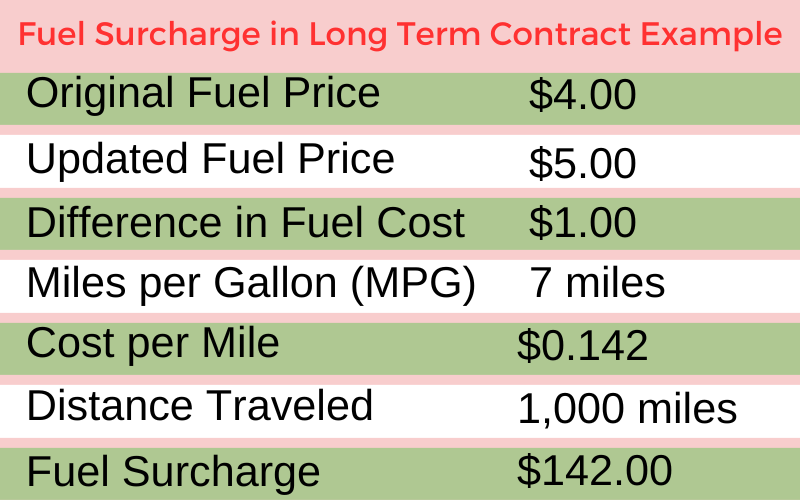
The Commission has clarified that charging additional fees retroactively—specifically fuel surcharges added after a ticket has been purchased—is not permitted. This ensures that passengers are not faced with unexpected costs after they have already committed to a fare.
There is, however, a distinction for those booking through travel agencies or tour operators. Under the Package Travel Directive, organizers of holiday packages may be allowed to increase prices retroactively, but only if such a possibility is explicitly stated in the contract and only under specific, limited circumstances as detailed in the Commission’s May 8 announcement.
Operational Support and Safety Measures
While the guidance protects passengers, it also provides operational flexibility to prevent the total closure of critical routes. One such measure involves the “90% fuel uplift rule” under the ReFuelEU Aviation framework. To avoid the abandonment of certain routes due to supply constraints, the Commission noted that airlines can be exempted from this specific fuel uplift requirement.
Simultaneously, the European Union Aviation Safety Agency (EASA) has stepped in to ensure that the drive for fuel availability does not compromise flight safety. EASA has issued a Safety Information Bulletin designed to inform fuel supply stakeholders and aviation operators about the safe usage of Jet A aviation fuel within Europe, ensuring that alternative supply chains meet rigorous safety standards.
Key Takeaways for Travelers
- Compensation Rights: You are still entitled to reimbursement, re-routing, and assistance if your flight is canceled.
- Fuel Price Loophole: Airlines cannot claim “high fuel prices” as an extraordinary circumstance to avoid paying compensation.
- Price Transparency: Retroactive fuel surcharges on individual flight tickets are prohibited under the Air Services Regulation.
- Package Tours: Retroactive price increases for holiday packages may be possible only if explicitly permitted by your contract.
As the situation in the Middle East continues to evolve, the European Commission and EASA will continue to monitor fuel supply chains and route viability. Travelers are encouraged to review their booking contracts and stay updated via official EU transport portals regarding their rights during this period of disruption.
The next official checkpoint for EU-wide transport stability will be the ongoing monitoring of fuel supply levels and the continued implementation of the ReFuelEU Aviation exemptions to ensure regional connectivity.
Do you have questions about your flight rights or a recent experience with a fuel surcharge? Share your thoughts in the comments below or share this guide with fellow travelers.
Keep reading