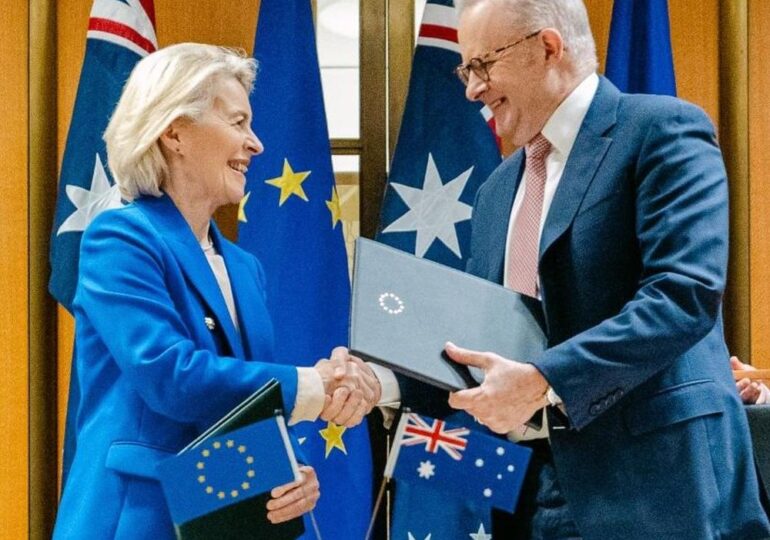
Australia will join the European Union’s flagship research and innovation program, Horizon Europe, as an associate member, granting Australian researchers access to significant collaborative funding and international networks. The agreement, finalized through negotiations between the European Commission and the Australian government, aims to strengthen scientific cooperation and technological innovation between the two regions through the current program cycle ending in 2027.
The decision marks a significant expansion of scientific ties between the Indo-Pacific and Europe. By joining the program, Australian scientists and institutions will be able to participate in research calls and collaborative projects on a similar footing to researchers from EU member states. This partnership is expected to drive advancements in critical sectors including climate change mitigation, health technologies, and digital innovation.
The European Commission confirmed that the negotiations concluded successfully, paving the way for a structured framework for research participation. Under the terms of the association, Australia will contribute to the program’s budget, which allows its researchers to access the massive pool of resources dedicated to solving global challenges. This financial commitment ensures that Australian institutions can compete for and lead high-impact international research initiatives.
How does the Horizon Europe association benefit Australian researchers?
The association provides Australian researchers with direct access to the Horizon Europe funding framework, which is the world’s largest multilateral research and innovation program. Previously, Australian researchers could only participate in certain projects through limited bilateral arrangements or as non-associated third-country participants, which often restricted their ability to lead consortia or access specific funding streams.
With associate status, Australian scientists can now:
- Lead and join research consortia: Australian universities and private sector innovators can act as primary partners in large-scale European research projects.
- Access specific funding calls: Researchers can apply for grants in priority areas such as biotechnology, quantum computing, and renewable energy.
- Integrate into European innovation ecosystems: The agreement facilitates deeper connections between Australian startups and European technology hubs, encouraging the transfer of knowledge and intellectual property.
- Participate in collaborative networks: Beyond direct funding, the association allows for increased participation in scientific advisory boards and international research networks.
The Australian government, primarily through the Department of Industry, Science and Resources, has emphasized that this move is designed to enhance the global competitiveness of the nation’s research sector. By aligning with the EU’s research standards and priorities, Australian institutions can better position themselves to tackle global issues that require cross-border expertise.
What are the core components of the EU-Australia research agreement?
The agreement focuses on creating a seamless link between the European and Australian scientific communities. While the European Commission manages the overarching program, the bilateral agreement ensures that the specific needs and research strengths of Australia are integrated into the collaborative framework. This includes provisions for data sharing, intellectual property management, and the recognition of research credentials.
A key aspect of the association is the cost-sharing model. As an associate member, Australia will contribute to the Horizon Europe budget to ensure its researchers have equitable access to the program’s resources. This financial arrangement is a standard requirement for non-EU countries seeking the level of integration that allows them to act as full partners in research consortia.
The scope of the cooperation is expected to prioritize several strategic areas:
- Climate and Environment: Joint research into decarbonization technologies and biodiversity protection.
- Health and Wellbeing: Collaborative efforts in pandemic preparedness and advanced medical research.
- Digital and Industrial Transition: Strengthening capabilities in artificial intelligence, semiconductors, and advanced manufacturing.
Why is this partnership significant for global science and geopolitics?
Beyond the immediate scientific benefits, the association between Australia and the European Union carries significant geopolitical weight. It represents a strengthening of ties between a key Indo-Pacific partner and the European bloc, at a time when scientific sovereignty and technological leadership are becoming central to national security and economic stability.
The partnership aligns with broader diplomatic efforts to foster stable, rules-based cooperation in science and technology. By linking their research infrastructures, both regions are creating a more resilient global scientific landscape that is less dependent on single-source technologies. This “science diplomacy” helps build trust and shared standards in emerging fields like biotechnology and artificial intelligence.
For the European Union, the association provides a strategic foothold in the Indo-Pacific, a region critical to global trade and security. For Australia, it offers a way to diversify its scientific partnerships and reduce reliance on other regional powers, ensuring that its research community remains connected to the world’s most advanced innovation ecosystems.
Comparison of Research Participation Status
To understand the impact of this move, it is helpful to compare how Australian researchers functioned before and after this agreement.
| Feature | Previous Status (Third-Country Participant) | New Status (Associate Member) |
|---|---|---|
| Funding Access | Limited to specific, non-core calls | Broad access to most Horizon Europe calls |
| Consortium Leadership | Difficult to lead major EU-led projects | Can lead and coordinate large consortia |
| Budget Contribution | Minimal or none | Proportional contribution to the program |
| Strategic Integration | External collaborator | Integrated partner in the research ecosystem |
What happens next for the EU-Australia scientific partnership?
Following the conclusion of the negotiations, the agreement must now move through the formal ratification processes in both the European Union and the Australian Parliament. This involves legal reviews and official signatures to ensure the agreement is fully integrated into the existing legislative frameworks of both entities.
Once ratified, the association is expected to become operational within the current Horizon Europe programming period, which runs through 2027. This timeline allows Australian institutions to begin preparing for upcoming research calls and integrating into the next cycle of international projects.
The next major milestone will be the formal signing ceremony and the subsequent publication of the agreement in the official journals of both the EU and Australia. Researchers are encouraged to monitor updates from the European Commission’s research portal and the Australian Department of Industry, Science and Resources for specific guidelines on applying for upcoming collaborative grants.
What are your thoughts on this new scientific era between Australia and Europe? Do you think this will change the landscape for Australian innovation? Let us know in the comments below and share this article with your colleagues.