The EU’s Stalled Response to Israeli Actions: A Crisis of Commitment?
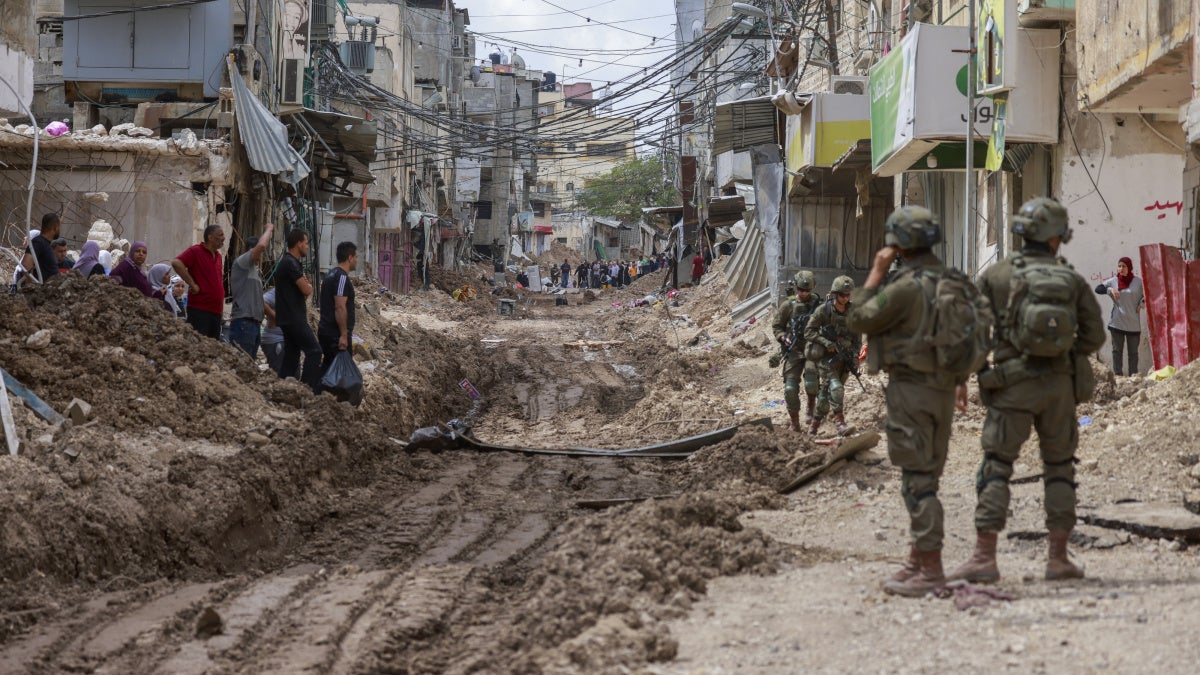
The european Union finds itself at a critical juncture regarding its relationship with Israel, grappling with a widening gap between stated principles and concrete action. While individual EU nations have begun taking symbolic steps, a unified and robust response to concerning developments in the Occupied Palestinian Territory remains elusive. This hesitancy undermines the EU’s credibility as a champion of international law and human rights.
Several European governments, including Slovenia, Spain, and the Netherlands, have declared Israeli ministers Bezalel Smotrich and Itamar Ben-gvir personae non gratae. Though, achieving a collective EU stance has proven impossible, blocked by the requirement for unanimous agreement on sanctions.
This lack of unity extends to economic measures. Despite acknowledging Israel’s breach of Article 2 of the EU-Israel Association Agreement – which prioritizes “respect for human rights and democratic principles” – the EU has yet to suspend the trade pillar of the agreement. A fragile ceasefire in Gaza shouldn’t be a reason to postpone this crucial consideration.
A Foundation of Concern: Legal and Investigative Findings
The EU’s internal review process reinforces the need for decisive action. It draws upon damning reports from the United Nations and a landmark July 2024 ruling from the International Court of Justice (ICJ). The ICJ unequivocally found Israel’s occupation unlawful and characterized by serious abuses.
Specifically,the court’s findings point to evidence suggesting a pattern of apartheid. These egregious abuses, ceasefire or not, are fundamentally incompatible with the human rights clause within the EU-Israel Association Agreement. You might be wondering what this means for the future of the relationship.
International Commitments and Unfulfilled Promises
Targeted sanctions and suspension of the trade agreement are also explicitly included within the annex to the september 2025 New York Declaration. This declaration, spearheaded by France and Saudi Arabia, aims to implement a ”two-state solution.”
Most EU states supported the UN resolution endorsing the declaration,and several formally recognized a Palestinian state. Yet, translating these commitments into tangible action has been slow. For example, the EU continues to trade with Israeli settlements, despite consistently acknowledging their illegality.
* The EU itself refers to these settlements as “an obstacle to a two-state solution.”
* They represent a clear breach of obligations outlined by the ICJ.
* This continued trade directly contradicts stated policy.
Why the EU Must Act Now
the current approach of deferral and inaction is unsustainable. Rather than easing pressure,the EU must demonstrate leadership by acting on its own assessments. It’s time to uphold international law and end the impunity that enables ongoing abuses.
Here’s what a stronger EU response could entail:
- Implement Targeted Sanctions: Focus on individuals and entities directly involved in human rights violations and settlement activity.
- Suspend the EU-Israel Association Agreement: Demonstrate a clear consequence for violating the agreement’s core principles.
- Enforce Trade Restrictions: Halt trade with Israeli settlements to align actions with stated policy.
- Strengthen Diplomatic Pressure: Advocate for accountability and compliance with international law on a global stage.
Ultimately, the EU’s credibility as a global actor hinges on its willingness to translate its values into concrete action. A decisive response to the situation in the Occupied Palestinian Territory isn’t just a matter of justice; it’s a test of the EU’s commitment to the rules-based international order. You deserve a clear and consistent foreign policy from the EU, and that begins with holding all actors accountable.
Keep reading