
European Union member states have officially agreed to open the first phase of accession negotiations with Ukraine and Moldova, marking a significant step in the integration of both nations into the bloc. The decision, finalized by EU envoys in Brussels, clears the way for the formal opening of the first “negotiating cluster,” which focuses on fundamental democratic standards and the rule of law. According to the Council of the European Union, this milestone represents a commitment to the long-term geopolitical stability of the European continent.
The agreement follows a period of rigorous assessment regarding the readiness of both Kyiv and Chișinău to align their national legal frameworks with the body of EU law, known as the acquis communautaire. While the ongoing conflict in Ukraine has created immense logistical and economic challenges, the European Commission has signaled that both candidate countries have met the essential benchmarks required to initiate these formal discussions. This development effectively sets the stage for a multi-year process involving dozens of policy chapters, ranging from environmental standards to judicial reform.
Understanding the EU Accession Process
The accession process is a structured, multi-stage journey that requires a candidate country to demonstrate full compliance with the “Copenhagen criteria”—a set of rules that include stable democratic institutions, the rule of law, and a functioning market economy. Opening the first “cluster” of negotiations is not the final step but rather the beginning of the most intensive phase of alignment. As noted by the European Commission, this initial phase prioritizes the “Fundamentals” cluster, which covers the judiciary, anti-corruption efforts, and public administration reform.
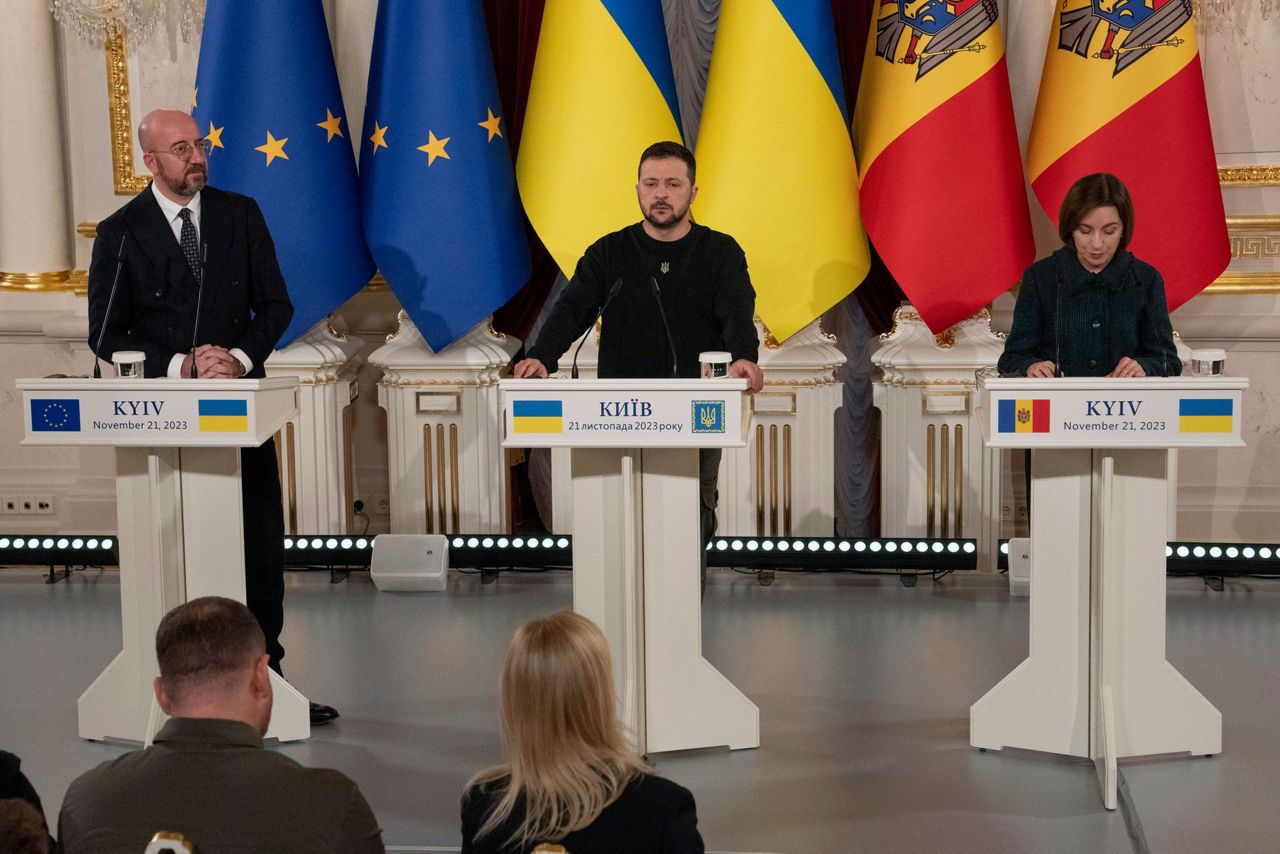
For Ukraine, the path to membership is complicated by the impacts of the war with Russia, which has necessitated significant domestic restructuring and the management of a wartime economy. Moldova, meanwhile, has faced its own set of regional pressures and hybrid threats, which EU officials have cited as a key reason for accelerating the integration process to ensure the security of the Eastern Partnership region. The European Union typically manages these negotiations through the European Council, which must reach a unanimous decision at every major transition point in the talks.
How Ukraine and Moldova Compare in Readiness
While both nations are moving forward simultaneously, their individual paths to membership are distinct. Ukraine’s journey is largely defined by its ability to maintain democratic governance and anti-corruption oversight while under martial law. According to reports from European Pravda, Kyiv has implemented a series of legislative changes aimed at meeting EU-mandated benchmarks, specifically targeting judicial independence and the transparency of state institutions. These reforms are being monitored closely by Brussels to ensure that the wartime environment does not hinder long-term institutional progress.

Moldova’s progress is similarly tied to deep-seated structural reforms. The nation has focused heavily on energy security and the modernization of its legal system to counter external political influence. Unlike previous expansion rounds, the EU has employed a more flexible methodology for this process, allowing for a “reversibility” clause where progress can be stalled if a candidate nation backslides on its reform commitments. This mechanism is intended to keep both countries accountable throughout the years-long negotiation cycle.
What Happens Next in the Membership Talks
The immediate next step involves the organization of the first intergovernmental conference, where the specific technicalities of the negotiations will be outlined. This will be followed by a “screening” process, where EU experts and their counterparts from Ukraine and Moldova conduct a line-by-line review of how their national laws compare to the EU standards. This technical work is expected to be time-consuming and will require sustained cooperation from all 27 EU member states.
The timeline for full membership remains undefined, as the process is merit-based and dependent on the speed of domestic reforms. EU leaders have emphasized that there are no “fast-track” shortcuts to membership, and both Kyiv and Chișinău will be held to the same standards applied to previous candidates. The next major checkpoint will likely be the publication of the European Commission’s annual progress report, which will serve as the primary document for assessing whether the countries are meeting their obligations in the fundamentals cluster. We invite our readers to share their thoughts on the geopolitical implications of this expansion in the comments section below.